Should you read Electronic Life?
What works
Crichton explains hardware, software, fear, and practical use in plain language designed to make a new machine feel approachable rather than magical.
What may not work for you
Specific recommendations and assumptions are obsolete, while the broad social predictions vary sharply in accuracy.
What may test your patience
Detailed guidance for period equipment has little direct use now and is best read historically rather than instructionally.
Does the ending reward the effort?
The book succeeds as a snapshot of adoption anxiety, not as a current guide; its datedness is part of the value.
Reading Electronic Life closely
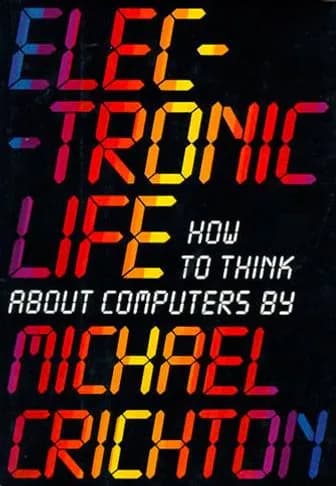
Electronic Life was written in 1983 to help readers approach personal computers without fear. Crichton explains what a computer does, how a newcomer might choose one, how software and programming shape its usefulness, and how a machine could fit into home and family life at a moment when such questions were genuinely new.
Much of the practical advice is obsolete: hardware categories, prices, storage, interfaces, and programming expectations changed beyond what any buyer's guide could survive. Yet the explanations reveal early assumptions about digital literacy. Crichton argues that computers are tools rather than mysterious authorities and encourages experimentation, skepticism, backups, and control over the machine's place in daily life.
Today the book is best read as technology history, not purchasing guidance. Its patient tone makes the personal-computer revolution visible at household scale, including anxieties that remain recognizable even when the equipment does not. Collectors, computing historians, and Crichton readers interested in his nonfiction will gain more than anyone seeking current technical instruction.
A guide for the first encounter
The book assumes intelligent readers with little direct computer experience and explains fundamentals without demanding jargon.
What became obsolete
Specific machines, software habits, and market advice belong firmly to the early 1980s.
What still resonates
The insistence that people understand tools, question outputs, and set boundaries remains useful even as the devices change.
Three useful comparisons
Five Patients
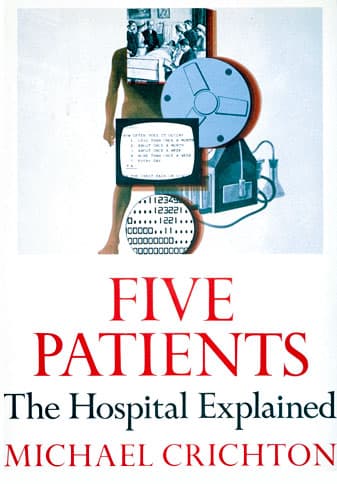
Five Patients applies the same explanatory clarity to hospital systems and retains more contemporary human interest.
Best for: Readers interested in medical history, hospital systems, and Crichton's nonfiction roots.
As an Amazon Associate, I earn from qualifying purchases.

Jasper Johns
Jasper Johns shows Crichton's clear nonfiction voice in art criticism rather than technology.
Best for: Readers of modern American art and Crichton completists curious about his critical nonfiction.
As an Amazon Associate, I earn from qualifying purchases.
Digital Fortress
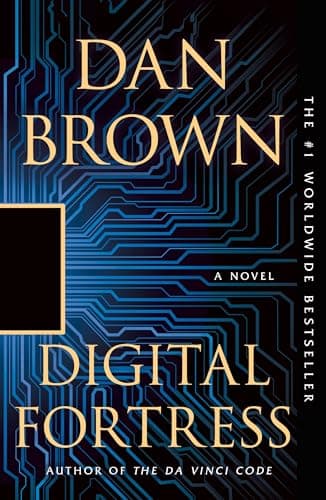
Digital Fortress turns computer anxiety into a fast fictional conspiracy, though its technology has also dated.
Best for: Brown completists and readers of retro cyberthrillers comfortable with obsolete and inaccurate technology.
As an Amazon Associate, I earn from qualifying purchases.