Should you read The World of Ice & Fire?
What works
Regional histories, dynasties, maps, and art reveal how Westerosi scholarship flatters power and turns uncertainty into official narrative.
What may not work for you
Genealogical summaries become repetitive, distant cultures are often filtered through stereotypes, and reference breadth replaces character intimacy.
What may test your patience
Successive reigns and regional houses can blur when read continuously; the book works better as a browsed companion.
Does the ending reward the effort?
There is no narrative ending, but the later regional sections leave the world broader and its official knowledge less trustworthy.
Reading The World of Ice & Fire closely
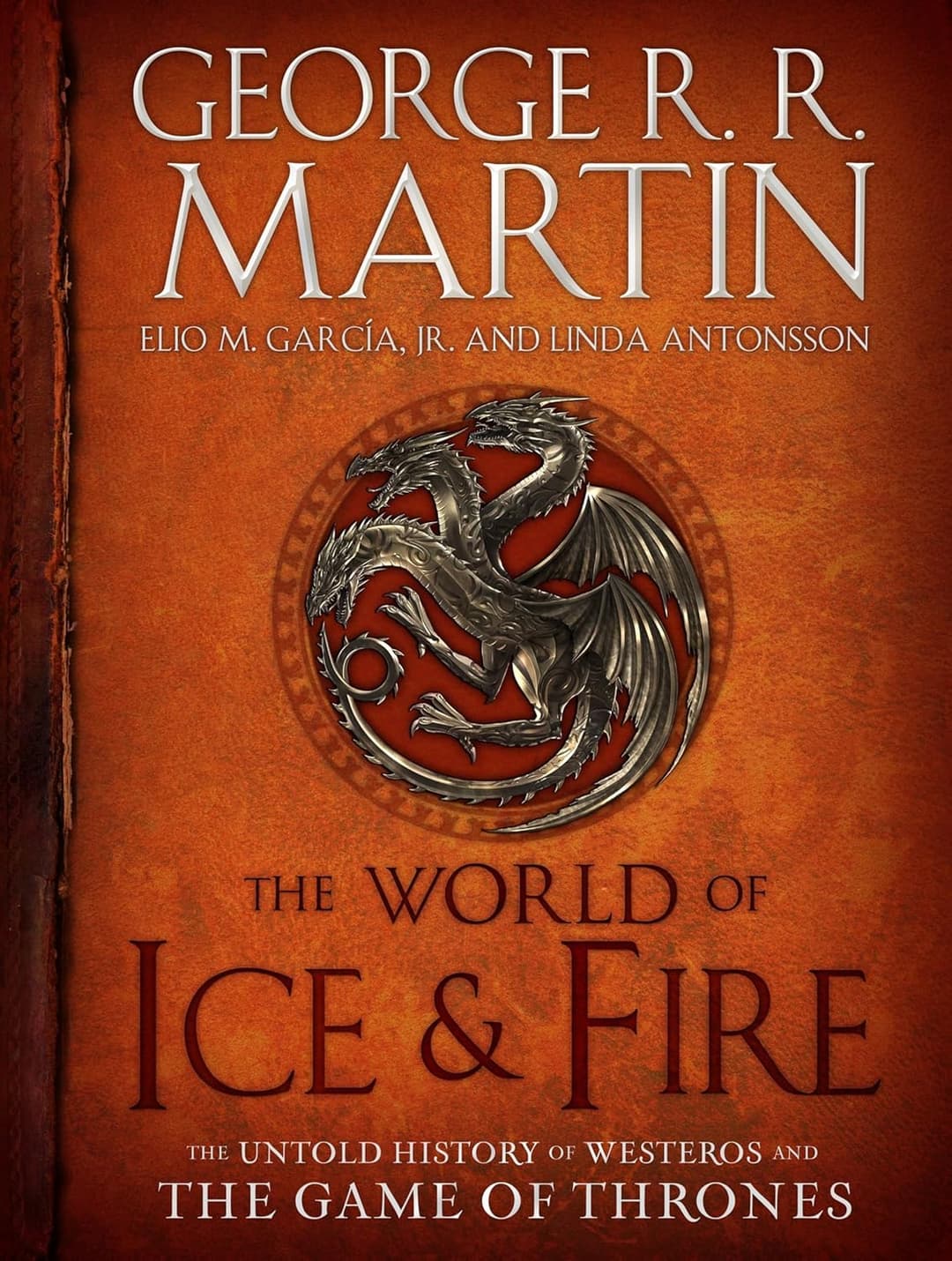
The World of Ice & Fire is an illustrated history of Westeros written in the voice of a maester. It moves from origin myths and vanished peoples through dynasties, wars, and regional customs. It is a companion to A Song of Ice and Fire, not the next volume of the story.
The maester's confidence is part of the fiction. He marks some stories as rumor, repeats stereotypes about distant cultures, and becomes careful when writing about rulers. The gaps and polite evasions often say more than another family tree does.
The artwork, maps, and regional chapters make this easy to browse and difficult to read straight through. Reign after reign can blur without a character to hold the history together. Fire & Blood is narrower and more dramatic; this book is better for checking a house, place, or disputed legend.
Start after at least one main-series novel so the names and places have some weight. The A Song of Ice and Fire order guide separates the required novels from companion books.
What the maester leaves uncertain
Rumor, official record, and political caution sit beside one another without a neutral account to settle them.
The illustrations and maps are more useful than many of the long royal summaries, especially when browsing rather than reading in sequence.
Three useful comparisons
Fire and Blood
Fire & Blood narrows to one dynasty and creates a more continuous, dramatic pseudo-history.
Best for: Targaryen enthusiasts and readers who enjoy dynastic pseudo-history, unreliable sources, and political succession more than close viewpoint fiction.
The Silmarillion
The Silmarillion offers deeper mythic unity and less explicit source unreliability.
Best for: Committed Middle-earth readers who enjoy mythology, tragic history, invented languages, and repeated reading more than conventional character access.
The Fall of Númenor
The Fall of Númenor gives its age a clearer chronology and a more tragic central line.
Best for: Readers who know The Silmarillion and want the clearest single-volume route through Númenor and the Second Age.
Make the next decision