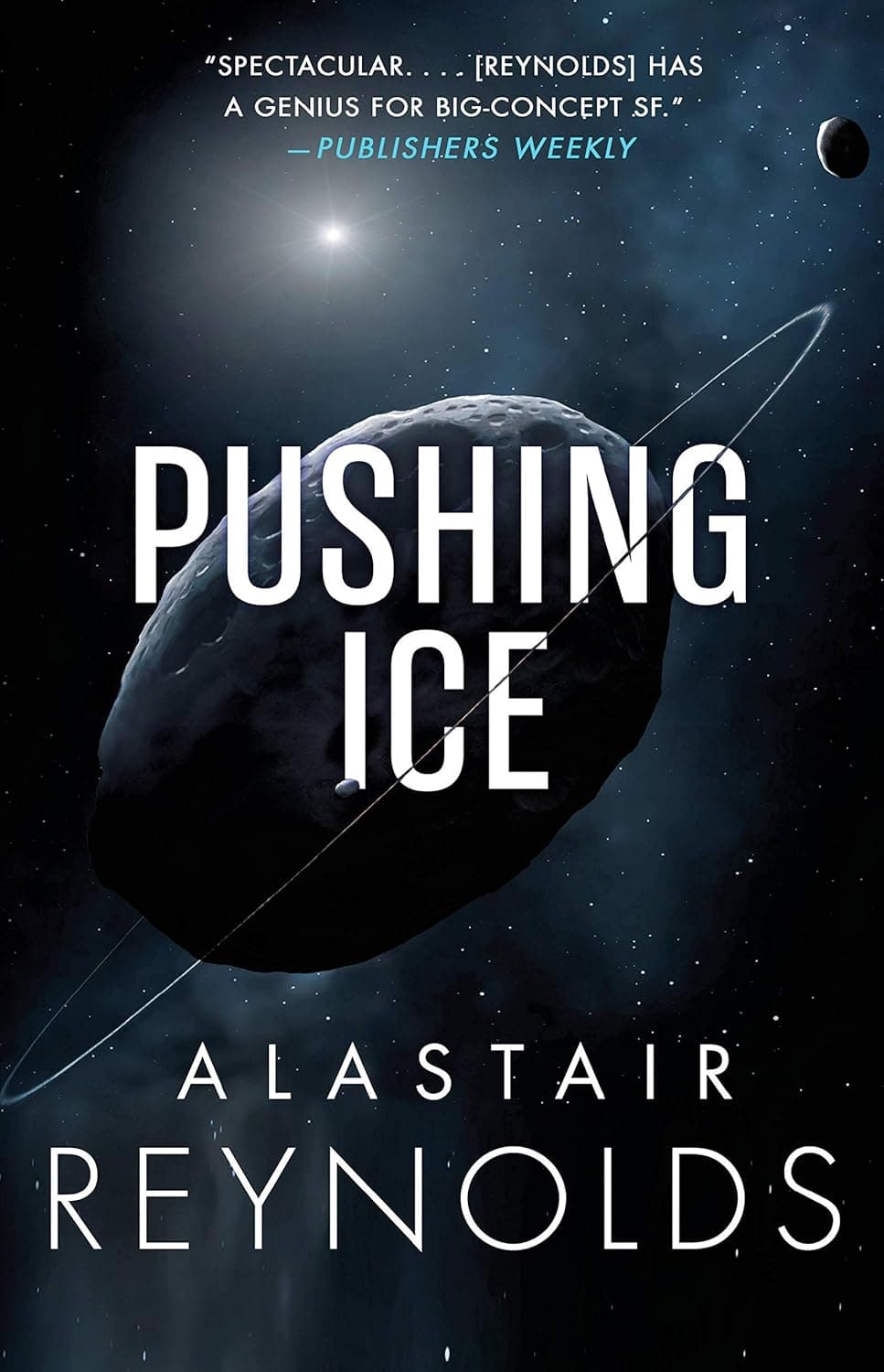
Should you read Pushing Ice?
What works
Fuel, trajectory, employer pressure, and incomplete information make the pursuit of Janus credible before the novel expands into generation-scale survival.
What may not work for you
Bella and Svetlana's conflict hardens repetitively, secondary crew members thin out, and political division sometimes feels prolonged to preserve tension.
What may test your patience
The middle spends years inside inherited resentment and community governance before the alien scale fully reasserts itself.
Does the ending reward the effort?
Yes. The deep-time reveal and final choices enlarge the mission without pretending that personal damage disappears beside cosmic wonder.
Reading Pushing Ice closely
Pushing Ice opens in a near future where the Rockhopper mines cometary ice around Saturn. When Janus leaves its orbit and accelerates toward interstellar space, captain Bella Lind accepts a corporate request to pursue long enough to gather data from what is clearly an artificial object.
The mission's limited fuel and changing information create a bitter conflict between Bella and machinery specialist Svetlana Barseghian. What begins as a calculated detour becomes irreversible, and the crew must turn an industrial ship into the basis of a society while Janus carries them beyond any rescue plan.
Reynolds expands the story from plausible space operations into first contact and deep time without losing the human fracture at its center. The scale is spectacular, but the long hostility between Bella and Svetlana is intentionally uncomfortable. Leadership decisions made under uncertainty continue shaping lives long after their original context disappears.
A near-future decision with deep-time consequences
The first crisis depends on fuel margins, communication delays, employer pressure, and incomplete trajectories. Because the decision feels operationally plausible, the later transformation of Janus and the crew's circumstances carries more weight than a conventional accidental wormhole.
Bella and Svetlana's damaged trust
Their disagreement is technical, political, and personal. Each believes the other has endangered everyone, and the ship's community inherits that conflict. Readers may find the sustained resentment frustrating, but it demonstrates how founding narratives harden into institutions.
First contact, scale, and standalone status
The novel moves through survival, social change, and contact with intelligences operating across immense distances and timescales. It is completely separate from Revelation Space and works best for readers who enjoy Arthur C. Clarke-style wonder with more abrasive human politics.
Three useful comparisons
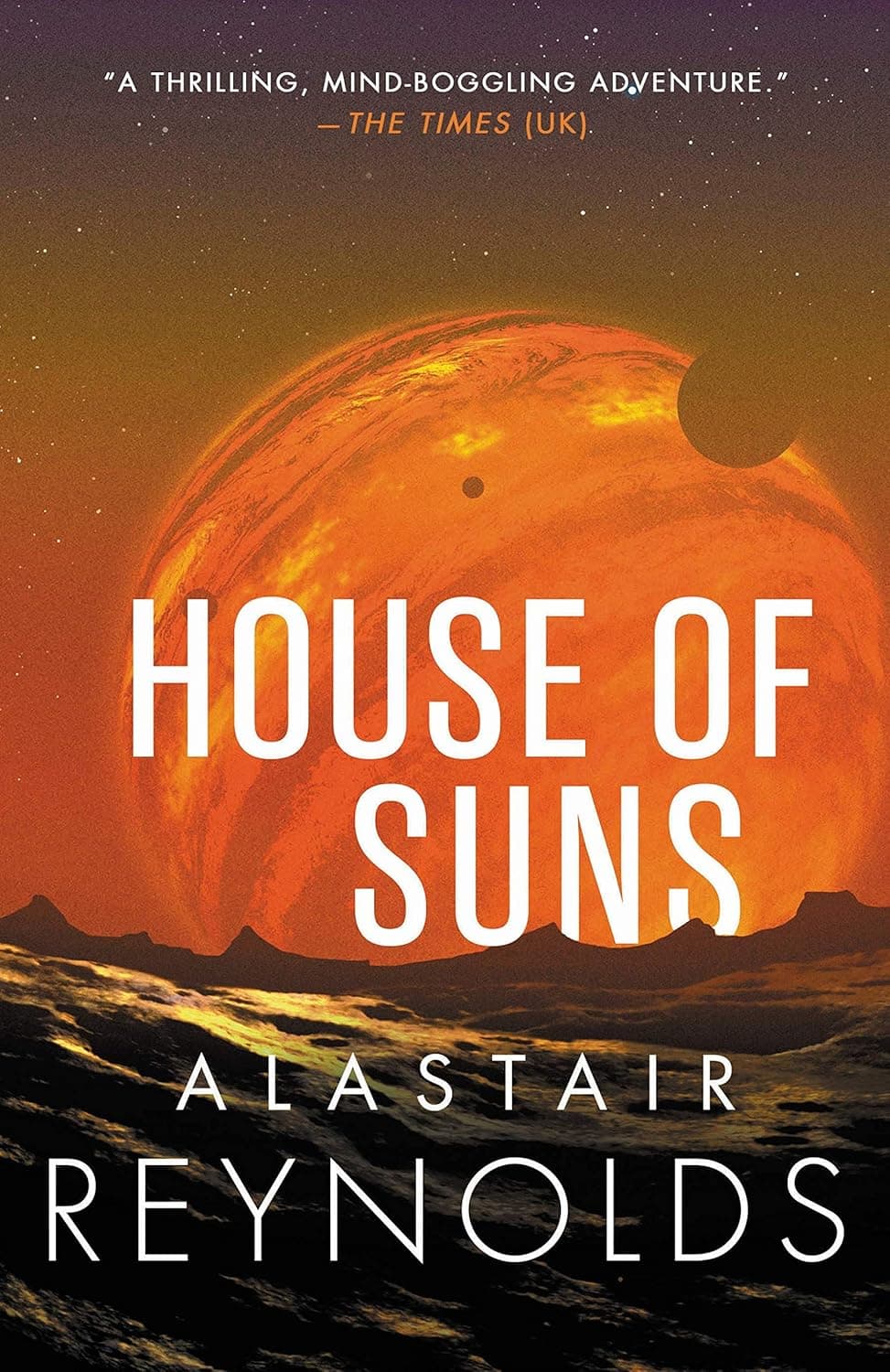
House of Suns
House of Suns offers even greater scale with a warmer central relationship and stronger mystery.
Best for: Choose it for an accessible standalone epic with deep time, clones, machine people, romance, pursuit, and galactic mystery.
As an Amazon Associate, I earn from qualifying purchases.
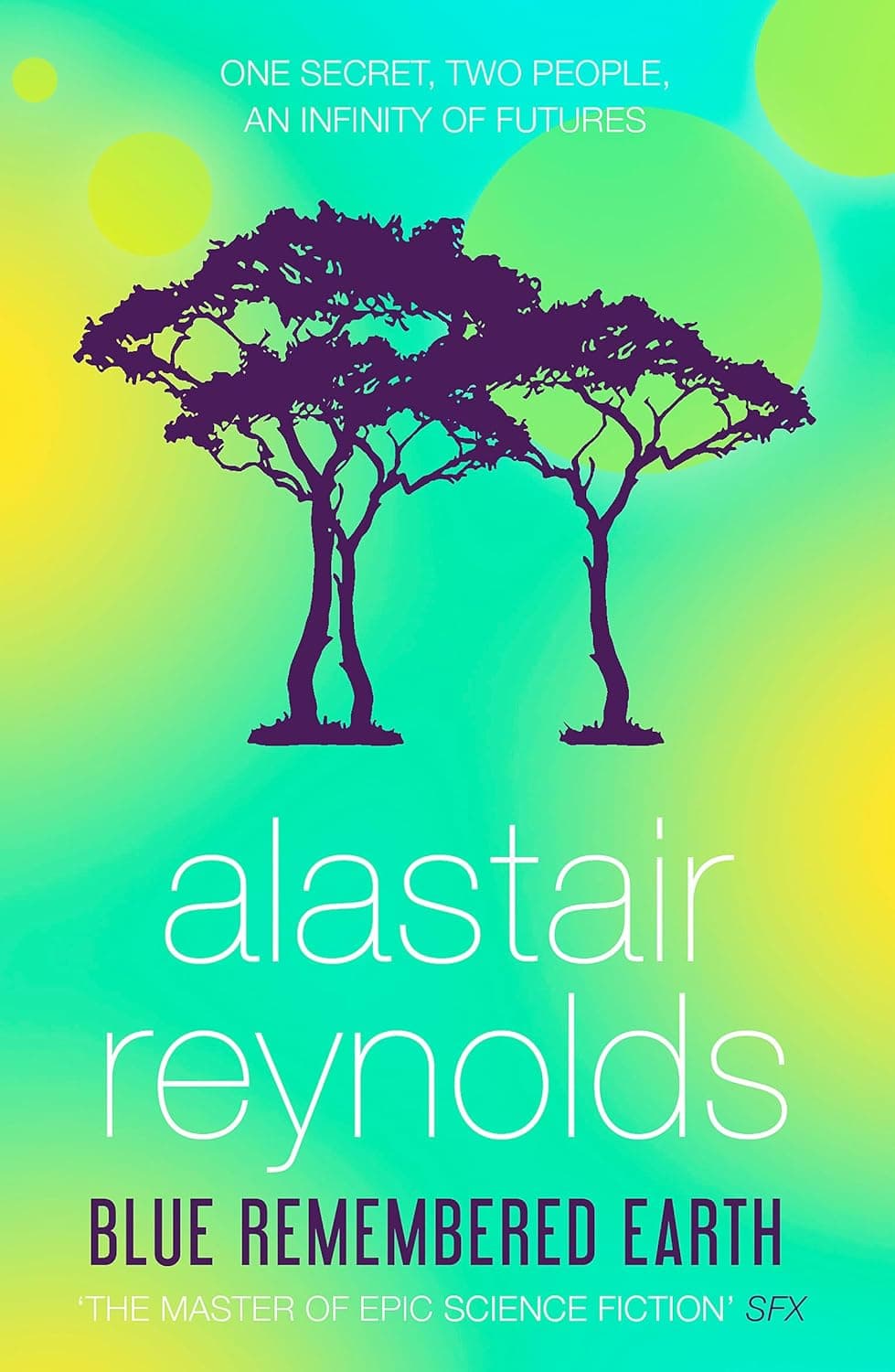
Blue Remembered Earth
Blue Remembered Earth is more optimistic and family-centered, beginning much closer to present-day Earth.
Best for: Best for optimistic future Africa, family mystery, elephants, solar-system infrastructure, and slow generational science fiction.
As an Amazon Associate, I earn from qualifying purchases.
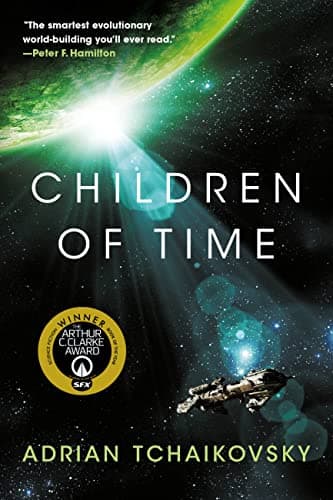
Children of Time
Children of Time handles long social development with richer nonhuman civilization and a more hopeful payoff.
Best for: Readers who like big evolutionary ideas, nonhuman viewpoints, and long time scales more than a conventional hero's journey.
As an Amazon Associate, I earn from qualifying purchases.
Make the next decision