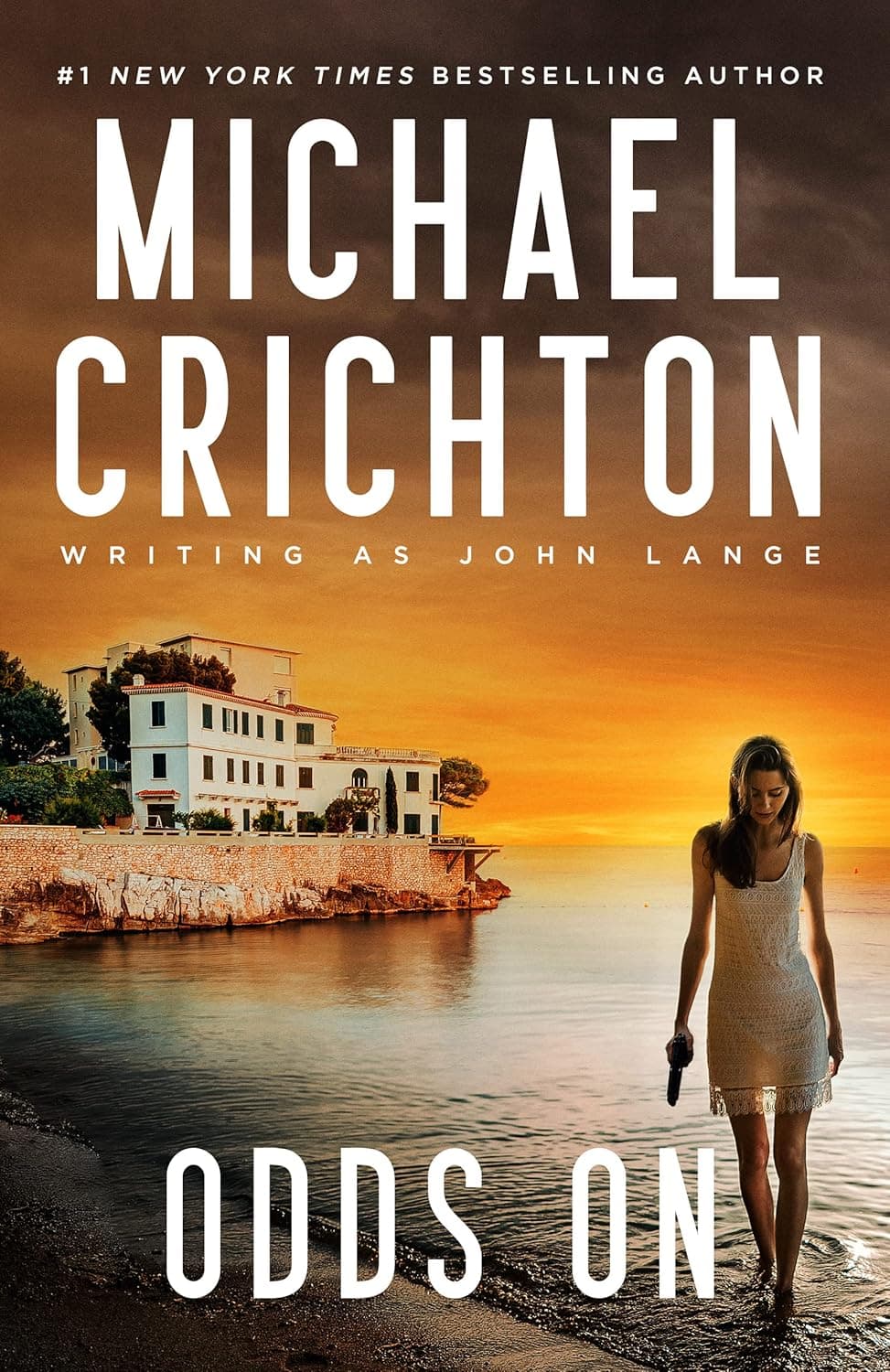
Should you read Odds On?
What works
The hotel layout, routines, and calculated risks give the theft a procedural spine and show Crichton's early interest in systems mistaken for control.
What may not work for you
The conspirators are thin, gender attitudes are dated, and the computer's precision functions more as novelty than persuasive analysis.
What may test your patience
Preparation repeats routes and percentages before the robbery supplies movement; the short length keeps the delay modest.
Does the ending reward the effort?
The final complications expose the limits of prediction effectively, though emotional consequences remain slight.
Reading Odds On closely
Odds On, Michael Crichton's first published novel under the name John Lange, follows three criminals planning to rob a luxury hotel on Spain's Costa Brava. Their scheme relies on computer analysis: feed in schedules, security routines, and human behavior, then choose the plan with the highest probability of success. The machine gives their crime a modern edge, but it cannot make the partners honest with one another.
The novel moves among the conspirators and hotel guests, gradually revealing the personal pressures hidden behind the statistical plan. Its 1960s understanding of computers is now historical rather than futuristic, yet that limitation strengthens the central irony. Data can optimize a route through the building; it cannot reliably predict attraction, jealousy, fear, or betrayal.
This is lean pulp suspense, not the research-heavy technothriller associated with Crichton's later name. Characterization is economical and some attitudes are dated, but the clipped chapters and accumulating complications make it an entertaining early heist. Readers interested in the roots of Crichton's fascination with systems failing under human pressure will find more than a simple curiosity.
A robbery designed by probability
The computer model gives the crew confidence and structure, while every unmeasured relationship creates a fresh source of risk.
Early Crichton in pulp form
The fast plotting and technological hook anticipate later work, although the scale is smaller and the prose more openly indebted to paperback crime fiction.
What has aged
Gender dynamics and the novelty assigned to computing belong to the 1960s, but the conflict between quantitative confidence and human unpredictability remains readable.
Three useful comparisons
The Great Train Robbery
The Great Train Robbery is far richer in period texture, logistics, and narrative control.
Best for: Readers who enjoy procedural heists, Victorian settings, and research woven into the mechanics of a crime.
As an Amazon Associate, I earn from qualifying purchases.

Easy Go
Easy Go offers a more colorful archaeological theft and a stronger sense of place.
Best for: A short archaeological heist that shows Crichton's procedural instincts early in his career.
As an Amazon Associate, I earn from qualifying purchases.
Binary
Binary turns technical planning into a tighter modern threat with greater suspense.
Best for: A brief, plausible-seeming technothriller with chemical danger and minimal character detour.
As an Amazon Associate, I earn from qualifying purchases.