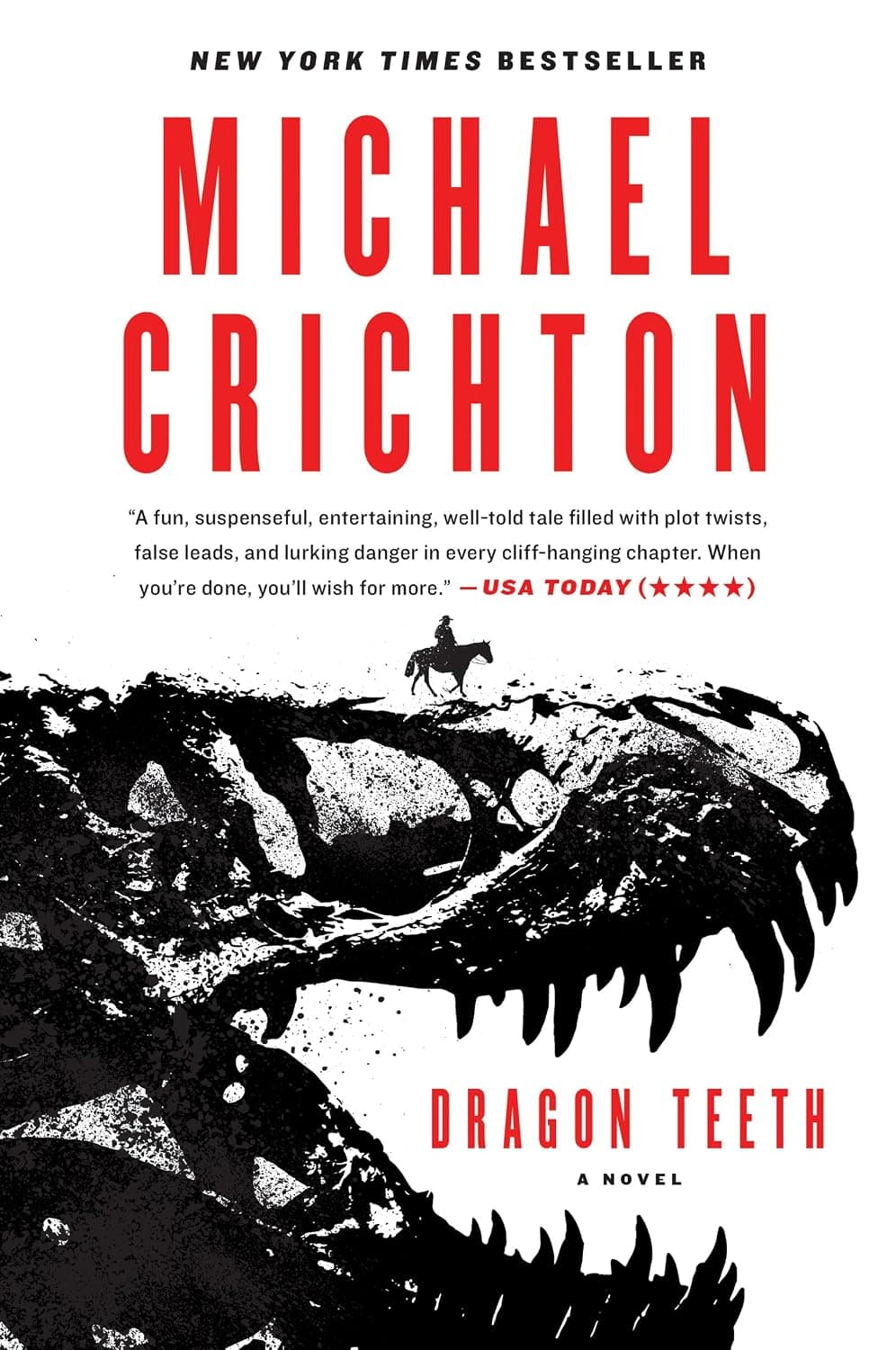
Should you read Dragon Teeth?
What works
Cope, Marsh, fossil sites, transport, theft, and frontier violence make scientific prestige inseparable from logistics and personality.
What may not work for you
The protagonist's growth is conventional, Indigenous people and western violence receive limited depth, and the posthumous text feels episodic.
What may test your patience
The shift between rival expeditions and later survival changes the novel's center, leaving the scientific plot temporarily behind.
Does the ending reward the effort?
The final return completes Johnson's maturation and the fossil journey, though history remains more interesting than his invented arc.
Reading Dragon Teeth closely
Dragon Teeth follows privileged Yale student William Johnson into the 1876 rivalry between real paleontologists Othniel Charles Marsh and Edward Drinker Cope. A wager leads him west with Marsh, suspicion drives him toward Cope, and a significant fossil discovery leaves him responsible for bones valuable enough to attract thieves and killers.
The Bone Wars supply historical absurdity and genuine scientific importance. Marsh and Cope sabotage, spy on, and discredit one another while crews work in dangerous territory. Crichton uses the fictional Johnson to travel between documented figures and frontier mythology, eventually moving from fossil camps toward Deadwood.
Published posthumously, the book is lighter and more episodic than Crichton's major thrillers. Its treatment of Indigenous people and the West should be read critically, and the adventure sometimes embraces familiar genre shorthand. Still, the combination of paleontology, rivalry, and personal maturation makes it accessible historical fiction for readers curious about the race that transformed dinosaur science.
Johnson between Marsh and Cope
His shifting employment reveals how personal rivalry shapes scientific collection and credit.
Bones as knowledge and property
A fossil can be evidence, prestige, money, and dangerous cargo depending on who claims it.
History mixed with invention
The paleontologists and Bone Wars are real; Johnson's central adventure is fictional.
Three useful comparisons
The Great Train Robbery
Great Train Robbery is more tightly engineered and socially analytical.
Best for: Readers who enjoy procedural heists, Victorian settings, and research woven into the mechanics of a crime.
As an Amazon Associate, I earn from qualifying purchases.
Pirate Latitudes
Pirate Latitudes is more violent and caper-driven, with similar posthumous roughness.
Best for: Best treated as brisk adult pirate adventure with violence and a fortified-island heist.
As an Amazon Associate, I earn from qualifying purchases.

Timeline
Timeline gives historical detail much faster action through a speculative rescue framework.
Best for: A good fit for researched medieval action, archaeology, speculative time travel, and a long setup followed by rapid adventure.
As an Amazon Associate, I earn from qualifying purchases.