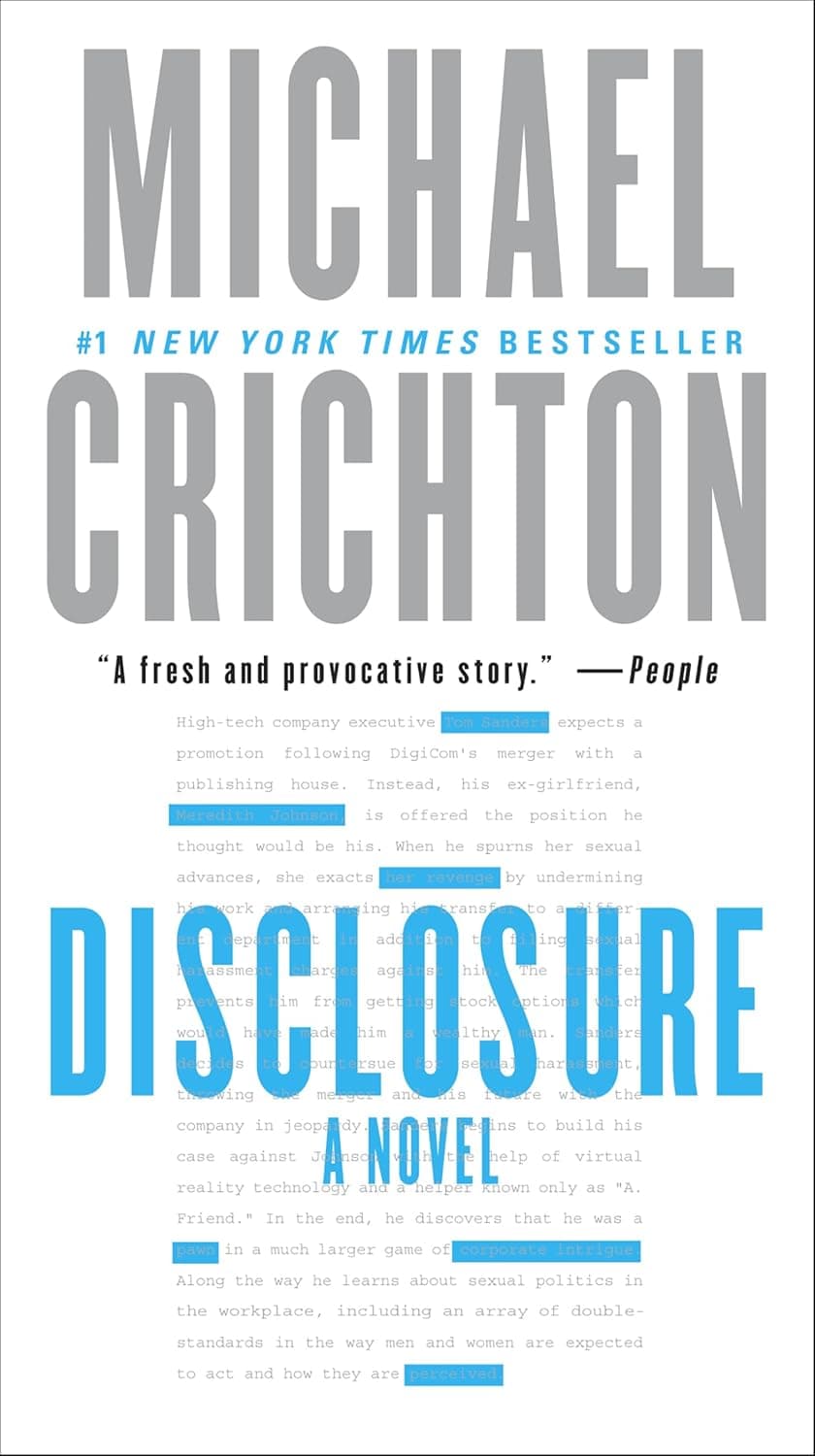
Should you read Disclosure?
What works
Promotion, documentation, legal strategy, product failure, and office alliances show how an allegation becomes inseparable from control of a company narrative.
What may not work for you
Meredith is shaped as a threatening archetype, broader harassment realities are sidelined, and Tom's self-understanding receives too little scrutiny.
What may test your patience
Legal and corporate briefings repeat strategic positions before the technical defect gives the conflict a more concrete center.
Does the ending reward the effort?
The conspiracy resolves efficiently, though the final restoration is cleaner than the book's claims about reputational harm and power.
Reading Disclosure closely
Disclosure follows DigiCom executive Tom Sanders after Meredith Johnson, his new boss and former lover, calls him into a private meeting. When Sanders rejects her advance, she accuses him of harassment and the company moves quickly to protect its merger. His attempt to establish what happened exposes a second struggle over a troubled product line.
Crichton reverses the gender pattern common in workplace-harassment narratives to examine power, credibility, and corporate procedure. The choice produced controversy and can feel constructed to make an argumentative point. The book works better when it shows how institutions use allegations strategically than when it implies one case can represent harassment generally.
Electronic records and an early virtual-reality system turn office politics into a technological investigation. Some digital scenes have aged into period pieces, but the underlying problem of access, audit trails, and information ownership remains legible. Readers should expect a corporate thriller with sexual content, coercion, and dated gender assumptions, not a balanced guide to workplace harassment.
Power behind the allegation
The central issue is who controls careers, internal procedure, and the story the company needs outsiders to believe.
The product problem
Sanders discovers that the personal accusation diverts attention from technical and managerial decisions affecting the merger.
Virtual reality as evidence space
The system visualizes corporate data dramatically, anticipating later concerns about permissions and digital traces.
Three useful comparisons

Rising Sun
Rising Sun combines corporate influence with murder and even more problematic cultural generalization.
Best for: Readers of corporate crime who can approach its cultural politics critically and historically.
As an Amazon Associate, I earn from qualifying purchases.
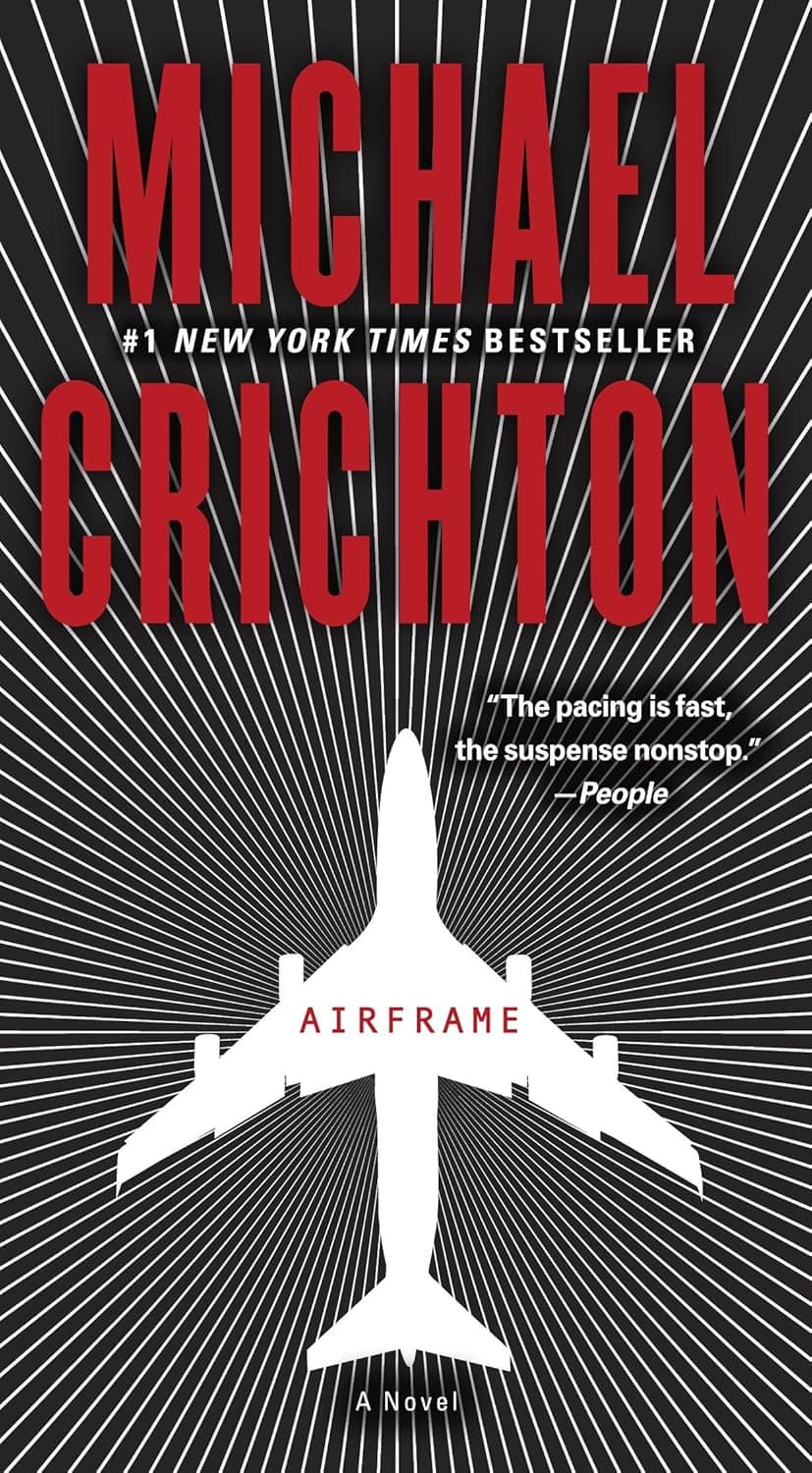
Airframe
Airframe is the stronger professional thriller, centered on engineering evidence and media pressure.
Best for: Come for aviation, accident investigation, corporate pressure, and a competent professional protagonist.
As an Amazon Associate, I earn from qualifying purchases.
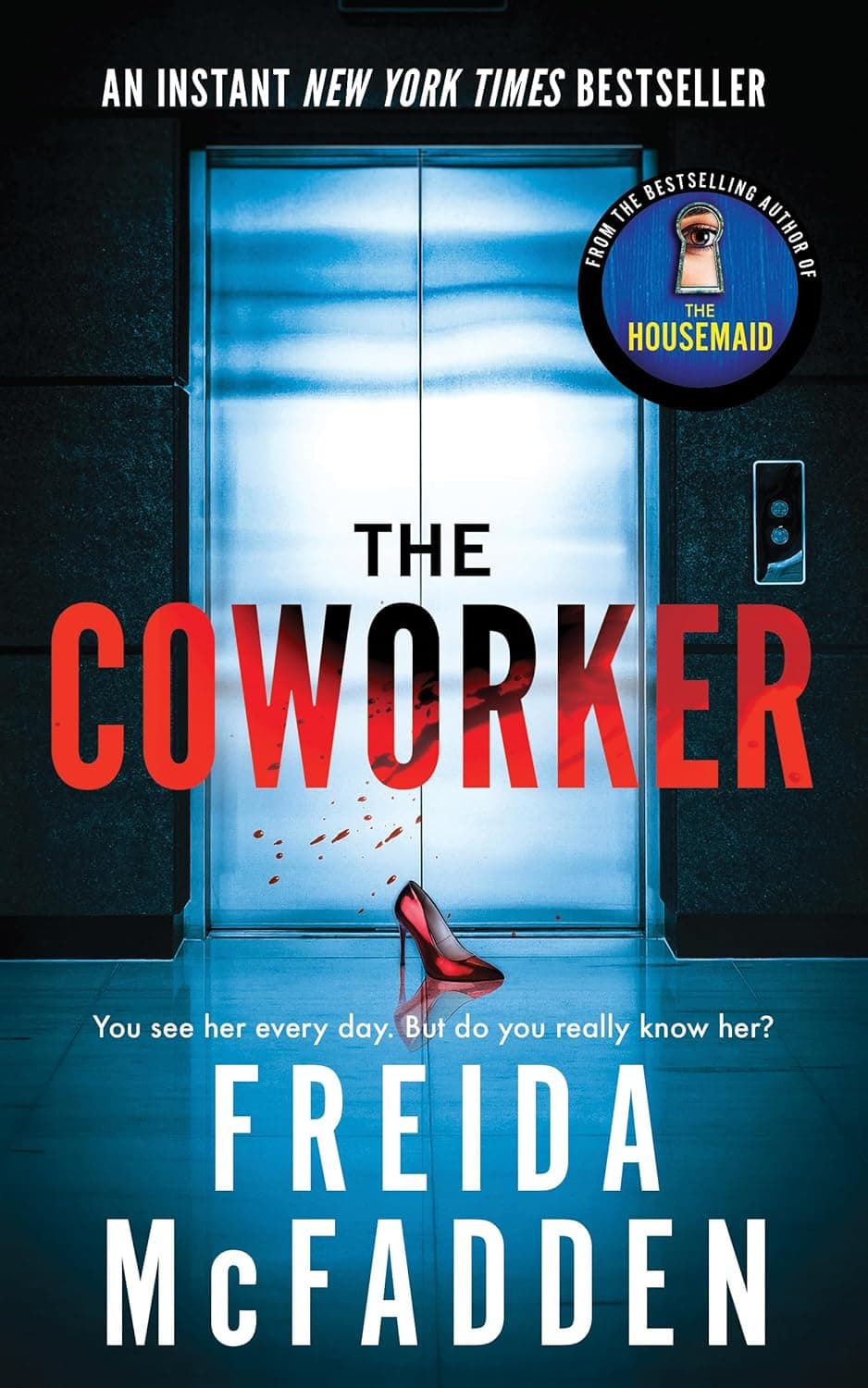
The Coworker
The Coworker offers lighter contemporary office suspense with twist-driven characterization rather than technical systems.
Best for: The appeal is fast office suspense, bullying, a missing-person mystery, competing accounts, and darkly comic detail.
As an Amazon Associate, I earn from qualifying purchases.