
Author profile
John Wiswell: books, review, and bibliography
John Wiswell writes humane speculative fiction from viewpoints a genre often treats as monsters, asking what hospitality, access, consent, and love look like when bodies work differently.
Biography and criticism
The monster as a person with domestic needs
Wiswell's fiction is warm without making prejudice harmless and strange without treating difference as a puzzle that must be cured.
Short fiction and a different center
John Wiswell is an American speculative writer whose short fiction gained recognition through stories that combine fantastical premises with disability, tenderness, and social observation. His work often shifts the center of identification toward a being another narrative would frame as the threat. This is not a twist that reveals the monster was beautiful by ordinary standards. It is a demand that personhood not depend on comfort.
Wiswell's own public discussion of disability informs an attention to access, pain, energy, and the assumptions hidden in supposedly neutral environments. Practical accommodation becomes part of worldbuilding.
A nest, a body, and difficult romance
Someone You Can Build a Nest In follows Shesheshen, a shapeshifting monster whose understanding of bodies and nesting is materially unlike human romance. The novel makes that difference comic, unsettling, and emotionally serious. Consent requires translation because the characters cannot assume the same meaning for intimacy.
Wiswell's prose is conversational and generous, though warmth does not erase predation, abusive family behavior, or the need for boundaries. The novel is the obvious starting point, followed by the short fiction for greater formal range. His work expands cozy and romantic fantasy by refusing the requirement that safety must look anatomically, socially, or narratively normal.
A body that changes the language of romance
Shesheshen's shapeshifting is not a glamorous ability attached to a stable human form. Her body is contingent, hungry, adaptive, and assembled in ways the people hunting her find repulsive. Wiswell lets that physical difference remain real. Romance does not reward Shesheshen by revealing that she was conventionally beautiful underneath. It requires another person to understand that affection cannot be conditioned on anatomical reassurance.
Communication becomes dangerous as well as funny. A phrase such as building a nest carries biological, emotional, and potentially lethal meanings that the partners do not share automatically. The joke is never that one body is absurd. It is that each culture has mistaken its own metaphors for universal experience.
Wiswell also writes disability through energy and access rather than inspirational display. A task may be possible and still carry a cost that another character does not see. Help can preserve agency or become another form of control depending on whether anyone asked what was needed. These practical distinctions give the fantasy an ethical texture stronger than a general message about accepting difference.
The novel's warmth does not remove its horror. Predation, abusive family dynamics, and fear of the monstrous body remain active. That combination is why the cozy label only partly fits. Safety is created locally through belief, consent, food, shelter, and boundaries. The wider world may remain dangerous, but the characters learn that danger does not give anyone ownership of the person being protected.
Comedy that changes who counts as the monster
Wiswell's jokes often begin with a mismatch between a character's ordinary need and the dramatic category imposed on it. A creature wants shelter, food, or a tactful conversation while the surrounding genre expects an attack. The humor lowers the reader's defensive certainty and creates time to see the situation from the body that a conventional story would treat as evidence of evil. This is not a simple reversal in which every monster is kind and every human cruel. Appetite remains real, misunderstanding has consequences, and good intention does not make incompatible needs disappear.
Someone You Can Build a Nest In extends that method into romance. Shesheshen cannot solve intimacy by becoming less physically strange, and Homily cannot offer love without confronting the family story that taught her what deserves to be hunted. Wiswell makes the relationship persuasive through practical negotiation: what touch means, what information has been withheld, which danger can be accepted, and where a boundary must remain. The prose is warm but not evasive. Its distinctive achievement is allowing grotesque imagery, disability, tenderness, and comic timing to occupy the same scene without asking one element to apologize for the others.
His short fiction helps explain the novel's economy. A speculative reversal must establish its rule quickly, but the memorable turn is usually emotional rather than mechanical. Wiswell asks who has been excluded from the conventional solution and then designs the premise around that absence. Expanded to novel length, the approach needs secondary conflict and repetition, yet the short-story discipline remains visible whenever one concrete need reveals an entire social arrangement.
Where to begin
The John Wiswell book reviewed here
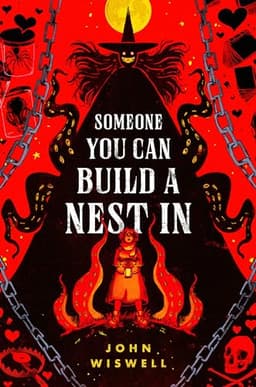
Someone You Can Build a Nest In
4.5 / 5Someone You Can Build a Nest In makes body horror tender without making its monster harmless, and makes romance kind without mistaking abuse for love.
Bibliography
Books by John Wiswell
Reviews and book guides open on Book Review Guide. The full list comes from the linked bibliography source.
Reviewed
Someone You Can Build a Nest In
Not reviewed yet
The Dragon has Some Complaints
Not reviewed yet
Phantom View
Not reviewed yet
We're Here
Not reviewed yet
Nebula Awards Showcase 57
Not reviewed yet
Nebula Awards Showcase 58
Not reviewed yet
Wearing the Lion
Not reviewed yet
Nebula Awards Showcase 56
Not reviewed yet
I'll Miss Myself
Not reviewed yet
The Year’s Best Science Fiction & Fantasy, 2021 Edition
Not reviewed yet
Three o'Clock Dragon
Not reviewed yet
D. I. y
Not reviewed yet
Fireside Quarterly Spring 2020
Bibliographic source: Open Library.
Books on this site
John Wiswell reviews and guides
20254.5 / 5
Someone You Can Build a Nest In
A Novel
As an Amazon Associate, I earn from qualifying purchases.
Keep exploring