Should you read Someone You Can Build a Nest In?
What works
Shesheshen's improvised bodies and reproductive instincts remain genuinely alien, while Homily's family reveals how ordinary cruelty can be harder to identify than monstrosity.
What may not work for you
The abusive relatives sometimes become broad villains, and the late action is less distinctive than the uncomfortable negotiations of care that precede it.
What may test your patience
Shesheshen initially interprets affection through anatomy and appetite, so the relationship requires readers to accept grotesque misunderstandings before trust develops.
Does the ending reward the effort?
Yes. The romance depends on boundaries, disclosure, and chosen form rather than requiring either character to become conventionally normal.
Reading Someone You Can Build a Nest In closely
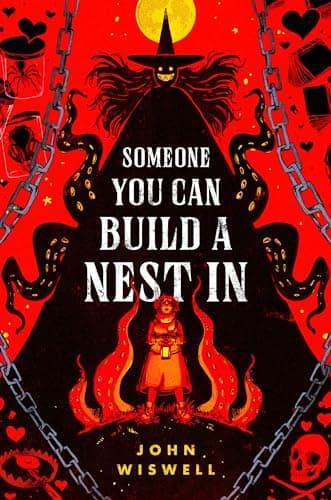
Shesheshen is an amorphous shapeshifter who builds temporary bodies from chains, bones, and whatever else is available. After monster hunters injure her, Homily nurses her back to health, and Shesheshen discovers that affection complicates her species' usual idea of reproduction.
The romance becomes more difficult when Homily reveals that her abusive family is hunting the monster they blame for a curse. John Wiswell balances body horror and gruesome jokes with unusual tenderness, using a monster's perspective to examine disability, boundaries, and learned shame.
A monster learning a different intimacy
Shesheshen initially understands love through appetite and biology. Her effort to build a life with Homily, instead of literally inside her, makes consent and communication the story's real transformation.
Content and tone
Expect gore, abusive family dynamics, body horror, attempted murder, and discussion of disability. The warmth is genuine, but so are the teeth.
Three useful comparisons
Nettle & Bone
Nettle & Bone offers a quest-shaped found family and fairy-tale warmth; Wiswell is stranger, more romantic, and much more invested in bodily monstrosity.
Best for: Readers who want an adult fairy tale about sisters and found family, with gallows humor and only a light romantic element.
Frankenstein
Frankenstein asks whether a rejected created being can enter human community; Shesheshen already has agency and must learn which human relationships deserve entry.
Best for: Readers interested in responsibility, isolation, unreliable self-justification, and Gothic philosophy more than conventional horror.
What Moves the Dead
What Moves the Dead uses body horror for claustrophobic Gothic dread, while Someone You Can Build a Nest In turns an unsettling body into the viewpoint and the love interest.
Best for: Best for anyone who wants a short Gothic retelling, fungal horror, body unease, and a practical narrator with flashes of dry humor.