
Author profile
Emilia Hart: books, review, and bibliography
Emilia Hart writes intergenerational fiction in which women separated by centuries confront forms of control that repeat under new names, with the natural world preserving memory and resistance.
Biography and criticism
Women's histories braided across time
Hart's legal training and transnational life sit behind novels that treat testimony, inherited fear, and the recovery of silenced experience as narrative structure.
From Australia and the law to fiction
Emilia Hart was born in Sydney and later moved to England. She trained and worked as a lawyer before her first novel, Weyward, reached a wide readership. Legal experience does not make the books courtroom dramas, but it sharpens their attention to evidence and authority: who is believed, what survives in a record, and how abuse can appear respectable when institutions accept the abuser's account.
Weyward links women in different periods through family, place, and an affinity with the natural world. Its braided chronology makes recurrence visible. The lives are not identical, yet control adapts to each era, and inheritance includes both damage and the means to resist it.
Water, bodies, and inherited stories
The Sirens shifts that method toward the sea, using family history, female bodies, and folklore to examine fear that passes between generations. Hart writes accessible Gothic atmosphere: houses, water, animals, dreams, and documents carry meaning without turning the plot into an abstract symbol system.
Her multiple timelines can create strong thematic echoes, though the symmetry sometimes makes characters feel arranged to prove continuity. The most effective passages let a material detail cross time and change meaning. Weyward is the better starting point for witchcraft, land, and domestic control. The Sirens suits readers drawn to oceanic unease and family mystery. Hart's developing career is united less by a specific supernatural rule than by the insistence that buried women's stories remain active beneath official history.
The strengths and risks of the braided timeline
Hart links her timelines through repeated fears, places, plants, and household routines. A controlling arrangement in one century can explain why a similar scene feels wrong in another. The connections work best when knowledge survives because somebody repeats an action or recognizes what a plant can do, not because a conveniently complete confession turns up.
The method also carries a risk. Once the reader identifies the pattern, each timeline can begin to feel assigned a thematic duty. One woman represents the origin, another the buried middle, and another the modern recovery. Hart's better scenes resist this neatness by giving a character an immediate desire unrelated to symbolic inheritance. Hunger, attraction, money, professional worry, and simple irritation make the women lives rather than matched evidence.
Nature in Hart's fiction is neither harmless refuge nor automatic proof of female virtue. Plants can heal and poison. Water can hold memory and destroy certainty. Animals notice changes people have been trained to dismiss. This ambiguity distinguishes the books from fantasies in which natural magic simply validates the heroine. The world offers capacity, but a person still decides what to do with it and whom the use may endanger.
Her legal background is most visible in the struggle over credible narrative. Harm rarely arrives without an explanation prepared by the person causing it. A controlling man can call isolation protection; an institution can call removal care; a family can call silence peace. Hart's protagonists gain ground when private recognition becomes shareable evidence. That is the moral action beneath the Gothic atmosphere: not merely discovering what happened, but changing who has the standing to say what happened.
How Hart gives each century a different texture
A braided novel succeeds only if its periods feel like more than changes of costume. Hart distinguishes her timelines through what each woman is permitted to know and say. One character may understand plants through inherited practice, another may possess fragments of family story, and a contemporary woman may have the vocabulary to name coercion while still struggling to leave it. The repetition is therefore never exact. Later knowledge clarifies an older pattern, but modern language does not magically rescue the person who lived before that language was available to her.
Hart also varies the distance of her prose. Immediate danger tends to narrow attention toward touch, breath, weather, and the arrangement of a room. Historical reflection opens the frame, letting land and family memory become visible. This movement is central to Weyward and remains important in The Sirens, where water can connect women while preserving different experiences of danger. Hart's recurring natural imagery is memorable because it changes function. A bird can be omen, witness, or ordinary creature; water can offer escape and remove evidence. The symbol earns its return by refusing to mean only one thing.
The central comparison between her novels is not merely that both connect women across time. Weyward is rooted in land, herbal knowledge, and the domestic uses of accusation; The Sirens turns toward the coast, migration, and bodies altered by stories told about female danger. Hart's development lies in making inheritance less like a secret message passed intact and more like a damaged pattern each generation must interpret. That shift gives the later work greater ambiguity even when the braided form remains recognizable.
Hart's popular appeal comes from making that pattern emotionally legible before every historical connection is explained. Readers can sense that a repeated place or bodily reaction matters and continue for confirmation. The danger is excessive symmetry, because real inheritance rarely provides three perfectly matched arcs. Her strongest departures from symmetry are the practical ones: one woman has money another lacked, one can leave but does not yet believe herself, and one possesses knowledge that remains useless without social power.
Where to begin
The Emilia Hart book reviewed here
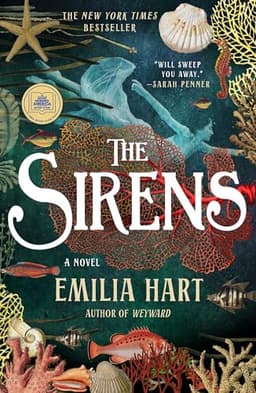
The Sirens
4.1 / 5The Sirens is most persuasive when the sea feels like inherited memory, though its interlocking mysteries sometimes explain what the atmosphere has already made clear.
Bibliography
Books by Emilia Hart
Reviews and book guides open on Book Review Guide. The full list comes from the linked bibliography source.
Reviewed
The Sirens
Not reviewed yet
Of the Flesh
Not reviewed yet
The Sirens: A Novel
Not reviewed yet
Sirens

Not reviewed yet
Les dones Weyward

Not reviewed yet
Weyward
Bibliographic source: Open Library.
Books on this site
Emilia Hart reviews and guides
20254.1 / 5
The Sirens
A Novel
As an Amazon Associate, I earn from qualifying purchases.
Keep exploring