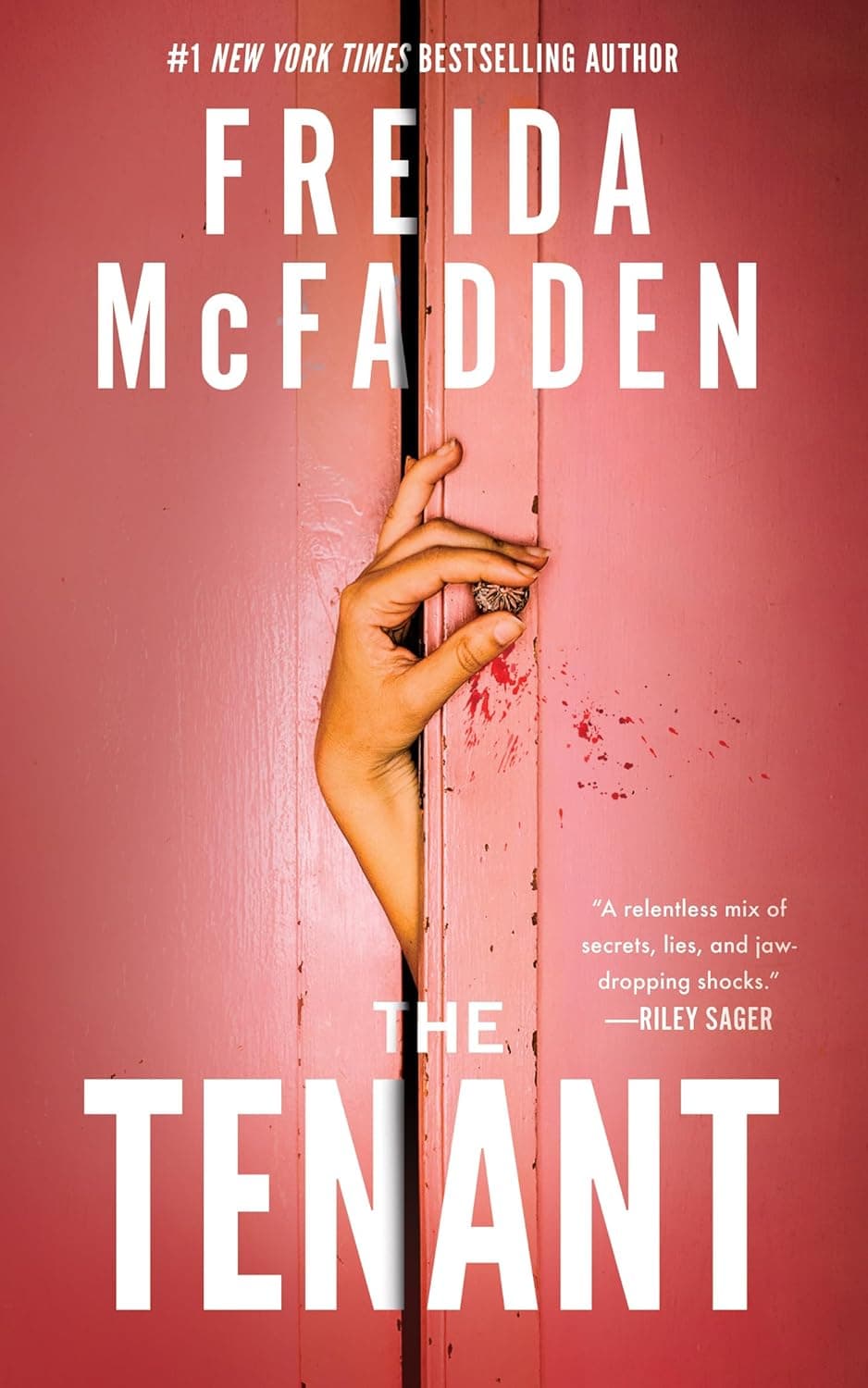
Should you read The Tenant?
What works
A small New York apartment makes sound, routine, money, and personal space usable sources of pressure without requiring an elaborate setting.
What may not work for you
Motives are withheld more than developed, ordinary behavior is made suspicious by narration alone, and the twist machinery outruns emotional credibility.
What may test your patience
The early roommate unease repeats small boundary violations before the danger becomes specific enough to move beyond atmosphere.
Does the ending reward the effort?
The reveals reframe several planted details and deliver the promised shock, but require characters to conceal themselves with improbable consistency.
Reading The Tenant closely
Freida McFadden’s The Tenant follows a cash-strapped couple who think they have found the perfect roommate, only to realize their cramped New York apartment is hiding more than late rent and awkward small talk. What begins as a practical decision slowly turns into a claustrophobic mystery, with every creak in the hallway and offhand comment landing like a warning. It is a compact psychological thriller that lets you sample the tone and tension without spoiling the main reveals.
The real hook is the narration. McFadden leans into a conversational, slightly sly voice that makes you feel like a friend is retelling something wild that happened in their building. Mundane chores and passing observations start to feel suspicious, and the book avoids cheap jump scares in favor of quiet, needling doubts. As the story narrows in on who is telling the truth, careful readers are rewarded for noticing throwaway lines and reading between the cracks in the walls.
New York City’s pace and pressure sit behind everything. The couple’s small apartment, nosy neighbors, and relentless commute explain why people take shortcuts and keep secrets even when they know better. That urban stress gives the plot momentum and makes the final turns feel like the logical endpoint of choices made in tight corners. You do not come to The Tenant for heavy literary symbolism, but for a polished thriller that understands how easily trust can collapse when everyone is sharing a very small space.
Three useful comparisons
Never Lie
Never Lie has a stronger locked-house setting and cassette structure, with a more elaborate central twist.
Best for: Try it for a locked house in a snowstorm, unreliable newlyweds, therapy secrets, and a large final reversal.
The Coworker
The Coworker moves suspicion into an office and uses emails to complicate competing accounts.
Best for: The appeal is fast office suspense, bullying, a missing-person mystery, competing accounts, and darkly comic detail.
The Intruder
The Intruder adds storm isolation and more immediate physical survival pressure.
Best for: This is the rapid remote-cabin thriller, with hurricane danger, trauma, mistrust, and a shifting idea of who the intruder is.