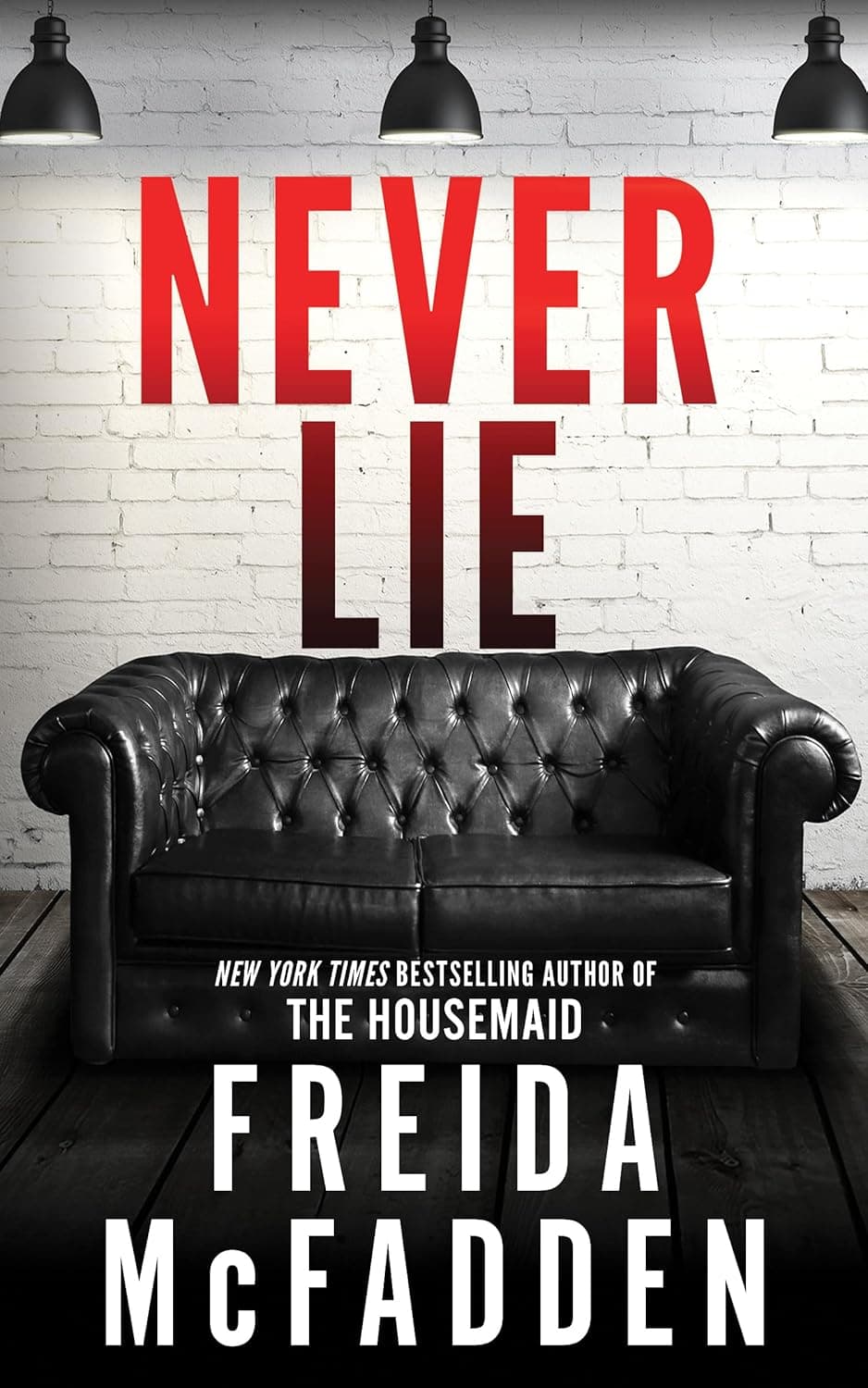
Should you read Never Lie?
What works
The empty manor, blizzard, missing psychiatrist, hidden room, and successive recordings provide a clear reason to reveal history one session at a time.
What may not work for you
Professional ethics are simplified, the narrator withholds unnaturally, and the central twist asks personality to serve surprise.
What may test your patience
Tricia listens to many recordings before the identities and timelines begin to overlap, creating deliberate but repetitive discovery.
Does the ending reward the effort?
The reveal is memorable and well planted for a binge thriller, though emotional plausibility weakens once every concealment is exposed.
Reading Never Lie closely
Newlyweds Tricia and Ethan become stranded in a remote manor during a snowstorm. The house belonged to missing psychiatrist Dr. Adrienne Hale, and a hidden room full of recorded therapy sessions gives Tricia a dangerous way into the disappearance.
Never Lie is a fast, dialogue-heavy thriller with short chapters, an unreliable narrator, and a locked-house setting. The story moves between the present-day blizzard and Adrienne's older sessions. Each cassette changes what Tricia thinks she knows about the patients and about the man trapped in the house with her.
The book sits between psychological thriller and light horror. It contains murder, emotional manipulation, and constant suspicion, but it relies more on claustrophobia and sudden revelations than on graphic gore. Its intensity is close to The Housemaid or The Tenant.
The final act makes a large reversal and invites you to reconsider earlier conversations. The clues are there, but whether the solution feels fair will depend on your tolerance for narrators who conceal crucial information. McFadden keeps the ride tight even when plausibility bends around the reveal.
Never Lie is a strong first McFadden if you want snowbound isolation, therapy secrets, and one complete story. Choose The Housemaid as your first Freida McFadden instead if domestic class tension and a recurring protagonist appeal more.
What Never Lie does well
Snowed in newlyweds, a vanished psychiatrist and a house full of hidden therapy tapes create a classic locked setting with modern pacing.
Alternating perspectives and cassette transcripts keep the story moving, so every chapter either adds a new clue or deepens the sense that someone is lying.
A big final reveal that invites an informal ending explained reread, as earlier scenes suddenly look different once you know who has been hiding what.
What to read next
Use Never Lie alongside The Housemaid and The Tenant to rank Freida McFadden books by twist, atmosphere and how attached you felt to the main character.
If you are searching for books like Never Lie by Freida McFadden, your own thriller shelf already offers natural companions in other snowed in, locked house and therapist focused stories.
For readers who want more after this one, you can build a mini Freida McFadden reading order that moves from Never Lie to The Inmate, The Locked Door and other standalones with similar moral grayness.
Three useful comparisons
The Intruder
The Intruder uses a storm and remote shelter for more immediate physical danger and a bloodied stranger.
Best for: This is the rapid remote-cabin thriller, with hurricane danger, trauma, mistrust, and a shifting idea of who the intruder is.
The Inmate
The Inmate also builds around disputed memory and a dangerous person from the narrator's past.
Best for: Choose it for a quick prison thriller with old-boyfriend danger, disputed testimony, and multiple reversals.
The Tenant
The Tenant transfers claustrophobia to shared urban housing and a smaller domestic mystery.
Best for: A quick, claustrophobic domestic thriller about roommates, money, privacy, and unreliable impressions.
Make the next decision