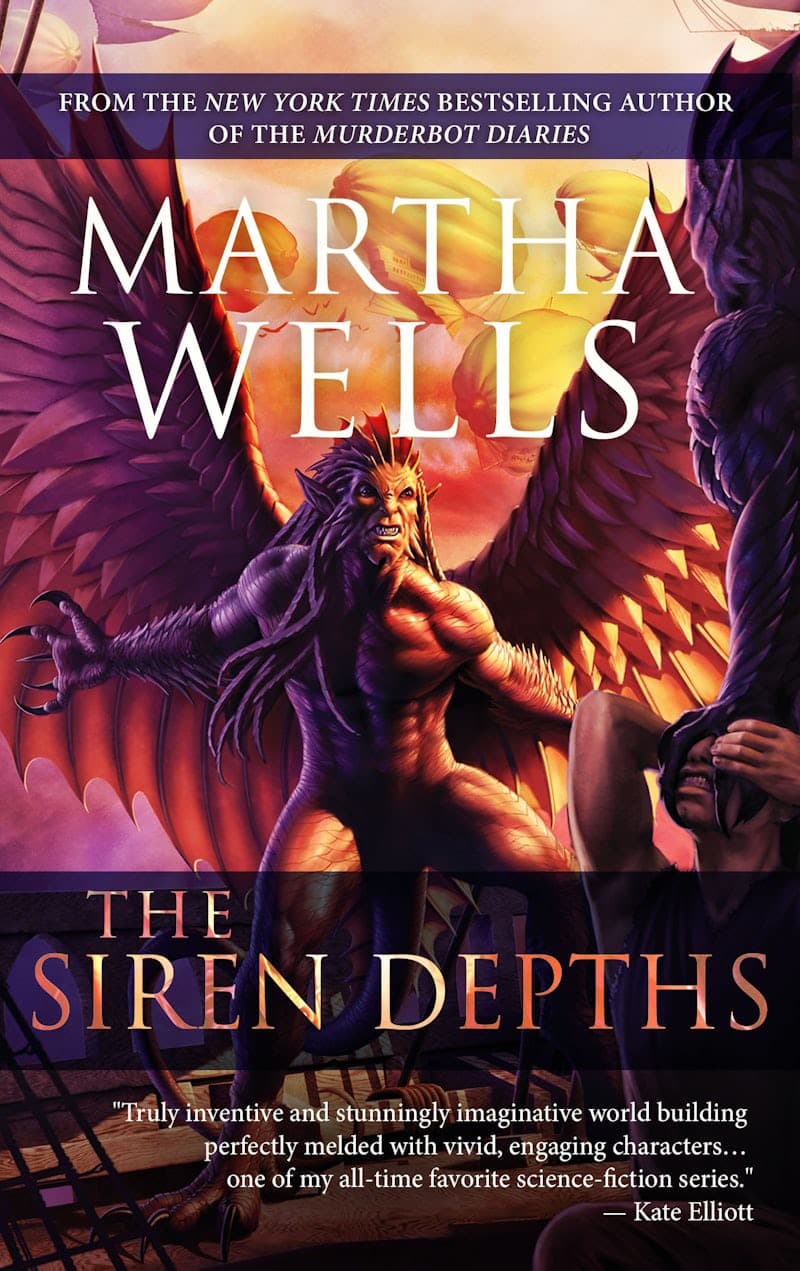
Should you read The Siren Depths?
What works
The rival court does not merely reveal information about Moon. It places him back inside the social logic that once discarded him and shows why origin cannot substitute for care. His relationships with Jade and Stone gain weight through separation, anger, and trust rather than declarations.
What may not work for you
Jade has less room than Moon during the central displacement, and the ancient voice beneath the court competes with the family conflict for attention. The external threat is effective, but it is not as distinctive as the emotional confrontation around Moon's lineage.
What may test your patience
The book deliberately removes Moon from the community readers know and places him among new court members with conflicting claims. The resulting discomfort lasts long enough to feel oppressive before the larger danger accelerates events.
Does the ending reward the effort?
Yes. The climax brings personal history, court politics, and physical danger together, then gives Moon an answer based on chosen responsibility rather than bloodline. It closes the trilogy while leaving the world open.
Reading The Siren Depths closely
The Siren Depths begins after Moon has helped Indigo Cloud establish a home, only for another Raksuran court to claim him through his birth line. The demand is devastating because it uses the same social structures that recently gave him belonging. Origin becomes a legal and emotional threat rather than a comforting answer to his childhood abandonment.
Removed from familiar allies, Moon encounters people who know pieces of his history but not the life he built without them. Wells refuses the easy satisfaction of a hidden noble family arriving to explain everything. The rival court has internal pressures and competing motives, yet knowledge of Moon's ancestry cannot erase the fact that he was left alone.
Jade and Stone remain essential even when absent from many central scenes. Their relationship with Moon has been established through repeated choices, so separation creates pressure without requiring melodramatic misunderstandings. Moon's instinct is still to expect abandonment, but he now has evidence that other people may act on his behalf even when he cannot see them.
The buried voice and renewed Fell danger widen the conflict beyond family. That external plot is effective, particularly as the court's physical environment becomes unsafe, though it sometimes pulls attention from the sharper question of who has the right to define Moon. Jade also deserves more space during a story so deeply concerned with the consequences for their partnership.
The ending makes this the most satisfying book of the opening trilogy. Moon's past is not neatly repaired, but its claims are placed beside the home and obligations he chose. The resolution pays off social details from three novels and closes a major character movement while leaving the Three Worlds available for later expeditions.
Birthright becomes a form of possession
The rival court treats origin as authority over Moon's present role. Wells distinguishes information he deserves to know from obligations others try to derive from that information.
Chosen family works while offstage
Jade and Indigo Cloud do not need to be physically present in every scene for their relationship with Moon to matter. His changing expectations reveal the trust built through earlier books.
Court vocabulary changes under pressure
Familiar roles sound different when used by people who see Moon as a resource. The shift demonstrates how the same social structure can express care in one relationship and control in another.
Three useful comparisons
The Cloud Roads
The Cloud Roads asks whether Moon can risk entering a community. The Siren Depths asks whether the community he chose can survive a claim from the one that abandoned him. Book one is the accessible adventure; book three is the deeper emotional answer and depends on everything built before it.
Best for: Readers who want nonhuman protagonists, found family earned through conflict, inventive ecological fantasy, aerial action, a slow-building romance, and a complete adventure that opens into a longer series.
The Serpent Sea
The Serpent Sea spends more time exploring ports, waterways, and unfamiliar peoples while the heartstone drives the quest. The Siren Depths narrows its pressure around lineage and competing courts. Choose the second for travel and invention, the third for character consequence, but the trilogy is best read in sequence.
Best for: Readers who enjoyed The Cloud Roads and want a wider tour of the Three Worlds, a maritime quest, more Moon and Jade, inventive peoples, and a continuing found-family story.
Someone You Can Build a Nest In
Wiswell also asks whether love can accommodate a body and nature that others call monstrous. Someone You Can Build a Nest In is a stranger, funnier romance with body horror. The Siren Depths embeds the question in family, court roles, and a long history of abandonment rather than a new partnership.
Best for: Come for queer monster romance, body horror, disability themes, abusive-family recovery, dark comedy, and a protagonist whose nonhuman nature remains meaningful.