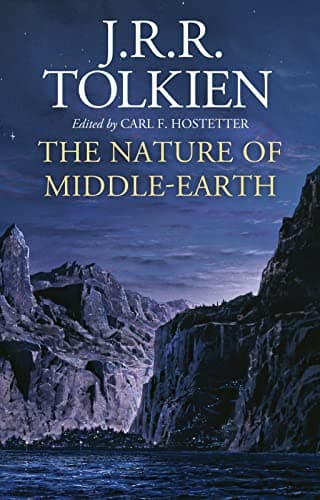
Should you read The Nature of Middle-earth?
What works
Chronology, Elvish growth, embodiment, population, customs, and metaphysics show Tolkien testing how an invented world might remain internally possible.
What may not work for you
Calculations and alternative schemes dominate, repetition is unavoidable, and many notes were never shaped for public reading.
What may test your patience
The aging and time-ratio discussions become extremely granular, requiring interest in the problem-solving process rather than only its results.
Does the ending reward the effort?
There is no narrative payoff; the value lies in seeing unresolved design work and Carl Hostetter's careful editorial organization.
Reading The Nature of Middle-earth closely
The Nature of Middle-earth collects late notes in which Tolkien tested Elvish aging, time, embodiment, geography, population, beauty, metaphysics, and language.
These are exploratory documents rather than polished tales. Their fascination lies in watching imagination meet chronology, arithmetic, philosophy, and repeated revision.
Worldbuilding under examination
Tolkien revises models when they conflict with narrative or metaphysical needs, so contradictions are part of the evidence.
Advanced reading
This is for readers already comfortable with The Silmarillion and posthumous textual collections.
Three useful comparisons
Unfinished Tales of Númenor and Middle-earth
Unfinished Tales contains far more narrative and is the better first posthumous collection.
Best for: Readers already familiar with The Lord of the Rings and The Silmarillion who enjoy textual history alongside lore.
The Letters of J.R.R. Tolkien
The Letters explains creative and personal decisions in a more accessible authorial voice.
Best for: Serious Tolkien readers interested in authorial context, creative process, belief, and the limits of canonical answers.
The Silmarillion
The Silmarillion turns decades of work into a readable mythic sequence and should come much earlier.
Best for: Committed Middle-earth readers who enjoy mythology, tragic history, invented languages, and repeated reading more than conventional character access.