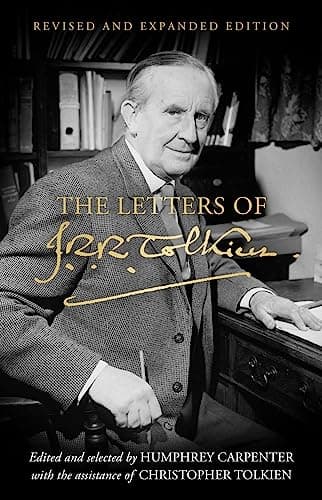
Should you read The Letters of J.R.R. Tolkien?
What works
Letters to family, readers, publishers, and colleagues reveal context and uncertainty that later summaries often turn into fixed doctrine.
What may not work for you
Selection and chronology create gaps, repeated explanations assume different recipients, and the volume is better consulted than rushed straight through.
What may test your patience
Long discussions of publication details, rights, and corrections slow the book if you care only about imaginative or biographical material.
Does the ending reward the effort?
The collection naturally has no designed conclusion; its value accumulates in a voice responding to real occasions across decades.
Reading The Letters of J.R.R. Tolkien closely
These letters to family, readers, publishers, and colleagues discuss invented languages, characters, theology, war, teaching, writing delays, and Middle-earth.
They do not form a continuous autobiography, but repeated concerns reveal Tolkien's creative responsibility, faith, linguistic pleasure, and response to success.
A guide to Tolkien's intentions
His explanations are invaluable evidence but should illuminate rather than close every interpretation.
How to read
Browse by index, recipient, or topic; chronology reveals changing circumstances and ideas.
Three useful comparisons
The Nature of Middle-earth
Nature shows private worldbuilding calculations; the Letters provide broader personal and intellectual context.
Best for: Advanced Tolkien readers interested in chronology, metaphysics, bodily life, and manuscript study.
The Monsters and the Critics, and Other Essays
Monsters and the Critics presents polished public scholarship rather than occasional correspondence.
Best for: Readers of medieval literature, Tolkien scholars, and advanced fans interested in the intellectual foundations of his fiction.
Unfinished Tales of Númenor and Middle-earth
Unfinished Tales preserves narrative drafts with editorial framing, useful beside Tolkien's own explanations.
Best for: Readers already familiar with The Lord of the Rings and The Silmarillion who enjoy textual history alongside lore.