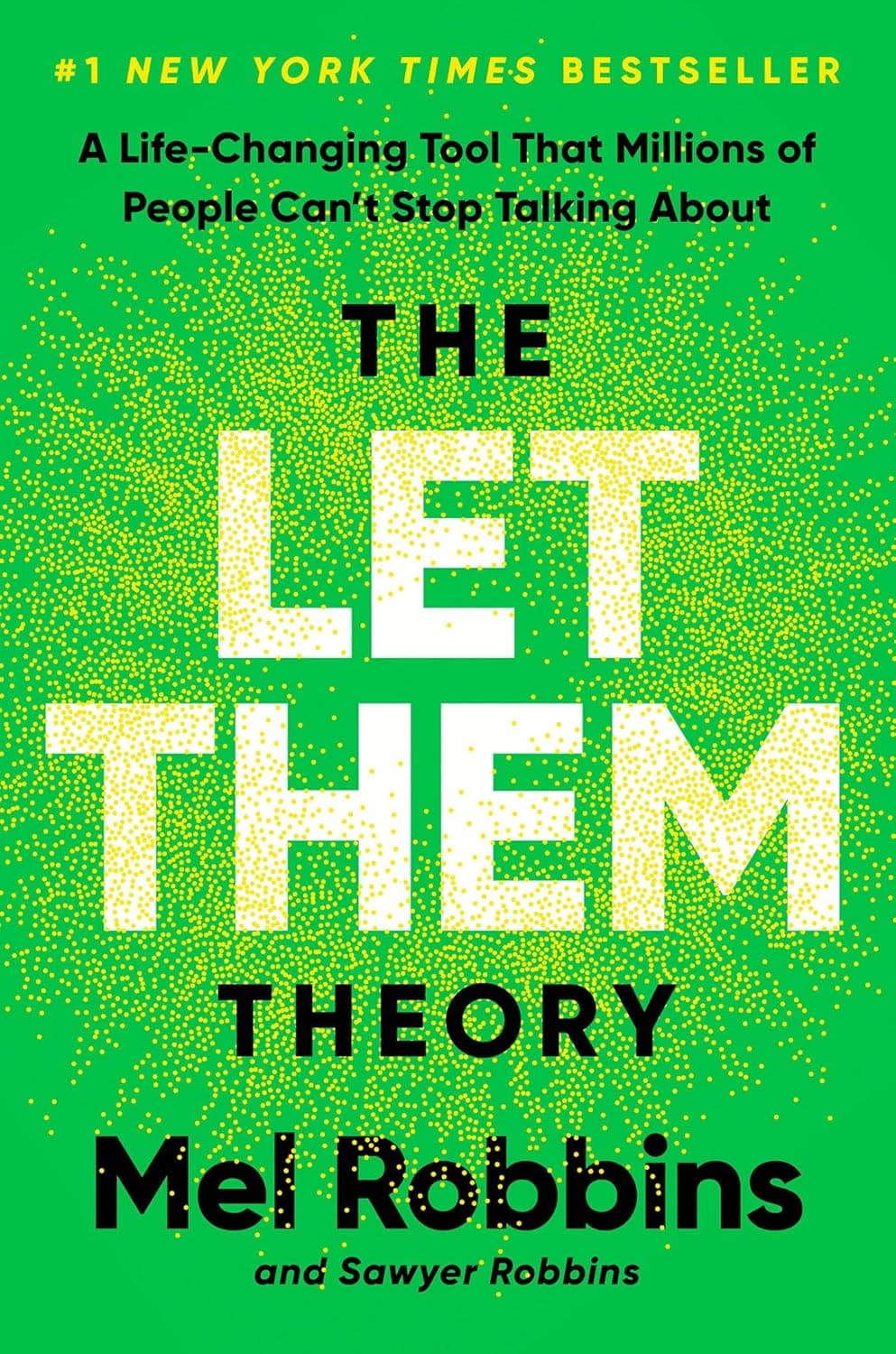
Should you read The Let Them Theory?
What works
Separating other people's choices from one's own response can interrupt control, rumination, and approval-seeking, and the language is easy to recall under stress.
What may not work for you
The advice can flatten relationships involving duty, power, safety, or mutual repair, and the research framing sometimes lends more authority than the concept needs.
What may test your patience
Once the two-part idea is established, later anecdotes repeat application rather than substantially refining limits or exceptions.
Does the ending reward the effort?
The closing action emphasis is motivating, though readers will need judgment beyond the slogan when relationships require conversation rather than release.
Reading The Let Them Theory closely
The Let Them Theory builds on two short phrases: let them and let me. Robbins argues that people should stop trying to control other people's choices and redirect that effort toward their own boundaries, goals, and habits. Personal stories, listener letters, and simple exercises make it feel more like a long podcast episode than a psychology textbook.
The Let Them Theory is most useful when judged by two questions: whether its advice changes everyday conflict and whether its simplicity slips into toxic positivity. The strongest chapters give scripts for family fights, friendship disappointments, and work problems, then pair let them with clear let me actions so the reader is not merely tolerating bad behavior. Robbins also excludes abusive, discriminatory, and unsafe situations from the framework, an important limit on the slogan.
The book lands best for people pleasers, burned out parents, and high achieving readers who have tried to control everything around them. If you liked books such as The Anxious Generation and other titles about anxiety and attention, you may appreciate how The Let Them Theory zooms in on your side of the equation, giving you permission to drop some fights and reclaim time for sleep, hobbies, and real connection. On the other hand, readers who want deep clinical research or who are sensitive to influencer style storytelling may find the repetition, productized language, and lack of citations frustrating.
Robbins describes finding the idea through messy family moments, but 'let them' is not wholly new. It overlaps with radical acceptance, Stoicism, and earlier uses of the same phrase, and critics have questioned how fairly those sources are credited. The method is most useful as a memorable prompt, not as an original theory of human behavior.
In practice, The Let Them Theory works less as a complete philosophy than as a reset button for specific moments: a friend stops replying, a colleague takes credit, or a relative judges your choices. Used that way, it can lower anxiety and prevent pointless arguments. Applied to injustice, safety, or structural problems, it feels much too thin.
Three useful comparisons
The Anxious Generation
Haidt addresses a social problem through research and policy; Robbins stays at the level of individual reframing and daily action.
Best for: Worth reading for parents, teachers, and school leaders who want concrete ideas, provided they also want to hear the researchers who challenge Haidt's causal claims.
21 Lessons for the 21st Century
Harari offers broad intellectual prompts rather than personal guidance; choose Robbins when immediate applicability matters most.
Best for: Use it as an accessible conversation starter about current global anxieties, not a final answer to them.
Replaceable You
Replaceable You uses reported science and humor to examine the body, offering curiosity rather than prescriptive self-help.
Best for: General readers interested in bodies, medical innovation, laboratory culture, and science writing with a comic voice.