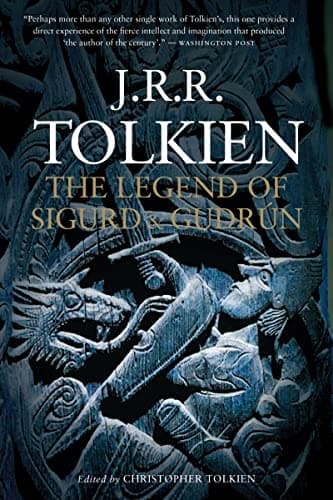
Should you read The Legend of Sigurd and Gudrún?
What works
Tolkien condenses conflicting legendary sources into alliterative narrative with fatal momentum, preserving heroism, betrayal, and curse without modern psychological smoothing.
What may not work for you
The verse is austere, names and kinships are dense, and commentary is necessary for readers without prior knowledge of the Völsung material.
What may test your patience
Alliterative stanzas can feel compressed and repetitive until read aloud or alongside the editorial notes.
Does the ending reward the effort?
The tragedy reaches full mythic closure, though Gudrún's later history feels like a second, colder movement after Sigurd's death.
Reading The Legend of Sigurd and Gudrún closely
Tolkien retells the Völsung and Nibelung legends in two long poems shaped by Old Norse alliterative verse. Sigurd's dragon-slaying, Brynhild, Gudrún, cursed treasure, betrayal, and vengeance drive the cycle.
Christopher Tolkien's introduction and notes explain sources and reconstruction, making the book both poetry and a window into the legends behind his father's imagination.
Old stories in a newly made verse
The compressed alliterative style favors rhythm and heroic image over novelistic explanation.
Three useful comparisons
Beowulf: A Translation and Commentary
Beowulf is a translation with extensive commentary; Sigurd and Gudrún is Tolkien's own poetic synthesis.
Best for: Readers studying Beowulf, Tolkien's scholarship, translation choices, and the medieval roots of his imaginative work.
The Fall of Arthur
The Fall of Arthur uses similar alliterative force for British legend but remains unfinished.
Best for: Tolkien scholars, Arthurian readers, and poetry enthusiasts comfortable with fragments and editorial apparatus.
The Story of Kullervo
Kullervo is rougher, earlier, and more transparently developmental, with prose and source discussion.
Best for: Specialists interested in Tolkien's development, the Kalevala, and the origins of the Túrin story.