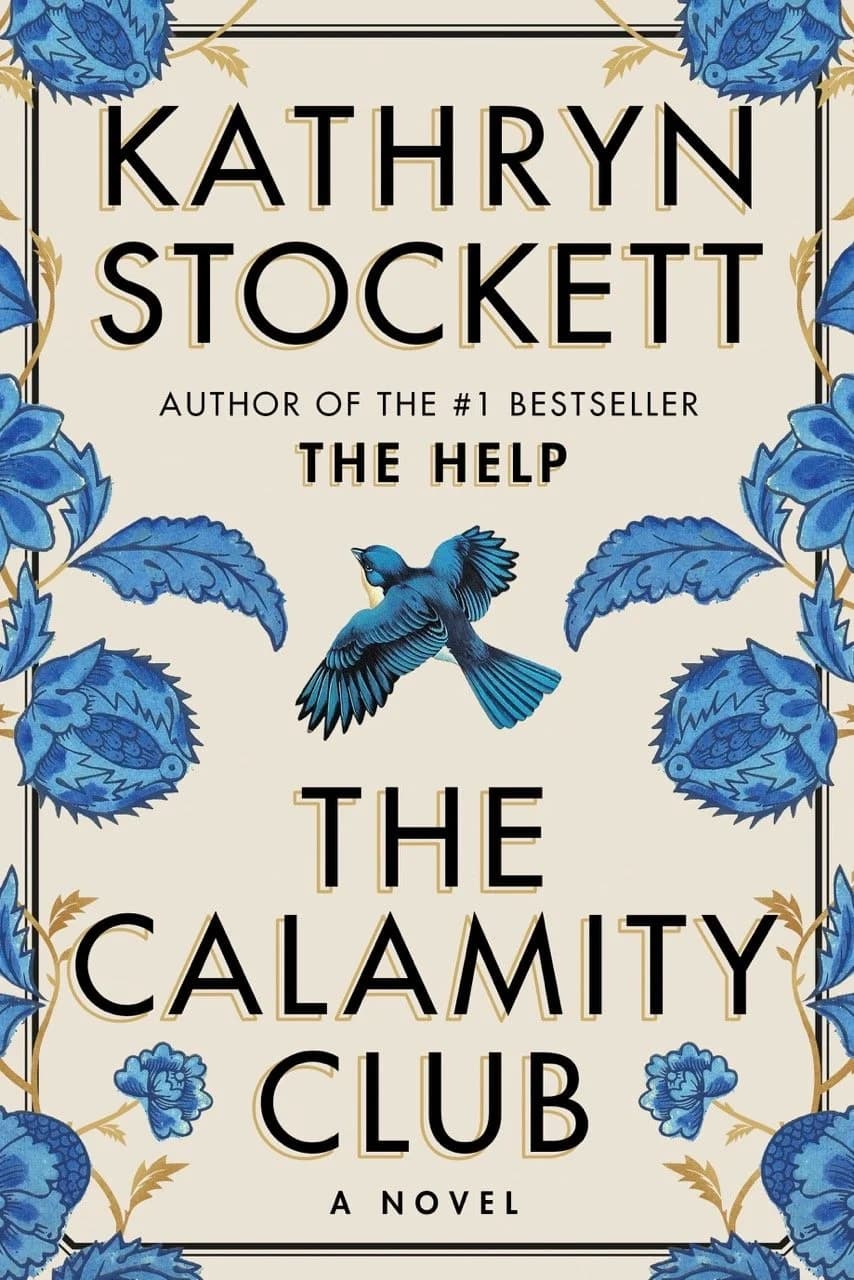
Should you read The Calamity Club?
What works
Stockett gives Meg and Birdie distinct practical intelligences. Meg studies adults because survival at the orphanage depends on it; Birdie reads ledgers, household performances, and family evasions. Their alternating voices keep a 656-page novel moving and make economic pressure visible in meals, taxes, work, clothing, and who is permitted to be believed.
What may not work for you
Several antagonists are drawn with so little ambiguity that the reader can predict not only whom to hate but the form of satisfaction their defeat will provide. The crowded plot also adds crises faster than it can deepen all of them, leaving some social history and supporting characters to function mainly as fuel for the next reversal.
What may test your patience
The middle is the clear test. Once the main women have converged, the novel spends roughly a hundred pages repeating threats, secrets, and preparations while opening still more plot lines. The voices remain lively, but the accumulating complications briefly feel like delay rather than escalation.
Does the ending reward the effort?
Mostly. The closing movement delivers the reckoning and solidarity the novel has promised, and it does so with real momentum. A few loose ends are tied too neatly or too quickly, but the emotional outcomes arise from skills and alliances established earlier rather than from a last-minute rescue.
Reading The Calamity Club closely
The Calamity Club opens in Oxford, Mississippi, in 1933 with two lives that seem unlikely to meet. Eleven-year-old Meg Lefleur is trapped at the Lafayette County Orphan Asylum for Girls, where age has moved her into the category of children the institution regards as unadoptable. Birdie Calhoun travels to Oxford hoping her socially ambitious sister Frances can help save the family home from back taxes. Instead, Birdie discovers that respectability has concealed another financial disaster.
Meg and Birdie narrate from different positions but share an instinct for useful information. Meg watches adults for changes in threat, learns office routines, and turns humor into a shield against humiliation. Birdie understands accounts and work. She can read a household through unpaid bills, strained manners, and the labor required to preserve appearances. Stockett's conversational prose lets exposition arrive through what each woman needs to know, so a large cast and an increasingly elaborate plot remain surprisingly easy to follow.
The novel's warmth should not be confused with harmless subject matter. The orphanage's treatment of older girls, poverty, sexual exploitation, misogyny, racism, alcoholism, and the history of eugenic sterilization in Mississippi all shape the available choices. Stockett is strongest when an institution's cruelty appears in a procedure, a ledger, a diagnosis, or a respectable committee rather than in a speech about injustice. Female solidarity becomes practical because it involves shelter, money, work, testimony, and risk.
At 656 publisher-listed pages, the book has room for memorable secondary figures, but it also has enough plot for several shorter novels. Around the midpoint, new complications continue arriving after the central alliance has already supplied a strong engine. Some antagonists are built for unmistakable condemnation, and a few reversals feel positioned to guarantee eventual applause. The result is less morally ambiguous than the historical material might support, especially when an abusive authority becomes almost theatrical in her villainy.
The final stretch regains speed as separate acts of competence begin to connect. Stockett understands the pleasure of watching underestimated people use the skills that powerful characters dismissed, and she delivers that pleasure without withholding it for a bleakly fashionable ending. A handful of resolutions come too fast after such a long road, but the larger payoff is earned. Readers who want austere historical fiction may resist its humor and melodrama. Readers who want an immersive, angry, generous story of women making survival collective will find the length much easier to forgive.
Two narrators, two kinds of arithmetic
Meg calculates immediate danger: who is watching, which rule will be enforced, and where a small advantage might be hidden. Birdie calculates material survival through taxes, wages, stock, and household debt. Their forms of attention give the plot urgency without making either voice interchangeable.
Respectability is an economic weapon
The novel repeatedly shows that respectable status depends on other people's labor and on the power to label inconvenient women immoral, incapable, or unfit. A polished room, a committee title, or a charitable institution can hide extraction more effectively than open cruelty.
Why the length both helps and hurts
The page count allows alliances to become lived relationships and gives a broad community room to matter. It also encourages one more secret, threat, and reversal after the central conflict is already clear. The middle would benefit from compression even though the cast benefits from time.
Three useful comparisons
The Women
The Women also follows women building practical solidarity inside institutions that undervalue them. Hannah offers a more linear life story shaped by Vietnam and its aftermath, with trauma remaining unresolved for longer. Stockett uses a larger comic ensemble, a child narrator, and a twistier plot compressed into 1933 Mississippi.
Best for: Adult historical-fiction readers prepared for graphic injury, death, addiction, PTSD, sexism, and a deliberately intense account of Vietnam-era nurses.
To Kill a Mockingbird
To Kill a Mockingbird uses a child's partial understanding to expose Southern injustice and asks the reader to notice what Scout cannot yet name. Meg is more deliberately strategic, and The Calamity Club gives its adult women equal narrative weight. Choose Lee for a tighter moral and legal drama; Stockett for female alliance, economic survival, and a more openly crowd-pleasing plot.
Best for: Readers and classrooms prepared to value Scout's moral growth while also discussing the novel's limited perspective on Black experience.
A Tale of Two Cities
A Tale of Two Cities also turns historical crisis into a populous melodrama of secrecy, sacrifice, imprisonment, and sudden reversals. Dickens is denser, more formally patterned, and tied to revolution on a national scale. The Calamity Club is easier to enter and concentrates on local institutions, women's work, and survival during the Depression.
Best for: Choose it for revolution, sacrifice, courtroom suspense, family devotion, and a shorter but denser Dickens novel.