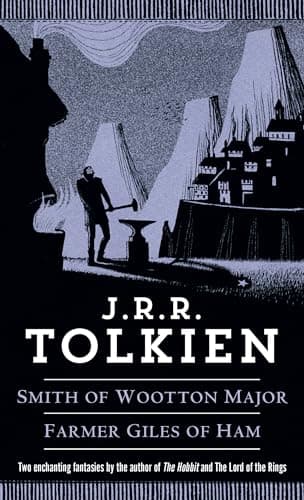
Should you read Smith of Wootton Major?
What works
Smith's journeys remain largely unexplained, preserving Faery as encounter rather than mapped world, while village custom gives the gift a human cycle.
What may not work for you
The symbolic figures and compressed life story create emotional distance, and readers expecting plot may find the tale elusive.
What may test your patience
The village feast and office of Master Cook require attention before the star's meaning and Smith's travels become clear.
Does the ending reward the effort?
Yes. The relinquishment is sad, dignified, and necessary, giving aging and artistic succession unusual weight for such a short tale.
Reading Smith of Wootton Major closely
A fay-star swallowed at a village feast grants Smith passage into Faery, where wonder, beauty, and danger reshape his ordinary life.
The gift has a season and must pass onward, making this quiet late tale as much about aging and relinquishment as enchantment.
Faery without a fixed system
The other world remains partly unknowable and resists being reduced to allegory.
The gift must pass
Smith's maturity appears in accepting that his privilege belongs to no traveler forever.
Three useful comparisons
Leaf by Niggle
Leaf by Niggle is more openly allegorical and focused on artistic work; Smith emphasizes gift and relinquishment.
Best for: Artists, Tolkien readers, and anyone drawn to brief philosophical fantasy about incompletion and grace.
Farmer Giles of Ham
Farmer Giles is funnier, more eventful, and more satirical.
Best for: Families, Tolkien readers, and lovers of comic medieval fantasy who want a short standalone tale.
Tales from the Perilous Realm
Perilous Realm gathers Smith with other shorter works and shows Tolkien's wider tonal range.
Best for: A substantial collection of Tolkien's shorter, stranger, and often funnier work.