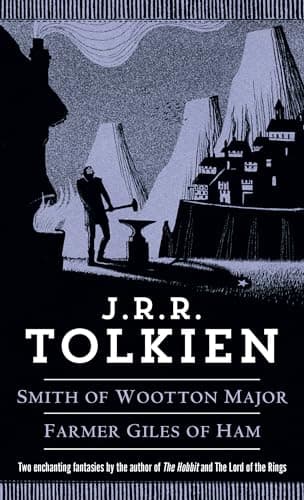
Should you read Farmer Giles of Ham?
What works
Giles succeeds through luck, reputation, local knowledge, and growing nerve, while Chrysophylax gives the dragon enough intelligence to complicate heroic convention.
What may not work for you
The mock-scholarly frame and medieval wordplay will pass over younger readers, while the characterization remains intentionally fable-thin.
What may test your patience
There is little drag, though the opening philological jokes delay the dragon adventure for readers unfamiliar with the parody.
Does the ending reward the effort?
Yes. Giles converts accidental status into local independence, completing the satire without becoming the conventional hero the court expected.
Reading Farmer Giles of Ham closely
Farmer Giles becomes a hero by accident and receives an ancient sword just before the dragon Chrysophylax threatens his countryside.
Tolkien uses a practical farmer, a negotiable dragon, philological jokes, and mock-medieval language to parody heroic legend while delivering a satisfying fairy tale.
Heroism without noble polish
Giles succeeds through stubbornness, adaptation, and bargaining rather than ceremonial authority.
Middle-earth connection
This is an independent comic tale, not part of Middle-earth.
Three useful comparisons
The Hobbit
The Hobbit offers deeper character growth and a larger adventure; Farmer Giles is shorter and more satirical.
Best for: Families, younger readers, and adults wanting an accessible classic adventure with humor, danger, and moral weight.
Smith of Wootton Major
Smith is quieter, stranger, and more concerned with wonder, aging, and relinquishment.
Best for: Readers who prefer contemplative fairy stories about wonder, maturity, and loss to adventure or extensive lore.
Roverandom
Roverandom is more child-centered, episodic, and fantastical, with less social satire.
Best for: Families and Tolkien readers wanting a playful standalone children's story with biographical warmth.