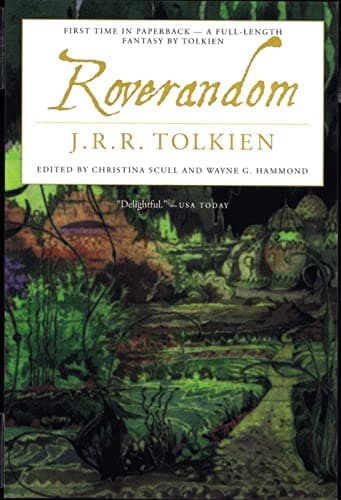
Should you read Roverandom?
What works
The dog's journey from toy to moon, sea, and home creates imaginative variety, while petulance gradually gives way to loyalty and perspective.
What may not work for you
Episodes connect loosely, private jokes and period assumptions can date the humor, and the adventure lacks the emotional concentration of The Hobbit.
What may test your patience
The lunar and undersea sections introduce new figures rapidly, making the middle feel like successive inventions rather than one tightening quest.
Does the ending reward the effort?
Yes. Returning Rover to ordinary family life gives the magical detour a tender purpose without overexplaining the real lost toy behind it.
Reading Roverandom closely
After annoying a wizard, a rude puppy is transformed into a toy and journeys to the moon and beneath the sea while seeking restoration.
Tolkien began the tale after his son lost a toy dog, giving its whimsical adventures an undertone about loss, apology, patience, and home.
A family story with cosmic range
Moon and ocean episodes pile wordplay and marvels around one small dog's problem.
Three useful comparisons
The Hobbit
The Hobbit is more coherent, dangerous, and emotionally complete, making it the stronger family classic.
Best for: Families, younger readers, and adults wanting an accessible classic adventure with humor, danger, and moral weight.
Mr. Bliss
Mr. Bliss is a shorter illustrated comedy with less fantasy and more visual slapstick.
Best for: Collectors and families curious about Tolkien's illustrated comic work beyond Middle-earth.
The Father Christmas Letters
Father Christmas Letters retain the physical intimacy of stories made directly for Tolkien's children.
Best for: Families, collectors, and Tolkien readers wanting a warm visual holiday book rooted in real correspondence.