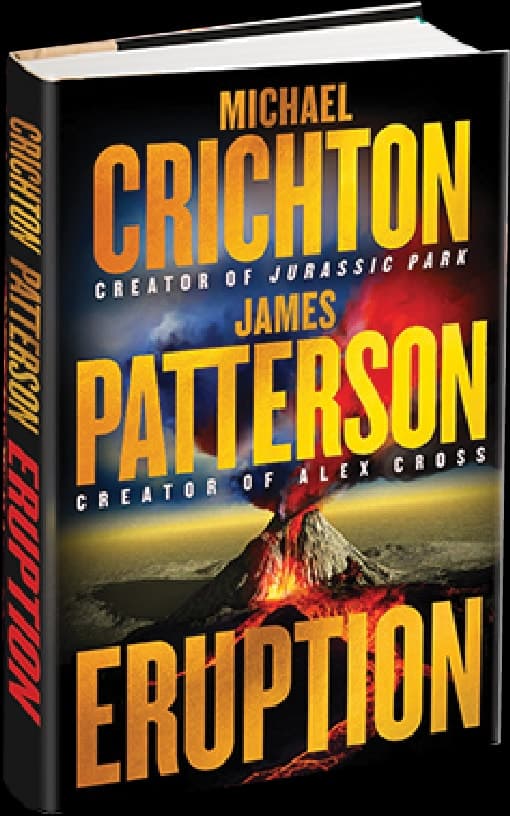
Should you read Eruption?
What works
Pressure, lava behavior, evacuation, secrecy, and a buried military hazard create interacting problems that cannot be solved by one heroic intervention.
What may not work for you
Characters are largely professional roles, exposition is heavy, and some escalation feels designed to keep raising spectacle rather than deepen consequence.
What may test your patience
Institutional briefings and concealed-history explanations crowd the opening before the eruption makes every decision immediate.
Does the ending reward the effort?
The disaster sequence pays off the technical setup and delivers closure, if with the clean efficiency expected from commercial catastrophe fiction.
Reading Eruption closely
Eruption begins as Mauna Loa moves toward a major event threatening Hawaii's Big Island. Volcanologist John MacGregor must interpret a fast-changing mountain, coordinate emergency decisions, and communicate risk under political pressure. The crisis becomes more dangerous when he learns that the US military concealed hazardous material whose exposure could create consequences beyond lava and ash.
The novel combines volcanic procedure, evacuation logistics, military secrecy, and a tight disaster countdown. Crichton's research-driven interest in natural systems is joined to James Patterson's short chapters and rapid escalation. The result moves faster and explains less patiently than classic Crichton, but the scientific and institutional strands remain recognizable.
Crichton worked on the project for years before his death; James Patterson completed it from the unfinished manuscript and extensive materials. Readers should therefore approach it as a genuine collaboration, not a newly finished solo Crichton novel. It suits fans of large-scale disaster thrillers who value momentum, operational detail, and multiple teams confronting a threat no single expert controls.
Volcano and hidden human hazard
The eruption is not a villain but a natural system that exposes an institutional decision kept secret for decades.
John MacGregor under pressure
Scientific authority requires translating uncertain forecasts into action before certainty becomes possible.
How the collaboration reads
Crichton's premise and research combine with Patterson's compressed chapters and high-speed thriller rhythm.
Three useful comparisons
Jurassic Park
Jurassic Park offers stronger characters and a more coherent argument about systems failing.
Best for: Adult and mature teen readers who want a fast, violent dinosaur story with sustained attention to genetics, automation, and corporate denial.
As an Amazon Associate, I earn from qualifying purchases.
The Andromeda Strain
Andromeda is colder and more procedural, centered on containment rather than public disaster.
Best for: Hard-edged outbreak science fiction for anyone who values laboratory procedure and containment systems over sentiment.
As an Amazon Associate, I earn from qualifying purchases.
Deception Point
Deception Point provides a similar blend of science, secrecy, and large conspiracy with faster chase mechanics.
Best for: Choose it for a standalone Brown thriller with Arctic survival, NASA, election politics, and a large government secret.
As an Amazon Associate, I earn from qualifying purchases.