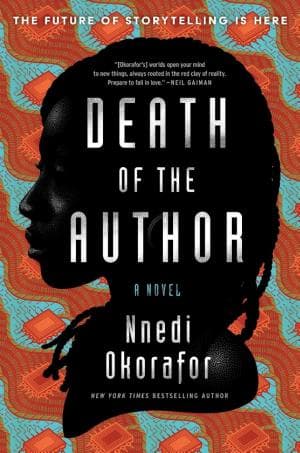
Should you read Death of the Author?
What works
Zelu's disability, Nigerian American family, failed academic career, and embedded robot novel create several competing accounts of authorship rather than one allegorical answer.
What may not work for you
The family narrative, publishing satire, technological speculation, and Rusted Robots sections do not always pull with equal force, making the middle feel expansive rather than inevitable.
What may test your patience
Readers must accept frequent movement between Zelu's life and her fiction before the echoes in embodiment, inheritance, and ownership become clear.
Does the ending reward the effort?
Yes, if read as a challenge rather than a neat resolution. It leaves authorship distributed among family, reader, industry, adaptation, and machine.
Reading Death of the Author closely
Death of the Author follows Zelu, a disabled Nigerian American writer whose academic career and literary ambitions collapse at the same time. Writing without an audience in mind frees her to create Rusted Robots, a far-future conflict between android societies that becomes a publishing phenomenon and changes how her family, readers, and industries see her.
Nnedi Okorafor moves between Zelu's life and the fiction inside her fiction, allowing the robot narrative to echo questions about inheritance, embodiment, migration, and authorship without becoming a simple code to solve. Success gives Zelu money and reach, but it also turns her work into something other people adapt, market, interpret, and claim.
The novel is expansive rather than tightly plotted. Family conversations, creative decisions, technology, fame, and the embedded science-fiction story all compete for attention. Readers open to that layered structure will find a generous book about who gets to tell a story and what happens once the story belongs to its audience too.
Zelu, family, and creative independence
Zelu's family can be loving, intrusive, dismissive, and protective within the same conversation. Her success changes the balance without erasing the history behind it, giving the novel emotional tension beyond the publishing plot.
The novel inside the novel
Rusted Robots is not a decorative excerpt. Its post-human societies extend the book's questions about bodies, culture, conflict, and who is allowed to define humanity.
Three useful comparisons
Yellowface
Yellowface is a tighter, nastier satire about theft and publishing status; Death of the Author is more generous, speculative, and interested in what happens after a book escapes its creator.
Best for: Readers of literary satire, unreliable narrators, publishing stories, social-media anxiety, cultural appropriation debates, and fast books built for argument.
Frankenstein
Frankenstein concentrates responsibility in the bond between maker and abandoned creation, while Okorafor distributes it across an author, family, industry, readers, and fictional machines.
Best for: Readers interested in responsibility, isolation, unreliable self-justification, and Gothic philosophy more than conventional horror.
When We Were Real
When We Were Real treats an impossible truth through a compact road-trip ensemble; Okorafor uses a broader family saga and a second fictional world.
Best for: Readers of philosophical science fiction who want a road trip, ensemble humor, grief, friendship, visible glitches, and emotional stakes larger than a puzzle solution.