Caraval after years of revision and rejection
Stephanie Garber was born in California and worked in education while pursuing publication. She wrote and revised multiple projects before Caraval appeared in 2017. The novel sends sisters Scarlett and Tella into an elaborate performance where clues, danger, desire, and deception are sold as a game. Its visual intensity and constant uncertainty established Garber's signature territory.
The Caraval trilogy expands the mythology, while Once Upon a Broken Heart gives Jacks and a new heroine a fairy-tale sequence of curses, bargains, and romantic danger. Garber understands that a beautiful setting can be a coercive environment precisely because a participant wants to believe in it.
Color, appetite, and unreliable romance
Garber's prose emphasizes color, fabric, taste, blood, magic, and dramatic entrances. The sensory abundance creates immersion but can crowd psychological nuance. Love interests remain compelling partly because their motives are withheld, a technique that risks confusing opacity with depth.
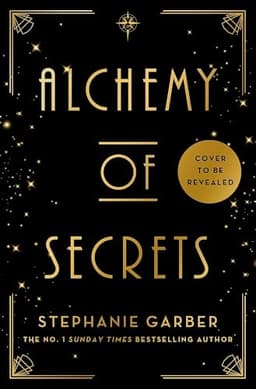
Alchemy of Secrets moves toward adult fantasy mystery in Los Angeles, using folklore and hidden histories while retaining multiple suspect attractions. Caraval is the best entrance for spectacle; Once Upon a Broken Heart for romance; Alchemy of Secrets for contemporary mystery. Garber's central pleasure is the rule revealed too late, and her best heroines learn not merely to win the game but to question why someone else was allowed to design it.
Spectacle is never neutral in Garber's worlds
Caraval invites both heroine and reader to enjoy being deceived. Lights, costumes, rooms, clocks, and performers create the sensation that the world has been arranged for personal discovery. That sensation is also a form of control. Someone owns the venue, chooses the rules, and decides which danger may still be called entertainment. Garber's best scenes allow delight and suspicion to rise together.
The sisters at the center prevent the game from being only a romantic maze. Scarlett's protectiveness can become its own attempt to decide what Tella may risk, while Tella refuses safety defined as obedience. Their conflict gives the fantasy a material emotional stake. Winning matters less than learning which version of love still leaves another person room to choose.
Once Upon a Broken Heart narrows this tension into bargaining. Jacks is attractive partly because he seems to understand rules the heroine does not, but privileged knowledge is not the same as trustworthiness. Garber uses curses and magical prices to externalize a familiar romantic problem: a person may correctly identify what another desires and still use that knowledge cruelly.
Her visual writing can overfill a scene with color and sensation, and hidden motive sometimes substitutes for developed motive. Alchemy of Secrets shows a useful next step by attaching mystery to a recognizable city and its layered folklore. Garber remains most convincing when a spectacular image changes the heroine's judgment, not when beauty exists only to generate another shareable description.
The rule, the exception, and the price
Garber builds fantasy around rules stated with the confidence of folklore: a bargain has a price, a kiss has a consequence, a game ends at a fixed hour. The reader quickly begins searching for the exception. Her plots depend on the pleasure of discovering that exact wording matters and the unease of realizing that a romantic interest may understand the rule better than the heroine. This keeps exposition active. A magical law is never only background information; it is a weapon someone may already be using.
The Once Upon a Broken Heart books give desire a fairy-tale vocabulary while keeping the motives contemporary and messy. Evangeline wants a story large enough to organize pain, and Jacks benefits whenever she mistakes the feeling of destiny for trust. Garber's colors, fabrics, sweets, and impossible buildings make the temptation visible. At times surprise multiplies faster than consequence, so one reversal weakens the previous one. Her best endings resist that habit and make a changed rule expose an earlier choice.