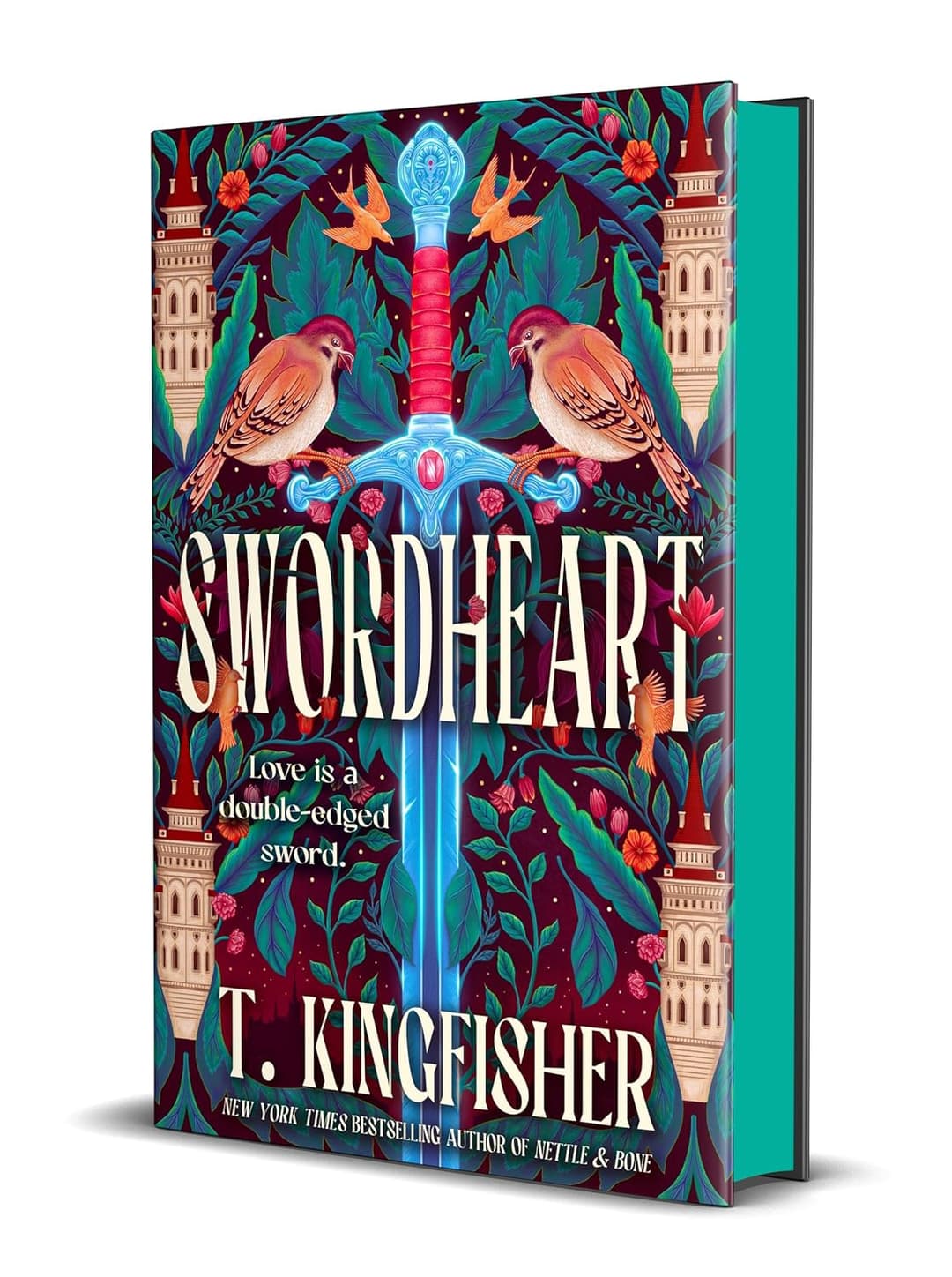
Should you read Swordheart?
What works
Halla's rambling questions are a form of intelligence others underestimate, and Sarkis's usefulness cannot substitute for Zale's law or Halla's persistence.
What may not work for you
The road plot meanders, some jokes repeat, and the villainous relatives are effective obstacles without much dimension.
What may test your patience
Bandits and roadside complications delay the inheritance case after the central trio has formed, creating charm but limited forward movement.
Does the ending reward the effort?
Yes for the inheritance and romance, though the sword's larger history deliberately remains open for the connected world.
Reading Swordheart closely
Halla has inherited her great-uncle's estate, which means his relatives suddenly regard her as both obstacle and property. Locked in a room and pressured into marriage, she draws an old sword and releases Sarkis, an immortal warrior bound to defend whoever possesses the blade.
Sarkis expects a wielder who understands weapons and danger. Instead, he gets a determined housekeeper whose rambling questions, social invisibility, and refusal to behave like a conventional heroine repeatedly unsettle other people's plans. Their attempt to secure Halla's legal rights becomes a road journey involving bandits, magical complications, and Zale, a nonbinary lawyer-priest of the White Rat.
The romance grows from comic frustration into recognition between two middle-aged adults who have both been treated as useful objects. Kingfisher keeps consent important despite the magical bond, using Halla's apparent foolishness and Sarkis's protective reflexes to explore the difference between being underestimated and being helpless.
An inheritance plot with an enchanted bodyguard
Halla's relatives use law, reputation, and confinement because open theft would look improper. Sarkis gives her physical protection, but Zale's legal knowledge and Halla's own persistence are equally necessary if safety is to become independence rather than another form of custody.
Banter with an ethical complication
Sarkis is magically compelled to answer the sword's wielder, so the novel cannot treat attraction as uncomplicated destiny. Halla's concern for his freedom and Sarkis's effort to respect her choices allow trust to develop within a bond neither selected.
World connections, humor, and spice
Swordheart stands alone but shares the World of the White Rat with the Clocktaur War and Saint of Steel books. Expect an adult romance, sustained banter, some on-page intimacy, road-adventure dangers, and humor that often hides how sharply the story understands coercion.
Three useful comparisons
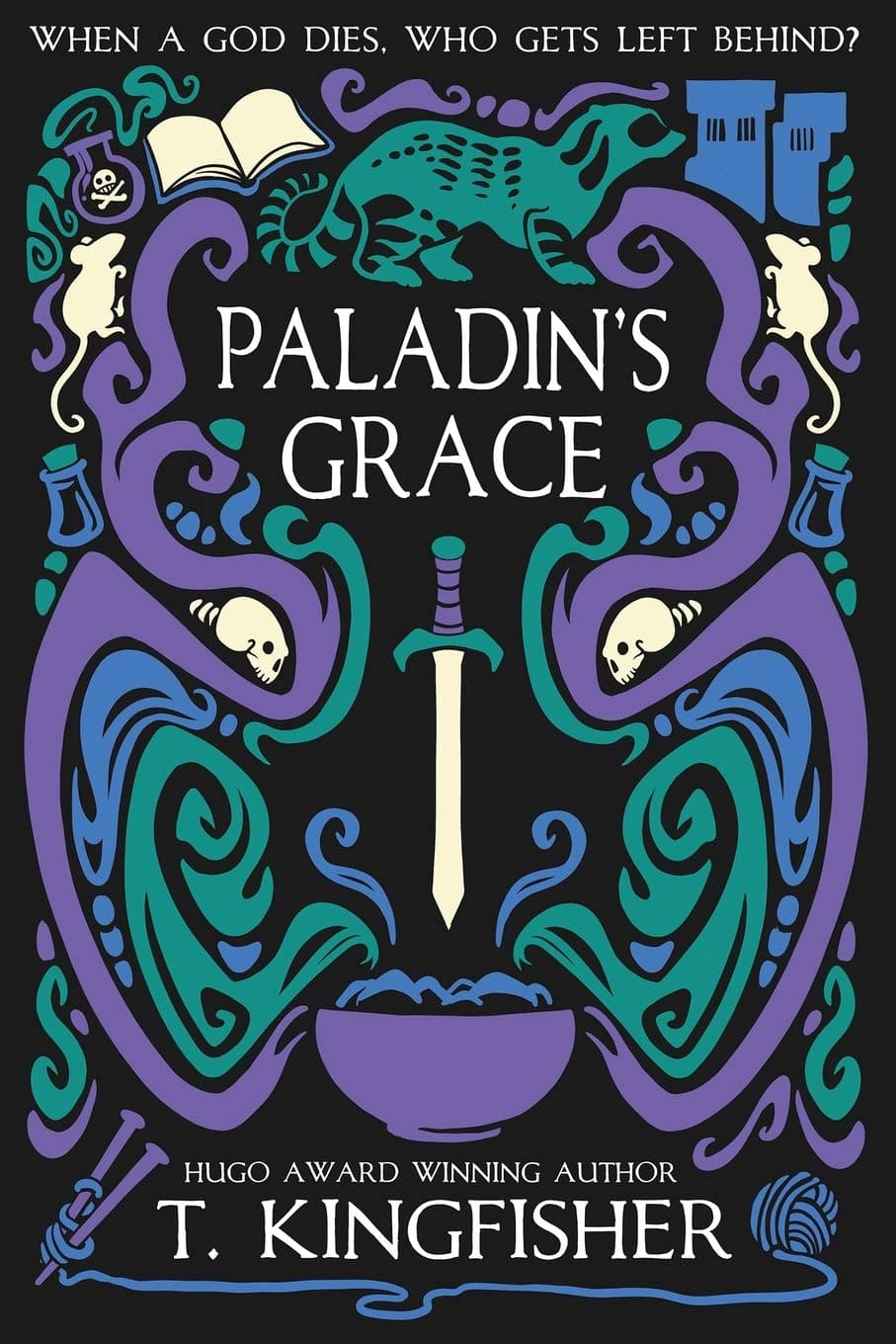
Paladin's Grace
Paladin's Grace is more emotionally restrained and urban, with stronger series continuity and less road comedy.
Best for: Best when you want mature fantasy romance, kindness, humor, some violence, and a mystery that supports rather than dominates the relationship.
As an Amazon Associate, I earn from qualifying purchases.
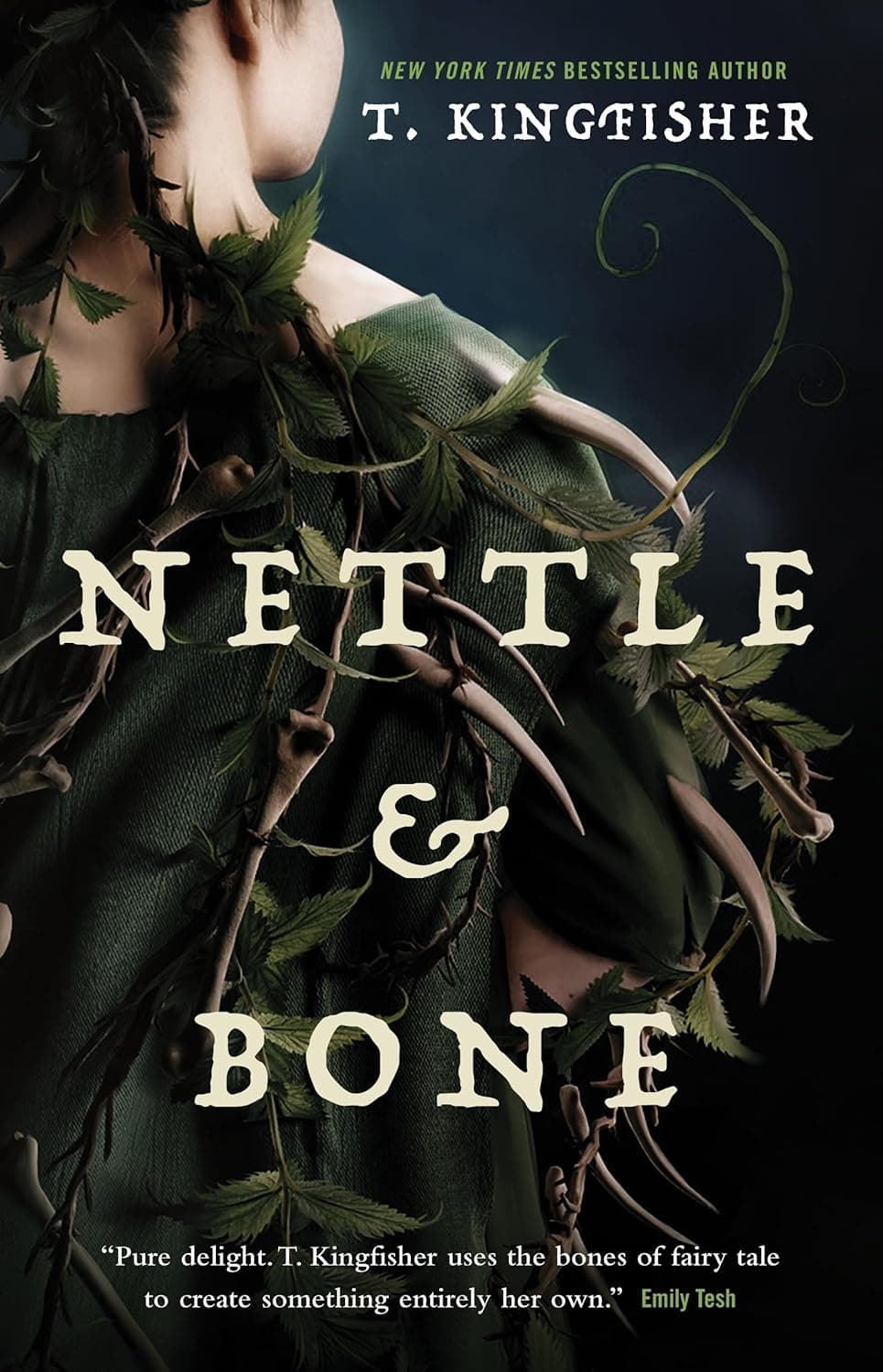
Nettle & Bone
Nettle & Bone is shorter, darker, and driven by sister rescue rather than romance.
Best for: Readers who want an adult fairy tale about sisters and found family, with gallows humor and only a light romantic element.
As an Amazon Associate, I earn from qualifying purchases.
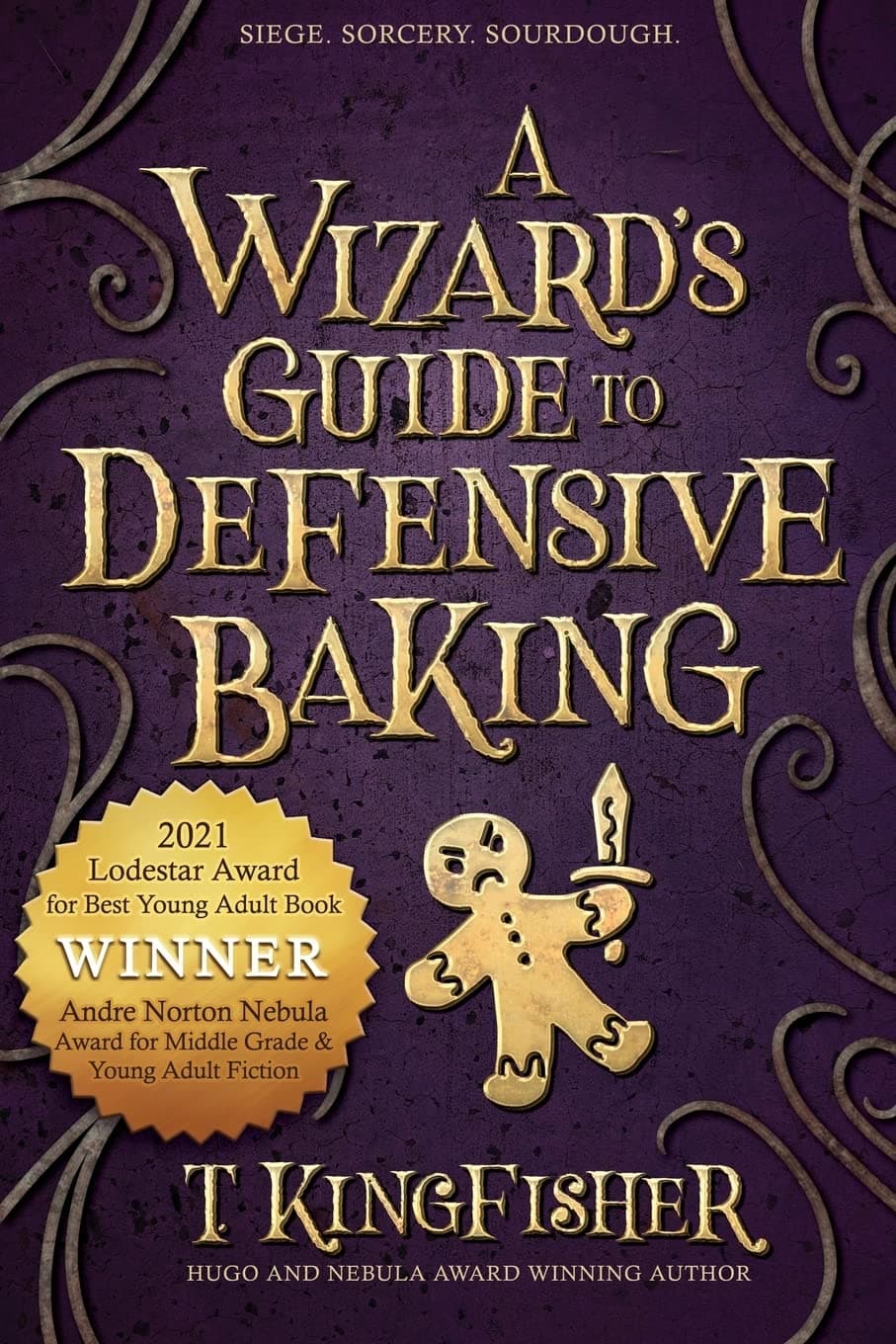
A Wizard's Guide to Defensive Baking
Defensive Baking shares practical magic and institutional critique but centers a child hero and civic crisis.
Best for: Confident middle-grade readers, teens, and adults who want whimsical magic with murder, persecution, and institutional critique.
As an Amazon Associate, I earn from qualifying purchases.