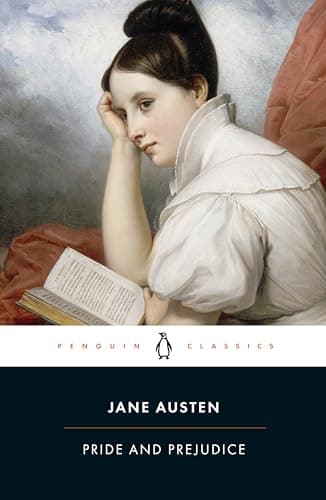
Should you read Pride and Prejudice?
What works
Every conversation does two jobs. The courtship moves forward while money, rank, family embarrassment, and self-deception shape what each speaker can admit. The comedy never sits apart from the emotional stakes.
What may not work for you
The final movement relays several important developments through letters and explanation, and the younger Bennet sisters are drawn more as pressures on Elizabeth than as equally complex people.
What may test your patience
The early Meryton and Netherfield chapters require a brief adjustment to family names, visiting customs, the entail, and the social weight of seemingly casual invitations. Once those rules are clear, the dialogue becomes much quicker.
Does the ending reward the effort?
Completely. The romantic resolution depends on changed behavior as well as changed feeling, while the practical questions about family and financial security remain visible rather than vanishing into sentiment.
Reading Pride and Prejudice closely
Pride and Prejudice places Elizabeth Bennet and Fitzwilliam Darcy inside a courtship market governed by money, inheritance, family reputation, and first impressions. Elizabeth's intelligence makes her an engaging judge of character, but Austen gives that confidence enough blind spots to make her growth as important as Darcy's.
The romance remains satisfying because attraction does not erase incompatibility. Both characters must recognize how pride, prejudice, and social power have shaped their behavior before affection can become a credible partnership.
Romance through self-correction
Elizabeth and Darcy do not simply discover hidden goodness; they respond to criticism and change. Their conversations make misunderstanding active and revealing rather than a device that could vanish with one explanation.
Three useful comparisons
Jane Eyre
Jane Eyre makes courtship more private, Gothic, and morally intense. Choose it for a first-person heroine facing secrecy and isolation; choose Pride and Prejudice for social comedy and a relationship tested in public conversation.
Best for: Readers who want an intense first-person classic combining romance, moral independence, work, and Gothic secrecy.
Great Expectations
Great Expectations also examines love distorted by class aspiration, but its first-person narrator is more self-punishing and its social world much darker. It offers broader consequences and less romantic balance.
Best for: An accessible Dickens novel about class, guilt, love, money, and a narrator learning to read his own past.
The Great Gatsby
The Great Gatsby shares an interest in wealth, desire, and mistaken judgment, but treats reinvention as tragedy rather than comic self-correction. Choose it for a shorter, more lyrical account of longing that cannot mature into mutual understanding.
Best for: Readers drawn to concise literary tragedy, unreliable admiration, class, reinvention, and prose that rewards rereading.