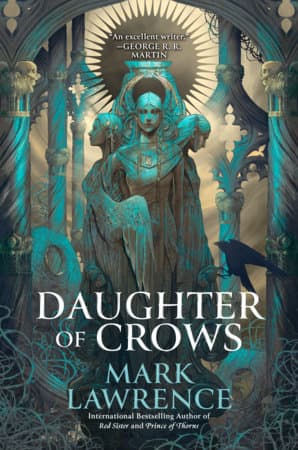
Should you read Daughter of Crows?
What works
Rue's competence carries guilt and reflexive violence rather than effortless glamour, and the Academy of Kindness turns institutional euphemism into a memorable source of dread.
What may not work for you
The mystery around Rue's past is controlled so tightly that some supporting figures feel like functions of the reveal rather than lives beyond it.
What may test your patience
Early chapters allude to the Academy more often than they explain it, asking readers to infer the shape of harm from Rue's reactions.
Does the ending reward the effort?
Yes as an opening volume. Rue makes a consequential choice, but the institution and the moral debt it created remain deliberately unresolved.
Reading Daughter of Crows closely
Daughter of Crows opens a new Mark Lawrence series with a protagonist who has already survived the kind of ordeal that would normally occupy an entire origin story. Rue was shaped by the Academy of Kindness, an institution whose gentle name hides a system designed to break girls down and rebuild the few survivors as agents of vengeance. The novel begins from the more interesting question of what happens after that training has hardened into memory, instinct, and guilt.
Rue’s age and experience give the story a different energy from a conventional academy fantasy. She is not discovering that the institution is cruel; she understands its methods intimately and has spent years carrying their consequences. When danger pulls her past back into the present, the tension comes from watching a capable survivor decide which parts of her training still serve her and which parts threaten to repeat the harm.
The atmosphere is firmly dark fantasy: violence, coercive training, grief, and moral compromise are central rather than decorative. Lawrence balances that severity with momentum and a tightly controlled mystery around Rue’s history. Readers who need warmth or an easy heroic divide may find the world punishing, but those who enjoy damaged adults making difficult choices should find plenty to hold onto.
This is the first Academy of Kindness book, so no earlier Lawrence series is required. Familiarity with his work may prepare readers for blunt violence and sharp reversals, but Rue’s story stands on its own and establishes a new world, conflict, and emotional center.
The Academy behind the title
The Academy of Kindness works as both setting and wound. Its rituals explain Rue’s competence, but the novel is more interested in the cost of turning survival into a profession. The contrast between the institution’s name and its methods gives the story a bitter edge without requiring long explanations of the world’s morality.
Tone and content
Expect a bleak world, institutional abuse, violence involving young trainees, death, and sustained threat. The book is written for adults and is likely to suit mature readers who are comfortable with grimdark fantasy, though its focus on endurance and chosen responsibility keeps it from feeling empty or cruel for its own sake.
Three useful comparisons
Golden Son
Golden Son operates on a much larger military scale; Daughter of Crows keeps its violence intimate and its attention on what training leaves inside one survivor.
Best for: Red Rising readers ready for space battles, political betrayal, friendship under secrecy, and relentless escalation.
The Will of the Many
The Will of the Many follows a young infiltrator learning an academy's rules; Rue already knows what institutions do to students and carries the damage into adulthood.
Best for: A fast-opening political fantasy built around academy competition, hidden identity, and a large mystery.
Nettle & Bone
Nettle & Bone counters darkness with found-family warmth and fairy-tale humor, while Daughter of Crows offers a harsher, more isolated reckoning with institutional abuse.
Best for: Readers who want an adult fairy tale about sisters and found family, with gallows humor and only a light romantic element.