
Author profile
Allen Levi: books, review, and bibliography
Allen Levi came to bestselling fiction after careers in law, public service, music, and ministry, bringing a lifetime's attention to grief, faith, place, and quiet acts of generosity into Theo of Golden.
Biography and criticism
A late-blooming novelist and the long life before Theo
Levi's first novel became a word-of-mouth success because it feels less like a calculated debut than the gathering of concerns he had already pursued through songs, memoir, law, and community life.
Law, judging, songs, and a family place
Allen Levi was born in Bay Minette, Alabama, in 1956 and educated at the University of Georgia. He practiced law, served as a judge, and developed a parallel life as a singer-songwriter and writer. He eventually left the bench and returned to family land near Hamilton, Georgia. Those occupations should not be arranged as a dramatic sequence of abandoned identities. They overlap in his work. Law sharpened his attention to testimony and consequence. Songwriting trained him to value cadence and compression. Faith and pastoral experience placed questions of service, grief, and vocation near the center of his public voice.
Before Theo of Golden, Levi published Oliviatown and the memoir The Last Sweet Mile, which reflects on caring for his brother during terminal illness. Loss in Levi's writing is therefore not an ornamental shadow added to make kindness look profound. It is the condition that makes attention urgent. His characters do not help because suffering can be solved. They help because another person remains visible even when no solution is available.
Ninety-two portraits in a coffee shop
The seed of Theo of Golden came while Levi was waiting for coffee in Columbus, Georgia. Portraits covered the shop's walls, and he wondered what it would mean for someone to buy them one at a time and return them to the people depicted. That small, practical fantasy of anonymous generosity became Theo's campaign. As Levi developed the character, he recognized qualities associated with his late brother Gary, particularly an expansive love of people and an appetite for a full life.
Levi wrote the novel over several years without assuming a traditional publisher would take it. Friends encouraged him to release it. The self-published edition spread by word of mouth before Atria brought it to a much larger audience. It found readers without a twisty premise or fashionable irony. Its simple appeal is the idea that paying close attention to people can change a town without making the giver famous.
The risk inside a novel of kindness
Theo of Golden is built from meetings and stories within the story. Theo listens, notices art, remembers details, and makes small gestures that matter deeply to other people. That gives many lives room in the novel, but it can also turn the book into a chain of uplifting moments. Golden sometimes feels less like a complete town than a parable where everyone has hidden decency. Levi's faith in people is both the book's appeal and the reason it can become sentimental.
What keeps the novel from becoming merely comforting is Theo's relationship to grief. He is not generous because he has escaped pain or discovered a technique for happiness. His outward attention coexists with private loss. Levi's prose is plain, warm, and rhythmically close to oral storytelling. It makes room for direct feeling without the protective distance many contemporary novels use to signal sophistication. Readers who dislike overt moral purpose may resist it; readers tired of cruelty being treated as realism may experience the same quality as relief.
An old-fashioned moral imagination
Levi's work belongs to a tradition of community storytelling in which a stranger's arrival reveals the moral condition of a place. Yet Theo does not transform Golden through speeches. He creates occasions for people to see one another differently. Portraits are crucial because they turn looking into a gift. A face that had become decoration is returned to a person with a name, a history, and someone who might treasure the image.
There are too few novels to define a broad fictional career, but there is enough work to identify a consistent ethical interest. Levi asks what a person owes to the life directly in front of him, especially after ambition and status have lost their glamour. Theo of Golden is the natural starting point. The Last Sweet Mile provides the biographical and spiritual counterweight, revealing that the tenderness of the novel was earned through care rather than manufactured as a brand.
Where to begin
The Allen Levi book reviewed here
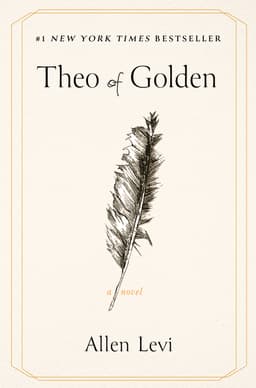
Theo of Golden
4.2 / 5Theo of Golden earns its tears through patient attention to overlooked people, although its faith in universal decency sometimes makes Golden feel more like a parable than a town.
Bibliography
Books by Allen Levi
Reviews and book guides open on Book Review Guide. The full list comes from the linked bibliography source.
Reviewed
Theo of Golden
Not reviewed yet
Development of Determination
Not reviewed yet
Too Much Gaming
Not reviewed yet
Shaping Your Life

Not reviewed yet
Oliviatown
Bibliographic source: Open Library.
Books on this site
Allen Levi reviews and guides
20254.2 / 5
Theo of Golden
A Novel
Theo of Golden earns its tears through patient attention to overlooked people, although its faith in universal decency sometimes makes Golden feel more like a parable than a town.
As an Amazon Associate, I earn from qualifying purchases.
Keep exploring