Books and television
Dexter Books vs TV Show: The Biggest Differences Explained
The same blood-spatter analyst starts both stories. The people he keeps close, the things he tells himself and the consequences he faces soon change.
Without spoilers
The first case overlaps. The continuing stories do not.
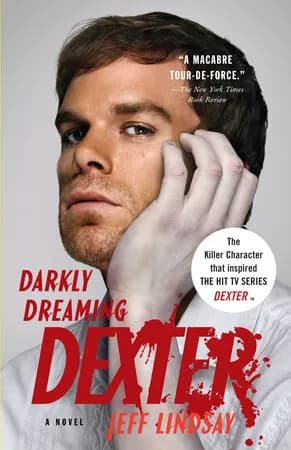
Season 1 of Dexter draws on Darkly Dreaming Dexter, but changes important outcomes. The later novels and television seasons develop separate cases and character histories. New Blood, Original Sin and Resurrection belong to the television version; none supplies a missing chapter of Jeff Lindsay’s eight-novel sequence.
Dexter has a voice-over on television, so the difference is not simply that the books let him narrate. It is how completely he controls the account. On the page, he keeps assuring you that his disguises work, his decisions make sense and other people are the baffling ones. His mistakes make those assurances harder to accept.
The overview below avoids major revelations. Open the later sections only if you want to compare character identities, deaths and the endings. Each spoiler section names the books or television periods it discusses.
A spoiler-free comparison
What changes before you get to the plot twists?
The differences begin with how Dexter tells his story and how much life the other characters get outside his account.
Voice
Dexter’s explanations are part of the joke
Narration and black humor
The novels put horrific acts beside complaints about traffic, office behavior and the effort of appearing interested in other people. Dexter treats his private routines as reasonable, then struggles with perfectly ordinary social expectations.
Television keeps some of that black humor, but Michael C. Hall’s face and the reactions of other actors can complicate what the voice-over says. The novels make you spend longer inside the explanation itself.
People
Familiar names do not guarantee familiar relationships
Deborah, Rita, Harry and the police department
Deborah is the spelling used for Dexter’s sister in the novels; the television character is Debra. Both are police officers, both matter to him, and neither can be reduced to a spelling change. Their knowledge and choices develop differently.
Harry’s rules give both Dexters a method and an excuse for directing their violence. On television, other characters also have scenes Dexter cannot narrate for them. The books keep their behavior filtered through what he notices, misunderstands or dismisses.
Story
There is no book for each television season
Separate cases after the shared beginning
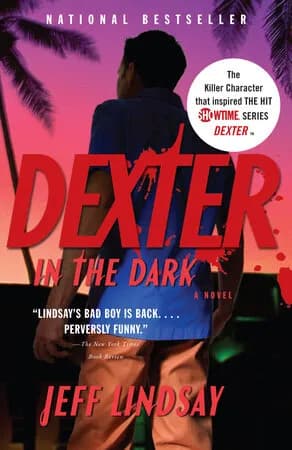
Dearly Devoted Dexter brings in Dr. Danco. Dexter in the Dark takes the Passenger in a supernatural direction. Later novels involve staged corpses, cannibalism, a dangerous witness and actors researching police work.
Those are not the season-by-season plots of the show. The series keeps the original premise while building its own continuing story. Watching a season is not a substitute for the corresponding numbered novel.
Major spoilers for the Dexter books and TV series below.
Show spoilers: The first ending: Brian, Deborah and LaGuerta
The first ending: Brian, Deborah and LaGuerta
In Darkly Dreaming Dexter, the killer is Dexter’s biological brother, Brian. Dexter prevents him from killing Deborah but lets him escape. Brian kills LaGuerta, and Deborah comes out of the encounter knowing what Dexter is. That leaves a living brother and an informed sister in the book continuity.
The first TV season ends differently. Dexter kills Brian to protect Debra, who does not learn his secret then. LaGuerta survives and remains important for years. The book has already changed the people who can threaten, understand or protect Dexter. Its sequels cannot start from the show’s position.
On television, Debra finally sees Dexter kill Travis Marshall at the end of season 6. In the season 7 finale, she kills LaGuerta to protect him. The show takes years to turn her from the sister being kept in the dark into someone involved in his crimes. The novels make her confront his nature at the end of their first case.
As an Amazon Associate, I earn from qualifying purchases.
Show spoilers: Doakes and the cost of suspicion
Doakes and the cost of suspicion
In Dearly Devoted Dexter, Albert Doakes’s surveillance forces Dexter into a more convincing domestic disguise. Dr. Danco later captures and mutilates Doakes, who survives. His continued presence keeps an enemy inside Dexter’s working life.
Television’s James Doakes dies when Lila destroys the cabin where Dexter is holding him in the season 2 finale. He is blamed for the Bay Harbor Butcher murders. The show removes the man who recognized something wrong in Dexter and gives Dexter a way out through that man’s ruined reputation. That is not the outcome of book two.
As an Amazon Associate, I earn from qualifying purchases.
Show spoilers: The Dark Passenger becomes more than a metaphor
The Dark Passenger becomes more than a metaphor
Dexter in the Dark gives the Passenger a supernatural origin connected to Moloch. Ritual killings frighten it away, leaving Dexter without the presence he has relied on. The book asks what happens when the thing he treats as part of himself can act independently.
The television Passenger is Dexter’s way of describing and discussing his urge to kill. Harry’s appearances give his thinking a face and a voice, but the show does not adapt the third novel’s Moloch mythology. A viewer expecting a police thriller can encounter a much stranger explanation on the page.
As an Amazon Associate, I earn from qualifying purchases.
Show spoilers: Rita, marriage and Harry’s Code
Rita, marriage and Harry’s Code
Dearly Devoted Dexter lets Dexter slip into an engagement by accident. By Dexter by Design, he and Rita have returned from their honeymoon in Paris. At work, a body displayed as a sunbather draws him toward another killer’s staged crimes. At home, marriage has become another set of daily obligations that he must fit around his secret life.
The show makes the proposal a deliberate choice and puts the wedding at the end of season 3. Both versions show him using family life to support his disguise. But Harry’s rules were made for hunting and concealing murder, not for explaining himself to Rita. Having a code does not tell him how to be a husband.
As an Amazon Associate, I earn from qualifying purchases.
Show spoilers: Rita, Astor and Cody
Rita, Astor and Cody
In the novels, Astor and Cody show violent tendencies after abuse by their father, and Dexter begins teaching them how to control and conceal those urges. That makes his role as a stepfather disturbing in a very specific way: he is passing on the system Harry taught him. Dexter Is Delicious then gives him a daughter, Lily Anne, whose arrival unsettles his insistence that he cannot feel ordinary love.
On television, Astor and Cody do not become those apprentices. Dexter and Rita have a son, Harrison. Rita is murdered by Trinity at the end of season 4. The novels keep Rita alive much longer, until Robert Chase kills her in Dexter’s Final Cut. The household does not break in the same way or at the same point.
As an Amazon Associate, I earn from qualifying purchases.
Show spoilers: Double Dexter puts a witness in control
Double Dexter puts a witness in control
Double Dexter starts from someone seeing Dexter at work on a victim. The witness becomes an adversary who can imitate his methods. Dexter cannot rely on the assumption that everyone around him has mistaken politeness for innocence.
That is a different exposure story from the television Bay Harbor Butcher investigation. The pressure comes from a particular observer learning to use Dexter’s private habits against him. Knowing how television handles Doakes does not resolve this book’s problem.
As an Amazon Associate, I earn from qualifying purchases.
Show spoilers: The actors in Final Cut change the family story
The actors in Final Cut change the family story
Dexter’s Final Cut brings actors Robert Chase and Jackie Forrest into the police department. Dexter’s relationship with Jackie and Chase’s predatory interest in Astor turn professional observation into a threat inside the family. Chase kills Jackie and Rita; Astor kills Chase. Dexter is left facing accusations tied to that scene.
That sequence leads directly into Dexter Is Dead. It is not a variation on the Trinity ending: the perpetrator, the threatened child and Dexter’s position afterward are different. Treating both versions as simply a story in which Rita dies erases most of what changes.
As an Amazon Associate, I earn from qualifying purchases.
Show spoilers: The book ending, New Blood and Resurrection
The book ending, New Blood and Resurrection
Dexter Is Dead ends after a rescue involving Astor and Cody, a yacht, a shooting and an explosion. The wounded Dexter sinks into the water. The last image stays with him there. Lindsay has acknowledged a small possibility of survival, but the novel provides no later return.
The original TV series instead leaves Dexter alive in self-imposed exile after Debra’s death. New Blood later brings Harrison into a confrontation that ends with him shooting Dexter. Resurrection continues after that shooting. It does not reopen Lindsay’s yacht scene or turn the eighth novel into a television outline.
The difference matters beyond whether Dexter survives. The book builds its final crisis from Cody and Astor, the relationships left around them and the aftermath of Final Cut. Television reaches its continuation through Harrison and events built across the shows. One ending cannot be used to predict the other.
The book connection behind Resurrection · Return to the spoiler-free reading order
As an Amazon Associate, I earn from qualifying purchases.
Quick answers
Two questions about the adaptations
Are the books darker than the show?
They are often more grotesque in their crimes and more relentlessly comic in Dexter’s narration. Television gives supporting characters more space outside his viewpoint. “Darker” alone does not explain that difference in reading and watching.
Is Dexter: Resurrection a sequel to the novels?
No. It continues the television story after New Blood. The eight novels have a separate continuity and ending.
Sources
Sources for this guide
The publisher verifies the novels and their premises. The comparison also checks character outcomes against the criticism, study guide and official television material below. Some source pages contain major spoilers.
- Penguin Random House: Dexter series
- Paramount: major character outcomes across the TV franchise
- SuperSummary: the first novel’s closing chapters
- Kirkus: Dearly Devoted Dexter
- Kirkus: Dexter in the Dark
- Publishers Weekly: Dexter Is Dead and the events leading into it
- International Thriller Writers: Jeff Lindsay on the ending
- Den of Geek: the first TV season’s finale
- The A.V. Club: the Passenger mythology
- Paramount: Resurrection season 2
- Kirkus: the final novel’s opening situation
- TV Guide: Debra’s discovery in the season 6 finale
- Dexter: the novels and television, publisher preview
Keep reading