Spanish reading
Best Spanish Books for Beginners (A1 to A2)
Start with a story you can follow in Spanish. Here are nine beginner books, from campus life in Buenos Aires to a missing-person case in Madrid.
I've read every book on this list, and the first one I'd hand to most beginners is Ana, estudiante. Ana has classes, friends and exams, so there's plenty you can work out from the situation. If a crime story or a weekend in Madrid sounds more interesting to you, there are A1 readers for those too.
Start here
What should I read first in Spanish?
If you know basic present-tense Spanish, try Ana, estudiante. For extra help with unfamiliar words, try Un día en Madrid, which has a visual dictionary. If you'd rather solve a mystery, start with Sin noticias. Read a page of whichever sounds good and see if you can say who is there and what they want.
What A1 reading feels like
At A1, a few familiar words can be enough to place a scene. A character orders coffee, meets a friend or asks where something is. Graded readers are written for learners and use shorter sentences and a smaller vocabulary than books written for fluent readers. Seeing the same words in several scenes gives you a chance to recognize them on your own.
Try the first full page of a sample. If you can say what happened after one read and a quick reread, the book is worth trying. If you're translating line by line and still can't tell who did what, start with an illustrated text or a shorter scene.
Beginner graded readers
Nine books for your first read in Spanish
Difusión and Paco Ardit label these readers A1. Pobre Ana uses a classroom level. Choose the setup you'd most like to follow.
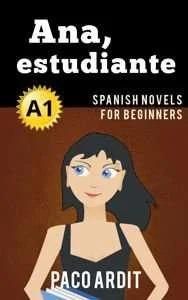
Campus life in Buenos Aires
Ana, estudiante
Paco Ardit · A1
Ana studies psychology in Buenos Aires. Between preparing for exams and meeting friends, she develops a crush on her professor. Ardit introduces her world through short chapters and ordinary actions such as ordering a coffee or reading for class.
This is where I'd start if you can follow basic present-tense sentences. The familiar routine gives you something to lean on when an Argentine expression is new to you.
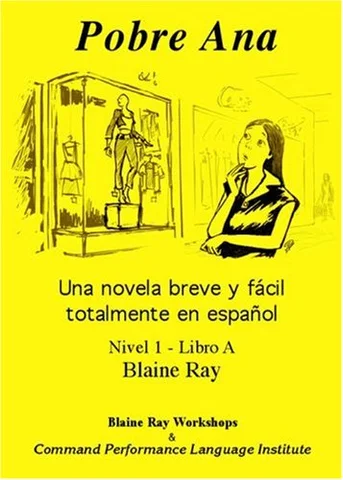
Family, school and a stay in Mexico
Pobre Ana
Blaine Ray · Beginner classroom reader
Ana is a California teenager who feels at odds with her family and friends. A chance to live with a family in Mexico gives her a different view of what she has at home. The story uses a small, recurring vocabulary to talk about school, money and family life.
If your Spanish has mostly come from class, the repeated language can make this a manageable first novel. The publisher uses its own classroom scale, so I treat it as a beginner option and would judge the fit from a sample.
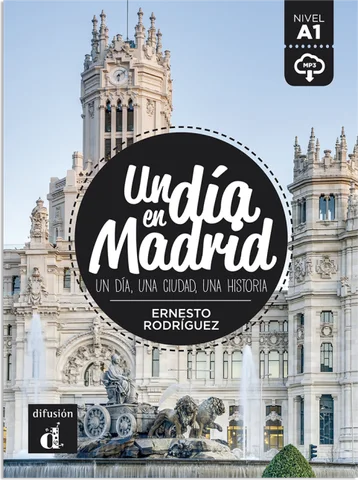
A Sunday around Madrid
Un día en Madrid
Ernesto Rodríguez · A1
Diane wants to visit El Rastro on her first trip to Madrid. Her boyfriend Tomás has other plans for their Sunday. The story comes with a visual dictionary and cultural material about the city.
If words for places and going out are already familiar, the city gives you clues as you read. The illustrations are handy when you can picture what a word refers to but can't quite translate it.
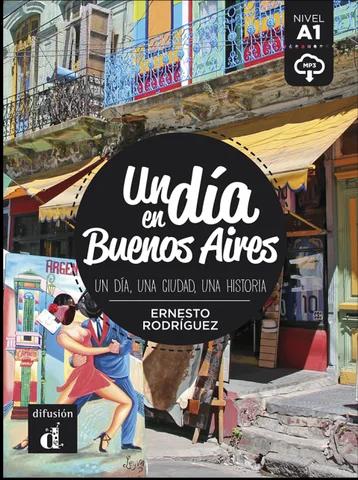
A family discovery and a trip
Un día en Buenos Aires
Ernesto Rodríguez · A1
Luis lives in Madrid and is fifty when he learns he has an uncle in Buenos Aires. He travels there to meet him. The story pairs that family visit with a visual dictionary and notes on the city.
This makes a good follow-up to Un día en Madrid if you like seeing a city through a visitor's eyes. Here the reason for traveling is personal, and there are family relationships to follow alongside the places.
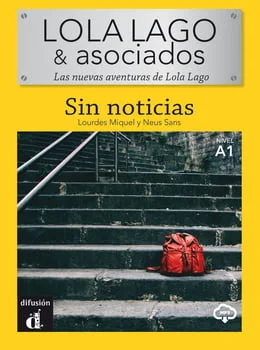
A missing-person case in Madrid
Sin noticias
Lourdes Miquel and Neus Sans · A1
A young German woman goes missing in Madrid, and detective Lola Lago and her colleagues set out to find her. The case gives the conversations a purpose, and Difusión includes a glossary and comprehension activities.
Try it if you like the question that opens a mystery and want help checking what you understood after a chapter. It's also an easy way into Lola Lago's world before the A2 case Amor en línea.
A Real Madrid fan's big dream
Fútbol en Madrid
Paco Ardit · A1
José is in his fifties, follows Real Madrid and imagines playing in the Spanish league with his heroes. Match talk and short chapters give this story a setting that football fans can recognize straight away.
If you already know how people talk about teams and players, use that knowledge to follow the Spanish. Try a short recap aloud by naming the team José supports and saying what he wants to do.
A private detective in Buenos Aires
Muerte en Buenos Aires
Paco Ardit · A1
The opening introduces Miguel, a private detective in Buenos Aires, through his daily life and work before the case takes over. The chapters are short enough to read a few at a time.
The quiet setup gives you a chance to get comfortable with the people and places. Once the investigation begins, try naming who did what before going back for any words you missed.
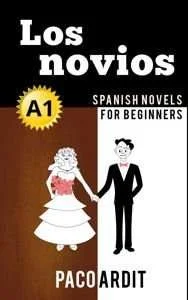
A wedding with too much planning
Los novios
Paco Ardit · A1
Pablo and Pamela want to live together, but planning their wedding turns out to be stressful. Their predicament puts the focus on everyday plans and disagreements between two people who want much the same thing.
The stakes are familiar, even when some of the words are new. Read for what each of them wants and see how much of the disagreement you can understand from that alone.
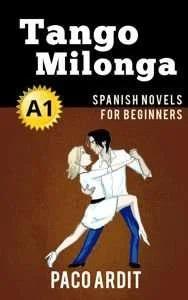
A dancer trying to get back on his feet
Tango milonga
Paco Ardit · A1
Rodolfo goes dancing every day in Buenos Aires until an accident leaves him with a broken leg. His aim is to recover well enough to dance tango again.
The dance vocabulary gives the book its own flavor. It helps to know that a milonga can be a social event where people dance tango. The story gives the word a setting to remember it by.
Graded readers and books written for fluent readers
A graded reader might use the same common verb several times in a chapter. A novel written for fluent readers might use three different verbs for the same action, or leave the action for you to infer. A familiar story in translation can help you guess what happens next, but its sentences may still be long or unfamiliar.
If you want to try Spanish written for a general audience, start with a menu, a short illustrated story or a familiar comic strip alongside your graded reader. Length and familiarity can make more difference at this point than the age of the intended audience.
How to read a chapter without translating every sentence
Read one scene to the end, then tell yourself in a few words what happened. If a word keeps showing up or stops you from understanding an important action, look it up and read that sentence again. Leave minor details for a reread.
If you're using a visual dictionary, look at the picture before the translation. After the chapter, close the book and try recalling a phrase you could use yourself. A few words you recognize tomorrow are worth more than a long list you never open again.
When to try your first A2 book
Move up when you can read most of an A1 chapter without frequent stops and explain why the characters did what they did. Try a chapter of Laura no está for short scenes with a mystery to follow. If you want to stay with a detective you already know, sample Amor en línea after Sin noticias.
Expect more references to earlier events and plans. If you can keep the sequence straight even when a verb ending is new, keep going. Keep an A1 book nearby for days when you want an easier read.
Listen along with your first Spanish book
At A1, I'd read the scene first. Then play 20 to 30 seconds while you follow the same words on the page. Hearing where the speaker pauses and which syllables carry stress can help connect the written words to their pronunciation. A quick recording can be hard to follow even when the printed page feels easy.
Try replaying a single sentence and saying it aloud at a comfortable speed. Once you can hear the phrase as a whole and explain what the speaker meant, replay the short scene with the book closed. A recording with clear speech and a pace you can follow is a better place to start than a long chapter you can only catch in fragments.
If you're considering an audiobook service, listen to a sample of the story you want and see whether the narration feels manageable.
As an Amazon Associate, I earn from qualifying purchases.
First books
Questions about reading at beginner level
Can I read a Spanish book if I've just started learning?
Start with a few illustrated sentences or a sample chapter once you know some common verbs and everyday words. If you can't place the scene yet, build up with shorter texts and try the chapter again later.
Should I use an English translation alongside the Spanish?
Use it after a first pass if the gist is still unclear. Reading each English line first makes it harder to see what you can already understand on your own.
Should I start with Spanish children's books?
Some illustrated books give beginners useful context, but books written for fluent children may have rhymes, unusual verbs or made-up words. Try a page and compare how much of the action you can follow in a graded reader.
Do I need to pick one variety of Spanish?
You can start with whichever setting interests you. If you're learning Spain's Spanish, Madrid may sound more familiar. A Buenos Aires story lets you meet Argentine usage in context, and a few regional words needn't stop you from following the plot.
Sources
Sources for this guide
The levels come from the publishers' catalogs and book descriptions. The Council of Europe explains what readers can generally do at A1 and A2.