Spanish reading
Best Books to Read in Spanish at A2 Level
Finish a whole story in Spanish, then try a collection that gives you a little more to work out on your own.
I've read all of these books. For a first complete A2 story, I'd pick Laura no está. The question of what happened to Laura carries through the short chapters. Once keeping track of a plot feels comfortable, a collection like Olly Richards's Short Stories in Spanish for Beginners gives you a new setting and new people to figure out every time you start a story.
Start with a complete story
Which Spanish book should I read at A2?
Start with Laura no está for a short mystery or Amor en línea if you'd like a detective story with a glossary and comprehension activities. If you can already follow several chapters without losing the plot, try a single story from Lingo Mastery or a few of Olly Richards's connected dialogues.
What A2 means when you sit down with a book
At A2 you can generally follow short, simple stories told in familiar language. In a graded novel, that means you can often recognize the problem and follow the sequence even when a detail gets past you. Try a second page if the first is mostly names or setup. Can you tell what changed and what the character might do next?
A2 is a reading range. A football fan might breeze through a match scene and slow down in a detective's office. If even a familiar topic has you piecing together every sentence, an A1 book will give you more room to read for pleasure.
One plot or a collection of short stories?
A graded novel lets you return to the same people and places tomorrow. That familiarity frees up attention for how the writer describes an earlier event or introduces a new clue. A collection is easier to fit into short sessions, but every new story asks you to learn who is talking and what matters.
Choose by what you're ready to practice. For continuity, the first six books below each give you a complete A2 story. The collections and dialogues further down offer more variety for readers who already follow that kind of plot.
Graded fiction
Six complete A2 stories in Spanish
These six books are labeled A2 by their publishers. The collections below have a broader or higher starting range.
A missing artist in Buenos Aires
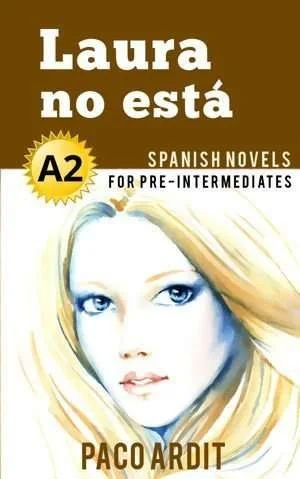
Laura no está
Paco Ardit · A2
Laura sells drawings on a pedestrian street in Buenos Aires. A stranger buys several of her portraits, and a few days later her friend Claudio is looking for her. The short chapters give you a clear sequence to keep track of.
I'd start here if you want your first complete A2 mystery. Remember what Claudio knows at the end of each chapter. That gives the next scene a purpose even if some of the wording takes a second look.
A Lola Lago case about online dating
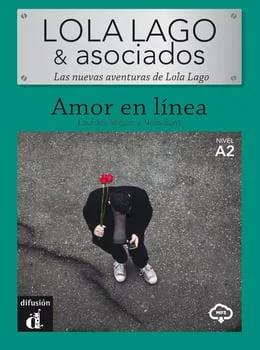
Amor en línea
Lourdes Miquel and Neus Sans · A2
Margarita meets someone online, and her longtime colleague Lola Lago has doubts about the romance. The conversations give you a chance to see how Margarita and Lola read the same situation differently.
If you've met Lola in Sin noticias, this is a natural way to try a harder reader with a familiar lead. A glossary and comprehension questions are there if you want to check where your reading and Lola's suspicions diverge.
A crime with digital clues
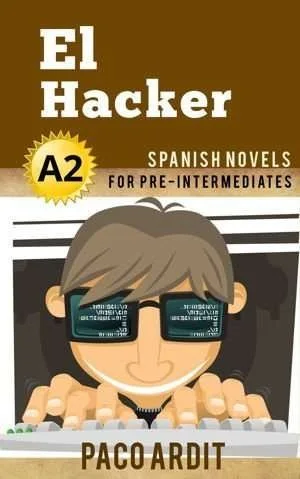
El Hacker
Paco Ardit · A2
Leo works in computer security in Argentina. After a young woman is killed, police ask him to examine her laptop and phone. The investigation adds technology vocabulary to Ardit's short-chapter format.
If you like mysteries with physical clues to keep track of, the two devices give you a focus. Expect some subject-specific words alongside the usual conversations and past-tense narration.
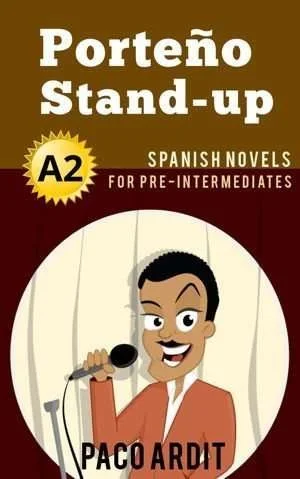
An actor's chance at a comedy show
Porteño Stand-up
Paco Ardit · A2
José Luis is a Buenos Aires native living in Córdoba. He takes supporting roles in film and television and dreams of performing stand-up. A friend tells him about an audition that might give him his chance.
The acting and audition setting puts different words in front of you than a detective story would. The opening also gives you a few distinctly Argentine details, from mate to the nickname that follows José Luis.
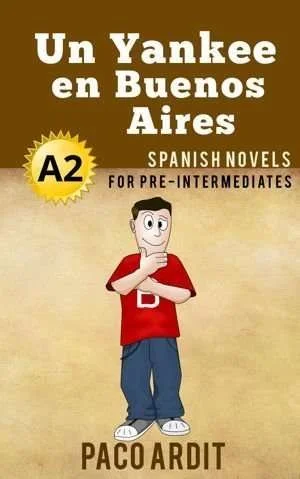
An American starting over after a breakup
Un Yankee en Buenos Aires
Paco Ardit · A2
Brian is finishing his studies in California when his girlfriend leaves him. A friend who lives abroad suggests he travel, setting up the trip to Buenos Aires. The opening puts familiar plans and relationships in the foreground.
This is a way into Argentine Spanish through a visitor's perspective. Try keeping track of what Brian had planned and what he is considering now, a distinction that makes the changes in tense matter to the story.
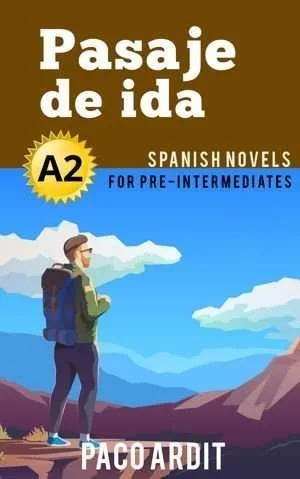
A photographer rethinking his work
Pasaje de ida
Paco Ardit · A2
George makes a good living in London photographing models and actors. His grandfather taught him to take pictures, and George would rather photograph landscapes. An encounter with an Argentine model gives him a reason to think about traveling farther afield.
The opening moves between George's present-day work and memories of his grandfather. That makes it a useful choice if you want to practice keeping track of past and present within the same story.
Short stories and dialogues for the step toward B1
Lingo Mastery recommends its two collections for A2 and up. StoryLearning places the Olly Richards books in the A2 to B1 range. Try one story or a short run of dialogues before committing to a collection.
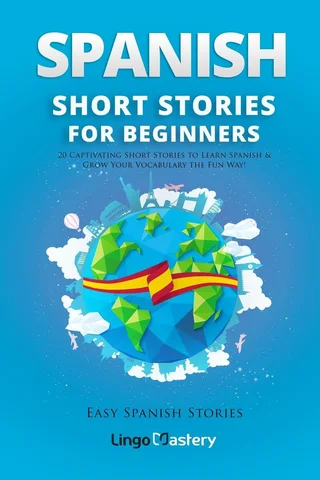
Everyday situations with bilingual recaps
Spanish Short Stories for Beginners
Lingo Mastery · A2 and up
Lingo Mastery uses twenty short pieces to put everyday Spanish in context. Topics include giving directions and describing past events. Spanish and English recaps, vocabulary notes and questions follow the stories.
The two summaries give you a useful way to check your reading. Try the Spanish recap first and save the English one for a scene you're still unsure about.
Eight stories across several genres
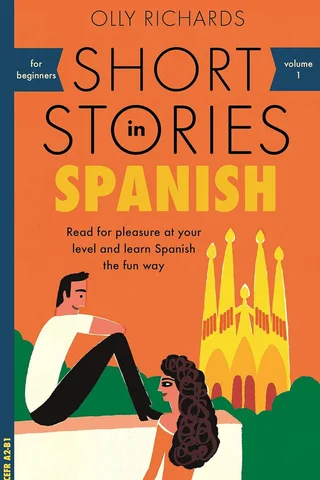
Short Stories in Spanish for Beginners
Olly Richards · A2 to B1
The first Olly Richards collection moves among genres including science fiction, crime and historical fiction. Each new story asks you to get your bearings again, even though the language is graded.
If you can already finish an A2 reader, try one story in a genre you know. If you can tell what happened after a chapter and still want to go on, that's a better reason to continue than the word “Beginners” on the cover.
One Madrid story told in short dialogues
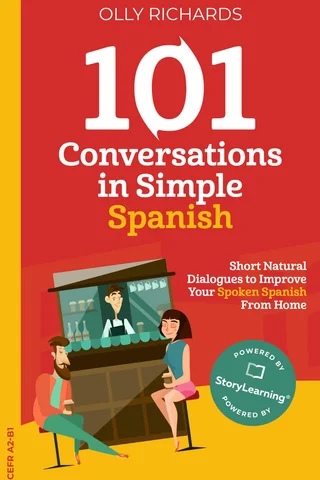
101 Conversations in Simple Spanish
Olly Richards · A2 to B1
Friends Alicia and Nuria are visiting Madrid when they come across valuable paintings in an antiques market. The story unfolds through 101 short conversations, so what people say supplies much of what you need to know.
This is the collection I'd try for practice following everyday speech on the page. A scene is short enough to reread aloud, but the conversations belong to a continuing plot, so it helps to start at the beginning.
New situations with the same reading support
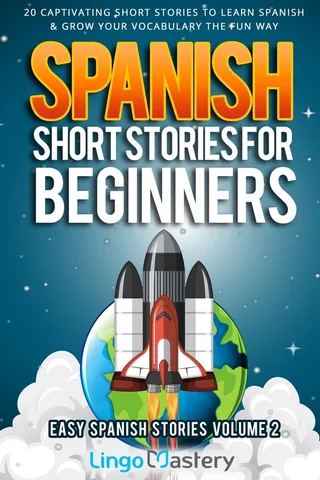
Spanish Short Stories for Beginners, Volume 2
Lingo Mastery · A2 and up
The second Lingo Mastery volume adds twenty pieces, with everyday situations such as shopping and language practice that includes the future tense. The bilingual summaries and vocabulary notes return after each story.
If the first volume's routine worked for you, try this one with a small change. Read a whole story, answer a question from memory, then check the Spanish summary. Use the English recap if the sequence still feels unclear.
Eight more stories with chapter questions
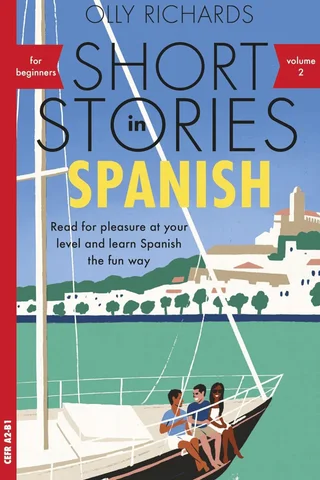
Short Stories in Spanish for Beginners, Volume 2
Olly Richards · A2 to B1
Volume 2 adds eight different stories, including crime and science fiction. The chapters have comprehension questions and there is help with selected words and a plot summary.
If the first volume felt like a stretch you could manage, this keeps the same published reading range while giving you fresh settings and plots. You can also sample this volume first since the stories are new.
Keep your place when the vocabulary gets harder
Read to the end of a scene before checking a dictionary. Note the words that carry the action, such as a verb that explains what someone did to a clue. Leave a color, a description or a synonym alone if the scene makes sense without it.
After a chapter, write one sentence about what changed. In a mystery, you could note what the detective learned and what is still uncertain. Pick two or three expressions from the chapter to revisit the next day. A phrase in context is often easier to recognize again than the same word on its own.
How to tell when you're ready for an A2-to-B1 collection
Try a full short story at your own pace. Retell the beginning, the turning point and the outcome. If the overall shape is clear, try another genre in the same book. Changing the topic or the amount of unfamiliar vocabulary one at a time makes it easier to tell what you're ready for.
If you remember the individual sentences but can't connect them to the plot, try another A2 novel before tackling the collection. If the difficulty is mainly long passages of narration, the connected dialogues in 101 Conversations in Simple Spanish give you shorter scenes to work with.
Build listening practice into your A2 reading
Pick a short exchange from a story you can already follow. Listen once with the book closed and see whether you can tell who is talking and what they want. Then read along to catch where words run together, how questions rise or fall, and which syllables the speaker stresses. Try saying one line back to hear how your phrasing compares.
If the recording is too fast to follow, start with the page or choose a clearer, slower sample. After a few passes, close the book again and see if you can give a one-sentence recap. Add a longer stretch of audio when you can follow a short scene on its own.
If you want more narration to practice with, use a sample to judge the pace and check for the specific title before choosing a subscription.
As an Amazon Associate, I earn from qualifying purchases.
Reading at A2
Questions about A2 Spanish books
Do I need to know all the Spanish past tenses?
You need enough to tell when events happened. Ardit's A2 books assume some familiarity with present, past and future forms. If a past-tense form keeps confusing you, look at time phrases and reread the scene to see what happened first.
Is an A2-to-B1 book too hard for an early A2 reader?
It can be. Start with a book labeled A2 if you still need to reread every paragraph. Try an A2-to-B1 story when you can handle a few unknown words and still explain the scene.
Do I need to read Volume 1 before Volume 2?
Either volume works as a starting point in the Olly Richards or Lingo Mastery collections. The volumes contain different standalone stories. Start 101 Conversations in Simple Spanish from the beginning because its dialogues tell one continuing story.
Can I read a regular Spanish novel at A2?
You can sample one, especially if you already know the plot. For a book you can finish with fewer interruptions, start with a graded novel and test a few pages of the regular novel alongside it.
Sources
Sources for this guide
The A2 and transition labels follow the publishers' and authors' reading ranges. Those ranges describe the intended readers of each book.
- Council of Europe CEFR Companion Volume
- Paco Ardit's Spanish Novels series
- Amor en línea at Difusión
- Olly Richards's StoryLearning book catalog
- Teach Yourself's first Spanish short-story collection
- Teach Yourself's second Spanish short-story collection
- Lingo Mastery's first Spanish short-story collection
- Lingo Mastery's second Spanish short-story collection