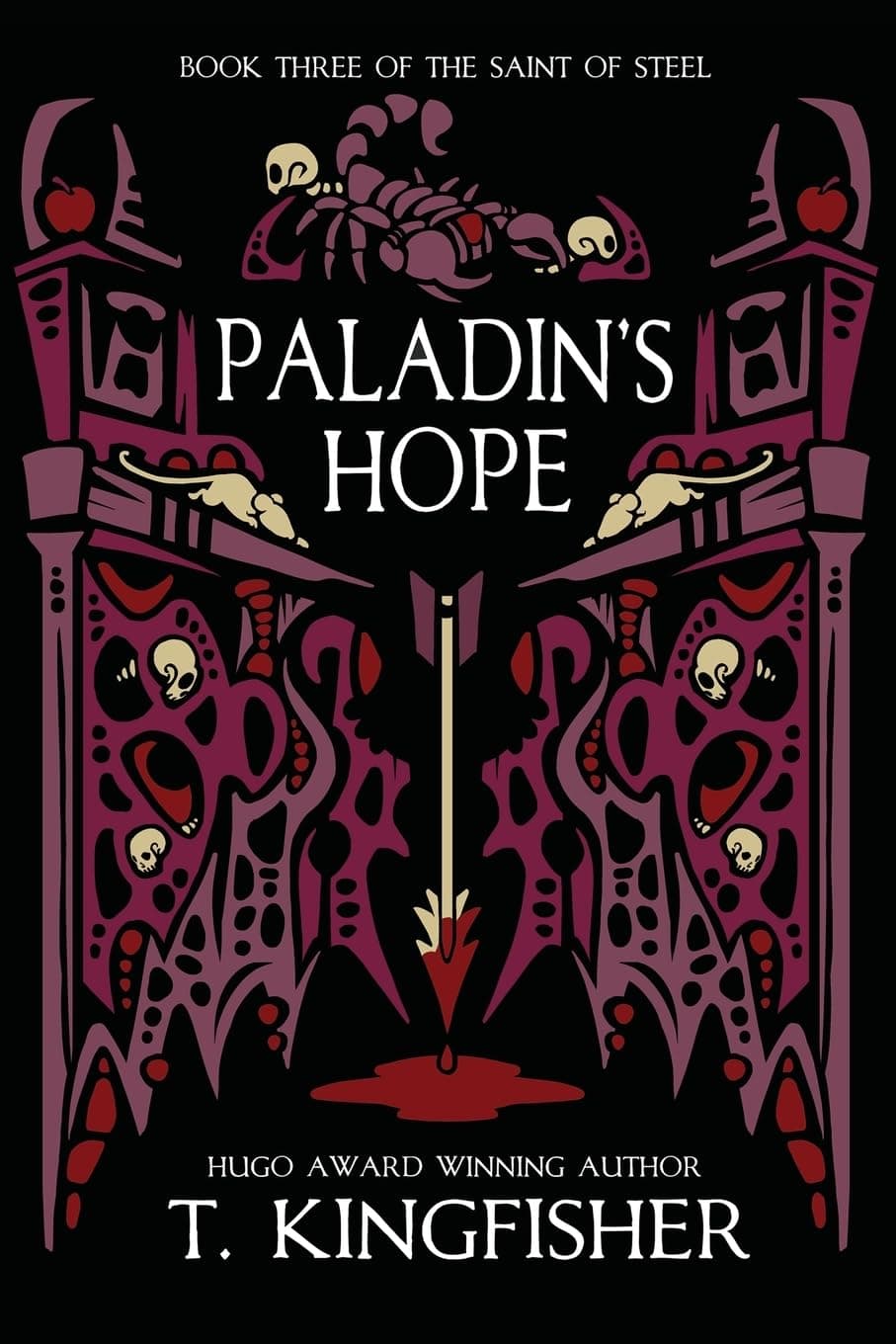
Should you read Paladin's Hope?
What works
Piper's reading of bodies and Galen's protective instincts make them useful to each other before attraction resolves, and the underground hazards exploit both skill sets.
What may not work for you
The transition from murder investigation to puzzle dungeon is abrupt, and familiar beliefs about being too damaged for love recur from earlier books.
What may test your patience
The early casework introduces corpses, temple obligations, and series connections before the central danger locks the pair into one urgent space.
Does the ending reward the effort?
Yes. The escape and relationship both depend on communication rather than solitary sacrifice, while the broader paladin questions remain available for later volumes.
Reading Paladin's Hope closely
Paladin's Hope pairs Galen, whose bright energy masks the same divine loss carried by the other Saint of Steel survivors, with Piper, a lich-doctor who examines bodies to determine how people died. A series of unusual corpses draws both men into an investigation that quickly becomes personal.
Piper's forensic attention and Galen's instinct for danger make them effective partners, while their emotional rhythms are less coordinated. Attraction develops amid gnole conversations, temple obligations, and uncertainty about whether either man can offer more than a brief refuge from work and grief.
The investigation leads into an underground structure whose puzzles shift the novel toward dungeon adventure and claustrophobic survival. Kingfisher keeps the romance tender and funny while making space for corpses, traps, violence, and fear. The result is the most overtly puzzle-driven of the first three Saint of Steel books.
A queer romance built through investigation
Galen and Piper are adults with established identities, so the conflict is not about discovering whether same-sex desire is possible. It comes from vulnerability, professional danger, and the familiar belief that one's own damage makes lasting affection unfair to someone else.
Forensic skill and underground danger
Piper is a physician who works with the dead, not an undead character. His ability to read bodies anchors the murder mystery, while Galen's combat experience becomes essential when the investigation moves into a confined and mechanically dangerous space.
Series continuity and tone
Recurring paladins, gnoles, and the unresolved question of their god's death reward reading in order. The central M/M romance concludes satisfyingly, with on-page intimacy, affectionate humor, and darker sequences involving death, confinement, and lethal traps.
Three useful comparisons
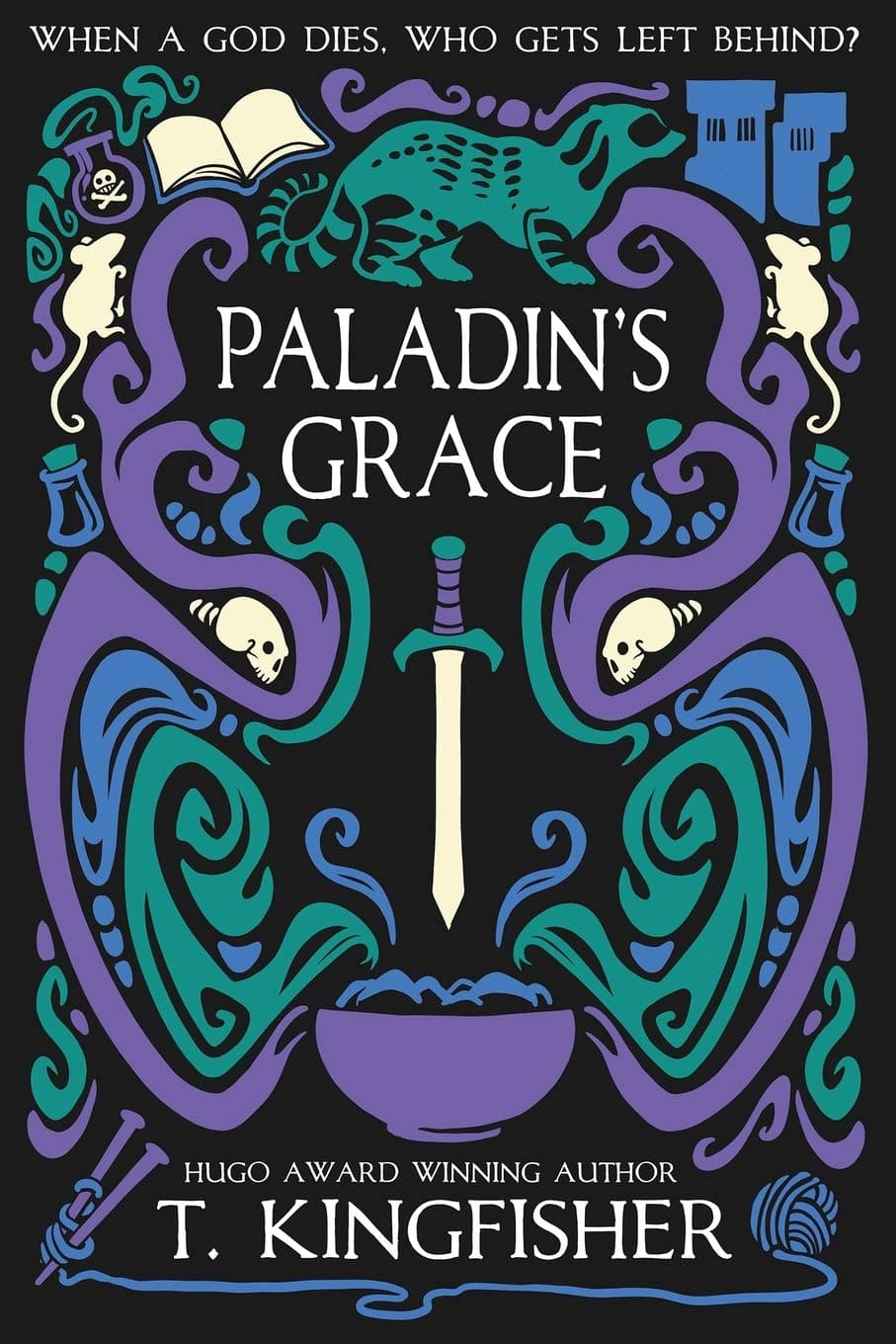
Paladin's Grace
Paladin's Grace begins the series and offers a slower M/F romance with perfume and an urban murder plot.
Best for: Best when you want mature fantasy romance, kindness, humor, some violence, and a mystery that supports rather than dominates the relationship.
As an Amazon Associate, I earn from qualifying purchases.
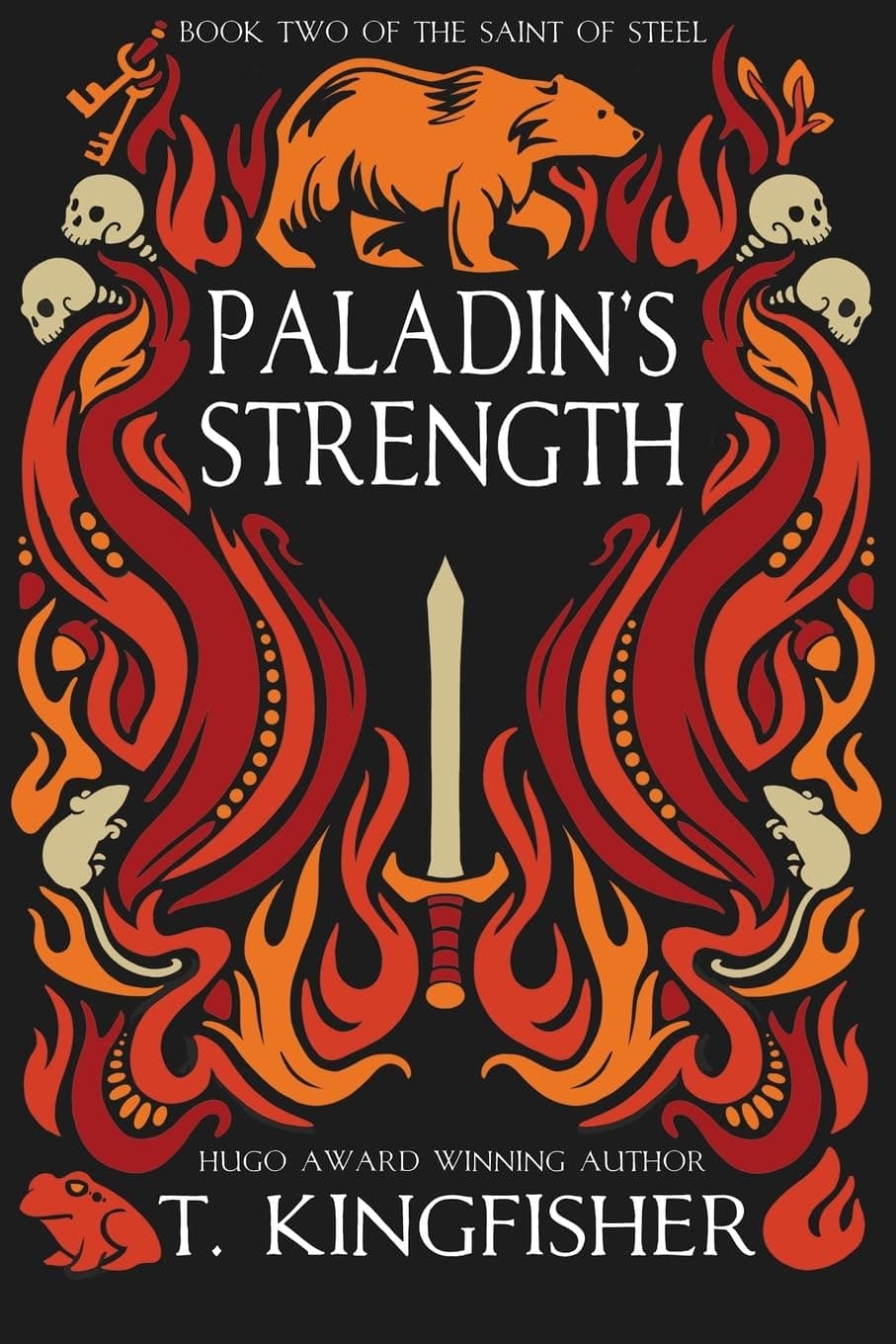
Paladin's Strength
Paladin's Strength is a broader road novel with more combat and a hidden transformation.
Best for: Readers who want body-positive fantasy romance, road adventure, monsters, and adults capable of talking through consequential secrets.
As an Amazon Associate, I earn from qualifying purchases.

Swordheart
Swordheart is funnier and looser, with legal trouble and an enchanted sword replacing forensic mystery.
Best for: Pick this for middle-aged fantasy romance, road comedy, an enchanted sword, legal stakes, and a nonbinary supporting hero.
As an Amazon Associate, I earn from qualifying purchases.