Reading Find the Christmas Killer closely
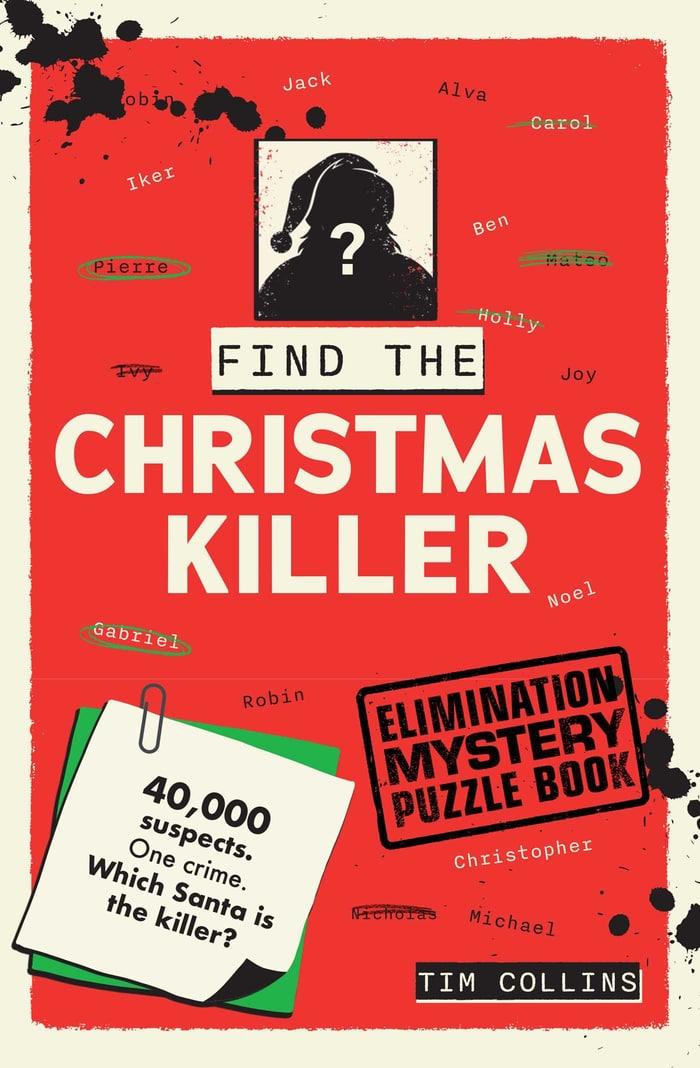
I read Find the Christmas Killer, Tim Collins's elimination puzzle set at a Christmas Eve singalong. A singer is killed before she can go onstage, and witnesses agree that the killer was dressed as Santa Claus. So were roughly 40,000 other people at the festival. The detective is handed the attendee list, and that's what you work on.
What the witnesses tell you
The witness accounts establish the disguise. The twelve clues that let you whittle down the list come from the killer, and the book gives you all of them up front. Some concern the spelling of a name. Others concern where it appears in a column or what else is printed on the page. The layout is part of the evidence, so a name copied onto a separate list can lose information you need.
The suspect pages are packed with first names, and some names recur. A match on spelling can still leave several entries in play. Each condition gives you a reason to cross something out, and the remaining entry has to survive every condition.
One case over several sittings
The rules fit on a page. The work is applying them to columns of closely set names without losing your place. A clue can be easy to understand and still take care to apply. If you put the book down, a bookmark and a note of which clues you've checked can save you a pass through the same pages.
With a collection of separate cases, each solve gives you an ending and the next one gives you a clean start. Here every page you clear belongs to the same investigation. After the setup, most of your time goes into checking the list. If you want a mystery that keeps introducing people to question, the stretches spent checking names will feel like a different activity.
A Christmas Eve case
The singalong gives Collins a reason to put a whole arena in the same costume. A witness can get a good look at the killer and still give you a description that fits the crowd. The rush to finish before midnight belongs to the story. At the table, you can stop as often as you need to.
Both The Killer Isn't Alice and Collins's book give you one roster to mark up. Alice's dossier opens with a disappearance and has eighteen conditions, including some that use the book's chapter divisions. Collins's list uses the positions of names within pages and columns. If you come from Alice, the habit of reading the whole clue sheet before you make a mark will serve you here, too.
The pleasure this book offers is watching a crowd shrink to a handful of names and being able to explain why each is still in play. The Christmas story gets you to the list. How much you like working through a list will decide how long you want to stay.