Should you read Edge of Worlds?
What works
The Kishan expedition brings outsiders into sustained contact with the Raksura and exposes how much practical diplomacy Jade and Moon have learned. The sealed Forerunner city is not a decorative ruin; its architecture controls movement, knowledge, and the approaching threat.
What may not work for you
A large traveling party means several figures remain names and functions, while the careful outward journey delays the central discovery. Most importantly, the ending is a hard cliffhanger, so the novel cannot provide the independent satisfaction of the first three books.
What may test your patience
The first half organizes the expedition, negotiates different customs, and moves a sizable group toward the site. Readers need to enjoy travel, reconnaissance, and ensemble preparation before the ruin becomes the main source of tension.
Does the ending reward the effort?
Not on its own. The final sequence is gripping and changes the scale of the threat, but it stops rather than concludes. The Harbors of the Sun should be considered the second volume of the same novel-sized arc.
Reading Edge of Worlds closely
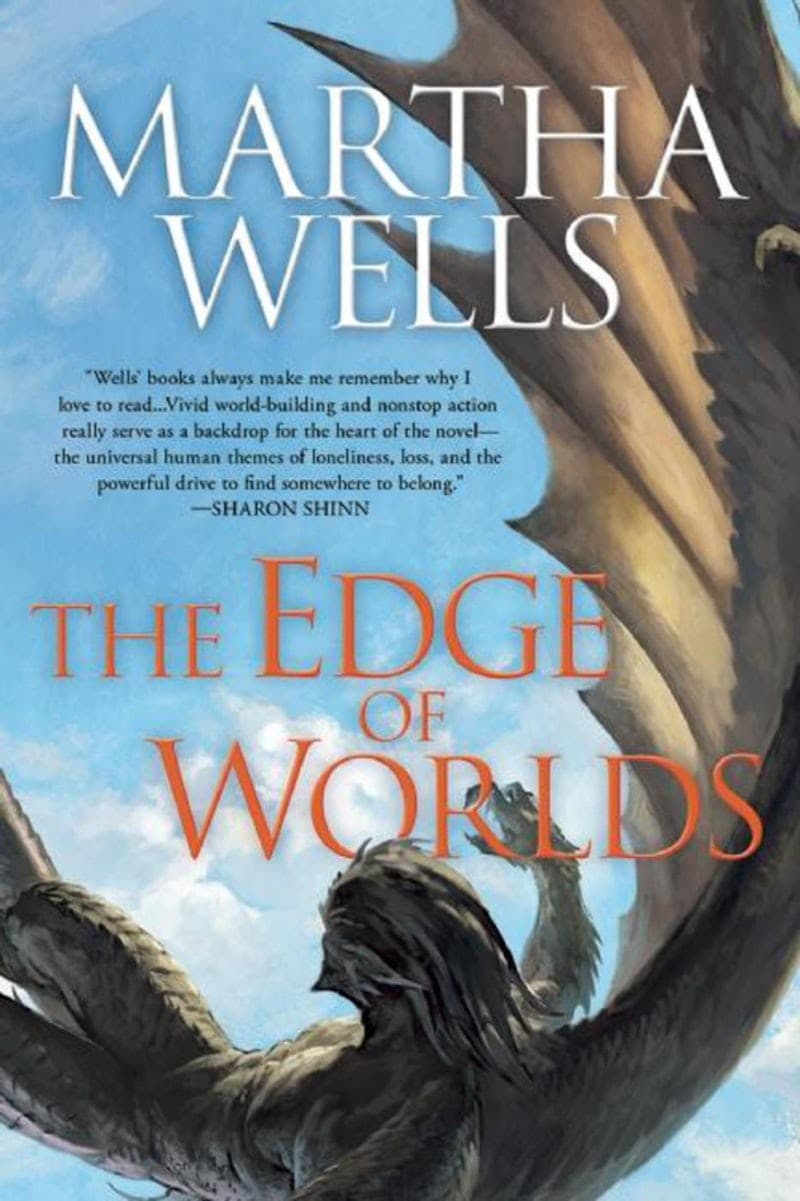
The Edge of Worlds begins a new Raksura arc after the opening trilogy has given Indigo Cloud greater stability. A Kishan expedition seeks help reaching a sealed city associated with the ancient Forerunners, and the Raksura have reason to believe the Fell are searching for the same place. Moon and Jade join a large party whose members do not share one understanding of the risk.
The expedition format gives Wells room to place Raksuran customs beside another complex society. The Kishan are neither simple employers nor suspicious outsiders. Their knowledge, hierarchy, and internal disagreements matter, while Jade must decide when to assert authority and when cooperation requires accepting incomplete information.
The city is the novel's strongest creation. Its spaces feel wrong in proportion and intention, suggesting inhabitants whose bodies and priorities differed from everyone exploring them. Rather than supplying a clean archaeological lecture, Wells reveals purpose through routes that fail, sealed structures, and the growing realization that a discovered object may have been protected for good reason.
This careful buildup requires patience. The group is large, travel takes time, and several supporting members remain identified more by expertise than personality. Readers who want Moon's intimate court story may also feel the ensemble dilutes him. The reward is mounting unease, not a series of quick confrontations.
The cliffhanger is the decisive caveat. The final sequence is exciting and changes the meaning of the expedition, but it does not deliver an independent resolution. The Harbors of the Sun is required, not optional continuation. Read together, the books form an ambitious finale; read alone, The Edge of Worlds feels like a strong volume stopped at its most urgent chapter.
Expedition fantasy built on diplomacy
Every practical decision also negotiates authority between the Raksura and Kishan. Cooperation depends on recognizing different expertise without pretending the groups have identical goals.
The ruin resists familiar bodies
Doors, distances, and pathways do not fit the explorers' expectations. The architecture makes the absent Forerunners feel genuinely different before the book supplies any confident explanation of them.
The ending is a midpoint
The final danger is not followed by recovery or reflection. This is a deliberate two-volume structure, and readers should approach The Harbors of the Sun as the next half rather than a later independent adventure.
Three useful comparisons
The Harbors of the Sun
The Harbors of the Sun is the necessary conclusion, beginning with the party divided and the danger already active. The Edge of Worlds offers more discovery, atmosphere, and diplomatic preparation. Read them as one arc: the fourth book asks what the ruins contain, and the fifth forces everyone to survive the answer.
Best for: Readers who have finished The Edge of Worlds and preferably the full Raksura sequence, seeking a fast, expansive conclusion with rescues, Fell danger, cultural alliances, and earned communal payoff.
Shards of Earth
Shards of Earth also assembles a mixed crew around ancient, civilization-level danger and makes travel between threatened places part of the suspense. Tchaikovsky is faster, more militarized, and set across space. Wells favors ecological fantasy, negotiation, and the unease of entering structures made for unknown bodies.
Best for: Go here for a found-family crew, diverse aliens, political factions, salvage work, and large-scale space-opera danger.
Children of Time
Children of Time reveals a civilization by following its development and eventually confronting human observers with a new intelligence. The Edge of Worlds approaches vanished makers only through ruins and consequences. Choose Tchaikovsky for explanatory scope; Wells for expedition suspense and archaeological uncertainty inside an established character series.
Best for: Readers who like big evolutionary ideas, nonhuman viewpoints, and long time scales more than a conventional hero's journey.