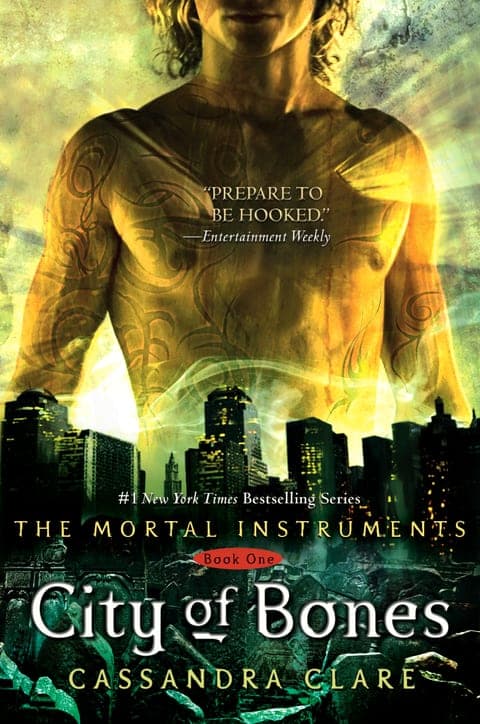
Reading City of Bones closely
City of Bones builds its fantasy from the unsettling idea that a familiar city can contain a whole society you have never been allowed to see. Clary Fray’s New York is not replaced by a distant kingdom. Its clubs, streets and buildings acquire another set of inhabitants and rules, while the disappearance of her mother makes that discovery urgently personal.
The opening has a clear advantage: Clary needs explanations the reader needs too. Cassandra Clare can introduce the Shadowhunters through conflict, suspicion and mistakes. The limitation follows from the same device. Clary spends a considerable amount of time receiving information from people who understand her situation better than she does.
A city with competing explanations
The Shadowhunters are demon hunters with angelic ancestry. The Downworlders around them are not one interchangeable supernatural threat: warlocks, vampires, werewolves and faeries occupy different places in the hidden social order. Learning who has authority, and who resents it, matters as much as learning what a rune does.
The urban setting keeps these explanations grounded in movement. An encounter can turn a recognizable place into hostile territory without pausing for a map of a new continent. The book’s pleasure lies in that overlap between an ordinary city and the elaborate claims made over it.
Clary, Jace and Simon
Jace’s confidence gives the dialogue speed, but it is often defensive. His sharpness makes an impression before the reasons for it become clear. Simon offers a different pressure on Clary: he belongs to the life she already understands, even as her attention moves toward people who appear able to explain her family.
That arrangement gives the romantic tension a practical basis. Choosing whom to trust also means choosing whose account of the world to accept. It is less satisfying when banter becomes a substitute for listening, or when Clary’s inexperience repeatedly leaves her waiting for someone else’s explanation.
A busy debut with a strong forward pull
The missing-person search and the questions around Clary’s family keep the novel moving. Exposition accumulates quickly, and the prose often emphasizes a mood or an attraction after the scene has already established it. Clare’s appetite for dramatic revelations is present from the start.
The search for Clary’s mother gives the plot its immediate urgency, while the family revelations leave plenty for City of Ashes to develop. The world expands faster than its first protagonist can understand it; that is a useful source of urgency and, occasionally, a source of clutter.
What follows City of Bones
Continue The Mortal Instruments with City of Ashes, City of Glass, City of Fallen Angels, City of Lost Souls and City of Heavenly Fire. Starting with City of Bones does not mean that this one novel supplies all the context for the much later Wicked Powers trilogy.
What to read before The Last King of Faerie explains the full series route and the shorter Dark Artifices refresher. The Cassandra Clare hub distinguishes the five books analyzed here from the wider Shadowhunter bibliography.
Make the next decision