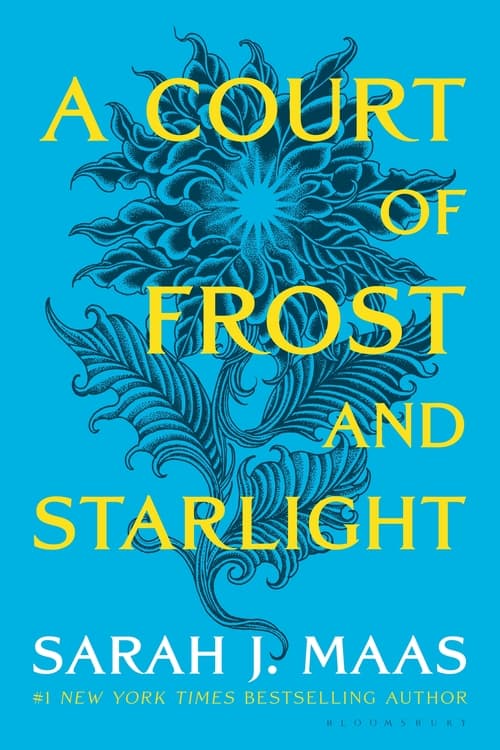
Should you read A Court of Frost and Starlight?
What works
The space for rebuilding after the war and revisiting relationships is welcome. The novella prepares the move toward the later books without immediately demanding another enormous crisis.
What may not work for you
There is no strong central conflict or antagonist, and the series makes little forward progress. Familiar company isn't enough to make the extended-epilogue structure feel substantial.
What may test your patience
Expect a pause after Wings and Ruin. Waiting for a central conflict to arrive is likely to make this short bridge feel longer than it is.
Does the ending reward the effort?
It leaves the series positioned to continue, but that transitional purpose isn't much of a payoff on its own. I value the preparation more than the novella's narrative progress.
Reading A Court of Frost and Starlight closely
A Court of Frost and Starlight is a pause after the war. Feyre, Rhysand, and their friends are rebuilding as Winter Solstice approaches, and the shorter book gives that aftermath space before the series moves on. It makes more sense as a bridge than as a new story with the weight of the preceding novels.
There is value in that pause. Rebuilding relationships after an enormous conflict shouldn't always require another antagonist to arrive immediately. The novella revisits the cast and plants seeds for what comes next, so its place in the reading order has a purpose.
As a book in its own right, though, I find it thin. There isn't a strong central conflict or antagonist, and the plot makes little progress. It feels like an extended epilogue: welcome company for someone who wants more time with these characters, but not enough narrative movement to make every extra page necessary.
The distinction matters for expectations. If you want the next decisive confrontation, this interlude is likely to frustrate you. If you want the relationships to settle after Wings and Ruin and before the shift into Silver Flames, the same relaxed structure has a clearer use.
I rate it 2.5/5. I'd keep it in the ACOTAR sequence, while treating it as a short transitional read rather than expecting the scale or momentum of a full novel. Preparing the next stage and being a satisfying story on its own are different achievements; this book does more of the first.
What the bridge does well
The relationship aftermath and future seeds are the reasons to read it. The change of pace allows the series to acknowledge rebuilding instead of moving directly from one large crisis to another.
That quieter purpose fits its position between Wings and Ruin and Silver Flames. It is less convincing as a reason to call the novella a substantial new plot.
Why it feels like an epilogue
Without a central conflict or antagonist, the book has little to push it forward. The familiarity of the cast carries more weight than narrative progress. That will work better for some readers than others, but it is the main limit behind my 2.5/5 rating.
Keep it between the novels
Read it after Wings and Ruin and before Silver Flames. The ACOTAR reading order explains why a shorter bridge still belongs in the sequence.
For quieter stories of recovery and relationships, see Books Like A Court of Frost and Starlight. Our Sarah J. Maas hub keeps the wider bibliography separate from the books covered here.
Publication and edition
Frost and Starlight was originally published in 2018. The 272-page count here is for Bloomsbury's 2020 US paperback. It is a shorter companion novella even though different formats may paginate it differently.
Three useful comparisons
A Court of Silver Flames
Silver Flames follows this bridge and gives the next stage a stronger character focus through Nesta's recovery, training, and friendships. Read it afterward rather than expecting Frost and Starlight to do that novel's work.
Best for: I'd recommend it for Nesta's recovery, female friendship, and a more mature, explicit ACOTAR romance. It is less persuasive if forced conflict involving familiar characters or convenient magical resolutions usually overwhelm your enjoyment.
Swordheart
Swordheart offers adult fantasy romance with warmer comic company and a concrete inheritance conflict. Choose it if you want a gentler adventure that still has its own central problem, rather than an ACOTAR interlude.
Best for: Pick this for middle-aged fantasy romance, road comedy, an enchanted sword, legal stakes, and a nonbinary supporting hero.
Make the next decision