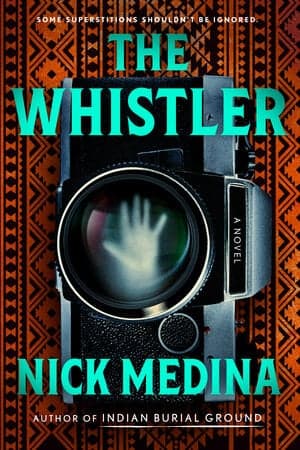
Should you read The Whistler?
What works
The book can do a lot with a sound and the thought that someone has answered it. I found the presence itself most effective when Henry knew he had heard something and could do very little to make anyone else hear it.
What may not work for you
Some of the supporting characters felt thin next to Henry and the thing following him. The middle also lets the tension ease after an opening that makes the threat feel immediate.
The ghost hunter at home
Henry Hotard was building a following by going looking for ghosts. After a serious injury, he returns to the Takoda Reservation, uses a wheelchair and relies on help from his grandparents while he adjusts. Now a presence seems to be coming to him. Henry takes the danger seriously, while his girlfriend Jade wonders how much of what he is experiencing might be tied to the injury and the trauma around it.
What Henry wants people to see
Before the injury, Henry needed his videos to make other people believe something extraordinary had happened. That ambition complicates the haunting. He has spent time making frightening things interesting to an audience, so he understands the difference between catching someone's attention and earning their trust. The people he needs to listen now are much closer to him than his viewers were.
A warning you can hear
The warning about whistling after dark gives the opening its best piece of suspense. A sound that would be ordinary during the day can suggest that something has answered. I liked how little explanation Medina needs to make that idea disturbing.
The book also threads a tale called The Boy With Two Faces through Henry's story and the history of the Cadow house. Those shifts make room for an older local story alongside a young man's experience. The warning has a place in the novel's particular setting. The book gives no reason to treat it as a belief held in common by every Indigenous community.
Recovery and being believed
Life with his grandparents gives Henry practical changes to deal with alongside the fear. He has to work out what help he needs and what he can ask of the people close to him. He also has opinions about what has happened and makes choices about how to respond. The fear of being dismissed makes those choices matter, especially when Jade offers an explanation Henry can't accept.
Waking up afraid
In one passage Henry wakes frightened and can't tell whether the fear began in a dream or arrived when he opened his eyes. He used to point a camera at an eerie place to see what it would pick up. Now he has to work out what happened after the fear is already there. The book is most direct when it stays close to that uncertainty.
Returning to Takoda
Medina has said he returned to characters whose stories were left open in his first two books. The overlap gives Takoda a history beyond Henry's immediate circle. His encounter is a new story, with the earlier novels there for readers who want to recognize those connections. Indian Burial Ground spends more time with a haunting that has become part of one family's memory.
Final thoughts
Henry's best reason to be afraid is the smallest one. Once a whistle can mean someone is out there, a quiet night stops being reassuring. For more on that kind of threat, the read-alikes for Medina's The Whistler range from a collection of short stories to books where a house seems to remember what happened in it.